
Ryan White Biography Quotes 30 Report mistakes
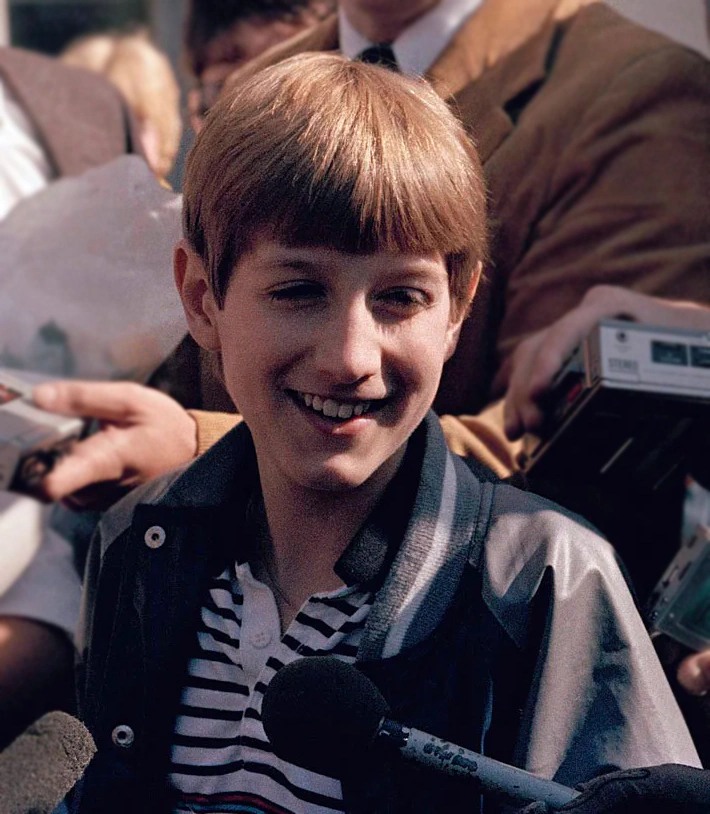
| 30 Quotes | |
| Born as | Ryan Wayne White |
| Occup. | Celebrity |
| From | USA |
| Born | December 6, 1971 Kokomo, Indiana, USA |
| Died | April 8, 1990 Indianapolis, Indiana, USA |
| Cause | AIDS-related complications |
| Aged | 18 years |
| Cite | |
Citation Formats
APA Style (7th ed.)
Ryan white biography, facts and quotes. (2026, February 11). FixQuotes. https://fixquotes.com/authors/ryan-white/
Chicago Style
"Ryan White biography, facts and quotes." FixQuotes. February 11, 2026. https://fixquotes.com/authors/ryan-white/.
MLA Style (9th ed.)
"Ryan White biography, facts and quotes." FixQuotes, 11 Feb. 2026, https://fixquotes.com/authors/ryan-white/. Accessed 13 Feb. 2026.
Early Life
Ryan Wayne White was born on December 6, 1971, in Kokomo, Indiana. He grew up in a close family led by his mother, Jeanne White, and alongside his sister, Andrea. Ryan had severe hemophilia A, a hereditary bleeding disorder that required frequent infusions of clotting factor derived from donated blood. In the early 1980s, before routine screening for HIV, many hemophilia patients relied on blood products that carried risks not yet fully understood. His childhood was shaped by the routine of medical care and by an ordinary wish to do the things other children did, even as he learned to navigate the limitations of a serious chronic condition.Diagnosis and the School Battle
In late 1984, after a bout of illness that included pneumonia, Ryan was diagnosed with AIDS, contracted through contaminated clotting factor. Doctors initially gave him a very short time to live, but he outlived those predictions by years. When he attempted to return to Western Middle School near Kokomo, the local school district refused to readmit him, citing fears about transmission. The decision ignited a highly publicized legal and community battle, emblematic of a national climate in which misinformation and stigma often overshadowed science. With Jeanne White's steadfast advocacy and the support of legal counsel, Ryan won the right to attend, but the hostility he faced was intense, including harassment and threats that made day-to-day life precarious.Moving to Cicero and a Community's Response
In 1987, Ryan, Jeanne, and Andrea moved to Cicero, Indiana, where he enrolled at Hamilton Heights High School. There, the tone changed. Administrators and students worked to prepare the school and the community with factual information about HIV and AIDS. The environment was not free from fear or controversy, but it was marked by empathy and inclusion. Ryan found the chance to be a teenager again, participating in school life and forging friendships. The support also extended to Jeanne, who had shouldered the strain of caregiving, public scrutiny, and litigation; the move allowed the family to live with more dignity and less daily turmoil. Jeanne later married Roy Ginder, and together they continued to stand by Ryan as his health fluctuated.Public Advocacy and Media Presence
Ryan's struggle transformed him into a national figure whose calm, steady presence countered myths about HIV. He appeared on television programs, spoke to journalists, and addressed public audiences about living with AIDS. His message emphasized that he was a typical teenager who happened to have a serious illness, and that people with HIV deserved respect, education-based policies, and access to care. In doing so, he helped mainstream a conversation that many preferred to avoid. His composure and clarity resonated with families, teachers, and lawmakers, and he became an inadvertent educator at a time when fear often eclipsed compassion.Friends, Allies, and Cultural Reach
Ryan's humanity drew notable allies. The musician Elton John befriended Ryan and his family, visited them, and used his platform to amplify Ryan's message about compassion and public health. After Ryan's death, Elton John spoke openly about the impact Ryan had on him and credited that influence with shaping his own activism on HIV/AIDS. Michael Jackson also offered public support and later dedicated the song "Gone Too Soon" to Ryan's memory, a gesture that kept the story of a Midwestern teenager in the national consciousness. These relationships reflected the bridge Ryan built between everyday life and celebrity advocacy, bringing wider attention to the realities of HIV and to the families living with it.Illness, Final Months, and Passing
Ryan's health declined in early 1990 as complications from AIDS worsened. He was admitted to Riley Hospital for Children in Indianapolis, where he died on April 8, 1990, at age 18. His passing drew national mourning. Friends, classmates, and public figures paid tribute, and his family shared a message consistent with the way he had lived: that facts, empathy, and fairness should guide the response to HIV/AIDS. Through it all, Jeanne White-Ginder's voice remained essential, reminding the country that behind statistics are families negotiating fear, bureaucracy, and hope.Legacy and the Ryan White CARE Act
In the months following his death, the United States enacted the Ryan White Comprehensive AIDS Resources Emergency (CARE) Act, signed into law in August 1990 by President George H. W. Bush. The legislation became the largest federal program dedicated to providing care and support services for people living with HIV/AIDS in the United States, particularly those without sufficient insurance or financial resources. Over time, reauthorizations sustained and expanded the program, ultimately known as the Ryan White HIV/AIDS Program, which continues to fund medical care, support services, and medications. The law stands as a concrete expression of what Ryan and his family advocated: that public policy should be guided by medical science and compassion, not fear.Continuing Influence
Ryan's story reshaped public understanding of HIV/AIDS by putting a teenager's face to a crisis too often discussed in abstract terms. His mother, Jeanne White-Ginder, remained an advocate, speaking across the country to promote education, non-discrimination, and access to care. His sister, Andrea, and stepfather, Roy Ginder, were part of a family that turned private ordeal into public service. Ryan's life demonstrated that accurate information and everyday decency can change policy and culture, and his friendships with figures like Elton John and Michael Jackson showed how personal connection can scale into public action. Decades later, his name still denotes a standard of humane response: listen to science, protect the vulnerable, and make room for people to live with dignity.Our collection contains 30 quotes written by Ryan, under the main topics: Never Give Up - Mortality - Meaning of Life - Equality - Movie.
Source / external links