
S. E. Hinton Biography Quotes 11 Report mistakes
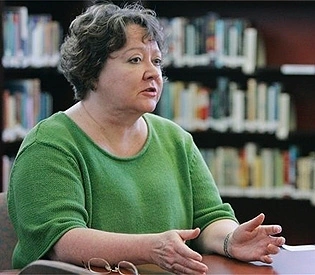
| 11 Quotes | |
| Born as | Susan Elouise Hinton |
| Occup. | Writer |
| From | USA |
| Born | July 22, 1950 Tulsa, Oklahoma, Oklahoma, U.S. |
| Age | 75 years |
| Cite | |
Citation Formats
APA Style (7th ed.)
S. e. hinton biography, facts and quotes. (2026, February 11). FixQuotes. https://fixquotes.com/authors/s-e-hinton/
Chicago Style
"S. E. Hinton biography, facts and quotes." FixQuotes. February 11, 2026. https://fixquotes.com/authors/s-e-hinton/.
MLA Style (9th ed.)
"S. E. Hinton biography, facts and quotes." FixQuotes, 11 Feb. 2026, https://fixquotes.com/authors/s-e-hinton/. Accessed 28 Mar. 2026.
Early Life and Background
Susan Elouise Hinton was born on July 22, 1950, in Tulsa, Oklahoma, a city whose oil-boom affluence and hard-edged working-class neighborhoods lived side by side. That social geography - the sharp, daily awareness of who had money, who did not, and what that did to a teenager's sense of safety - became the emotional map of her best-known fiction. She grew up in mid-century America as television, rock and roll, and car culture reshaped youth identity, while adult institutions still expected compliance and silence from the young.Her childhood combined steadiness with an early confrontation with loss: her father, a civil engineer, died by suicide when she was young, and her mother raised her afterward. In that atmosphere, imagination could function as refuge and rehearsal space, a private arena where a kid could test bravado, tenderness, and anger without consequences. Hinton has described herself as a tomboy in a mostly male peer world, a detail that matters less as trivia than as training - she learned to listen across gendered expectations and to write boys not as a costume but as a lived social language.
Education and Formative Influences
Hinton attended Will Rogers High School in Tulsa, where she began drafting what became The Outsiders while still a teenager, writing against the grain of early-1960s young-adult publishing that often sterilized adolescence into moral lessons. She later studied at the University of Tulsa, reading widely and absorbing a plainspoken, scene-driven storytelling tradition from American realism and popular film, yet filtering it through the immediacy of teenage voice. The book's authority came from proximity - she was not remembering adolescence from a safe distance; she was inside it, capturing its speed, its tribal loyalties, and its hunger to be seen.Career, Major Works, and Turning Points
The Outsiders was published in 1967, when Hinton was still in her teens, and its impact was immediate: it treated working-class boys, violence, and vulnerability as human facts rather than sociological problems. The novel opened a new lane for modern YA realism and was followed by That Was Then, This Is Now (1971), Rumble Fish (1975), and Tex (1979), books that kept faith with adolescent interiority while showing consequences - addiction, grief, poverty, and the cost of mythologizing toughness. Film adaptations, especially Francis Ford Coppola's The Outsiders (1983) and Rumble Fish (1983), turned her Tulsa universe into a national visual icon; later works such as Taming the Star Runner (1988) and The Puppy Sister (1995) extended her interest in identity and belonging, even as she guarded her privacy and wrote less frequently than her early fame might have predicted.Philosophy, Style, and Themes
Hinton's work is built on an unusually direct pipeline between empathy and craft, and she has explained that she does not hover above a character so much as inhabit one: “I go straight from thinking about my narrator to being him”. That method helps explain the unforced first-person voices that made her novels feel less like books about teenagers than books spoken by them. Her narrators observe with a camera-like alertness, but the style is never merely visual; the spare sentences carry moral weight, asking what a kid owes to friends, to family, and to an idea of self that may not survive the next fight.The central theme is not delinquency but class and tenderness - how love and loyalty are shaped by scarcity, and how masculinity becomes both armor and trap. The opening line of The Outsiders captures her knack for placing yearning beside danger in a single breath: “When I stepped out into the bright sunlight from the darkness of the movie house, I had only two things on my mind: Paul Newman and a ride home”. The sentence is funny, specific, and lonely at once, sketching a boy whose fantasies are cinematic while his needs are basic. Underneath the plots - rumbles, betrayals, rescues - Hinton keeps returning to the question of authorship over one's life, and to the half-mystery of why one keeps telling stories at all: “I have no idea why I write. The old standards are: I like to express my feelings, stretch my imagination, earn money”. The candor suggests a writer suspicious of grand narratives, more interested in honest motive than in literary poses.
Legacy and Influence
Hinton is widely credited with helping create contemporary young-adult literature as a serious, unsentimental field, proving that teenagers would read - and reread - stories that refused to patronize them. The Outsiders, in particular, became a classroom staple and a private rite of passage, giving generations a vocabulary for friendship across social lines and for the ache of wanting to stay "gold" in a world that hardens people. Beyond sales and adaptations, her enduring influence lies in permission: she made it possible for later writers to center working-class lives, male vulnerability, and moral ambiguity in books for the young, and she did it with a voice that still feels like someone speaking from the next seat over rather than from a lectern.Our collection contains 11 quotes written by E. Hinton, under the main topics: Witty One-Liners - Friendship - Writing - Movie.
S. E. Hinton Famous Works
- 1988 Taming the Star Runner (Novel)
- 1979 Tex (Novel)
- 1975 Rumble Fish (Novel)
- 1971 That Was Then, This Is Now (Novel)
- 1967 The Outsiders (Novel)
Source / external links