
Saad Hariri Biography Quotes 2 Report mistakes
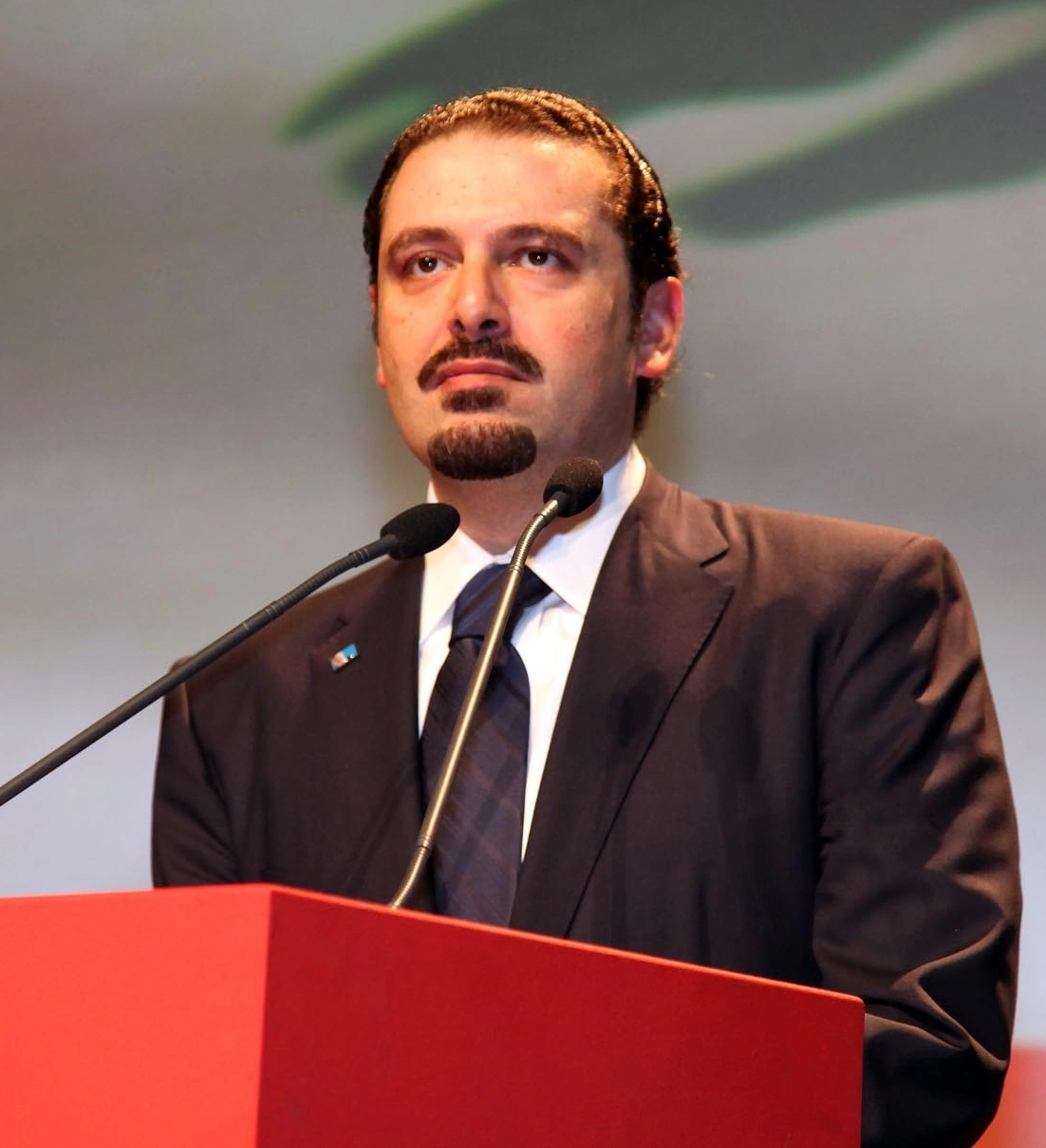
| 2 Quotes | |
| Born as | Saad-eddine Rafiq Al-Hariri |
| Occup. | Politician |
| From | Lebanon |
| Born | April 18, 1970 Riyadh, Saudi Arabia |
| Age | 55 years |
| Cite | |
Citation Formats
APA Style (7th ed.)
Saad hariri biography, facts and quotes. (2026, February 11). FixQuotes. https://fixquotes.com/authors/saad-hariri/
Chicago Style
"Saad Hariri biography, facts and quotes." FixQuotes. February 11, 2026. https://fixquotes.com/authors/saad-hariri/.
MLA Style (9th ed.)
"Saad Hariri biography, facts and quotes." FixQuotes, 11 Feb. 2026, https://fixquotes.com/authors/saad-hariri/. Accessed 12 Feb. 2026.
Early Life and Background
Saad-eddine Rafiq Al-Hariri was born on April 18, 1970, into a Lebanon defined by fracture. His early years unfolded against the backdrop of the Lebanese Civil War (1975-1990), a conflict that turned identity into a daily calculation and made security, patronage, and foreign leverage - Syrian, Israeli, Iranian, Saudi, American - part of ordinary political weather. The Hariri family name already carried the aura of reconstruction and money, but also the vulnerabilities that come with being a prominent Sunni household in a sectarian republic.His father, Rafik Hariri, rose from business success in Saudi Arabia to become Lebanon's dominant postwar statesman, championing the rebuilding of downtown Beirut and the promise that economic recovery could soften political wounds. Saad grew up mostly away from Lebanon, absorbing the experience of distance - the way a homeland can be both a memory and a project. That separation, and the family's vast network of business and political ties, would later shape his governing instinct: to protect institutions and alliances first, and to treat social peace as a scarce commodity.
Education and Formative Influences
Hariri studied business administration at Georgetown University in Washington, D.C., graduating in the early 1990s, then entered the family orbit of Saudi-based enterprise, including Saudi Oger. The combination of American campus pragmatism, Gulf corporate culture, and Lebanon's postwar reconstruction ethos formed a distinct temperament: managerial, coalition-minded, and sensitive to the internationalized nature of Lebanese sovereignty, where budgets, security, and diplomacy constantly intersect.Career, Major Works, and Turning Points
The defining rupture came on February 14, 2005, when Rafik Hariri was assassinated in Beirut, an event that convulsed the country, accelerated the Cedar Revolution, and helped precipitate the withdrawal of Syrian troops. Saad inherited leadership of the Future Movement and became a central figure of the March 14 coalition, positioning himself against Syrian tutelage and, increasingly, against Hizbollah's armed status. He served as prime minister in 2009-2011, 2016-2020, and briefly in 2021-2022 amid a state sliding from chronic dysfunction into financial catastrophe. His tenures were marked less by sweeping legislation than by crisis management: navigating the 2008 Doha Agreement aftermath, the Syrian war's spillover and refugee influx, repeated government deadlock, and finally the 2019 protest movement and sovereign debt default. A dramatic personal turning point arrived in November 2017 when, while in Saudi Arabia, he announced his resignation in a televised statement, a move widely seen as coerced; international pressure and Lebanese consensus enabled his return and the rescinding of the resignation, but the episode underscored his constrained autonomy and the degree to which Lebanese leadership can be hostage to external patrons.Philosophy, Style, and Themes
Hariri's public philosophy is built around a wager his father's era made famous: that commerce, reconstruction, and institutional continuity can outlast militia logic. His style is transactional and conciliatory, often criticized as overly compromising yet rooted in an acute sense of the costs of civil strife. He has repeatedly framed politics as the art of preventing rupture rather than achieving purity, a stance shaped by living through war and then inheriting a movement born from an assassination. His belief in moderation is not simply ideological - it is self-protective, an attempt to keep Sunni politics tethered to the state rather than to street mobilization.His rhetoric often reveals a skepticism toward performative politics, admitting the fragility of charisma in a country addicted to it: "It's very easy to have slogans and rhetoric that people will follow, but eventually the slogans fall away". This is less a critique of opponents than a confession of his own governing dilemma - that long-term legitimacy requires results in a system designed to block results. His outlook on accountability, hardened by the unresolved pursuit of truth in his father's killing and by Lebanon's culture of impunity, can sound stark: "Justice is revenge". In that line sits a psychological tension running through his career - the pull between reconciliation as statecraft and the desire for moral closure in a political order where legal closure rarely arrives.
Legacy and Influence
Hariri's legacy is inseparable from the arc of post-2005 Lebanon: the hope that mass mobilization could restore sovereignty, the slow grind of institutional paralysis, and the eventual collapse of economic assumptions that reconstruction-era leaders treated as permanent. To supporters, he represents a moderating Sunni center committed to the state and international partnerships; to critics, he symbolizes the postwar elite's dependence on debt, patronage, and foreign capital. His most enduring influence may be as a case study in constrained leadership - a politician who tried to govern through compromise in a republic where armed power, sectarian vetoes, and external sponsorship often decide what compromise is allowed to mean.Our collection contains 2 quotes written by Saad, under the main topics: Justice - Leadership.
Other people related to Saad: Michel Aoun (Soldier), Hassan Nasrallah (Revolutionary), Rafic Hariri (Statesman), Emile Lahud (Statesman)
Source / external links