
Sadio Mané Biography Quotes 6 Report mistakes
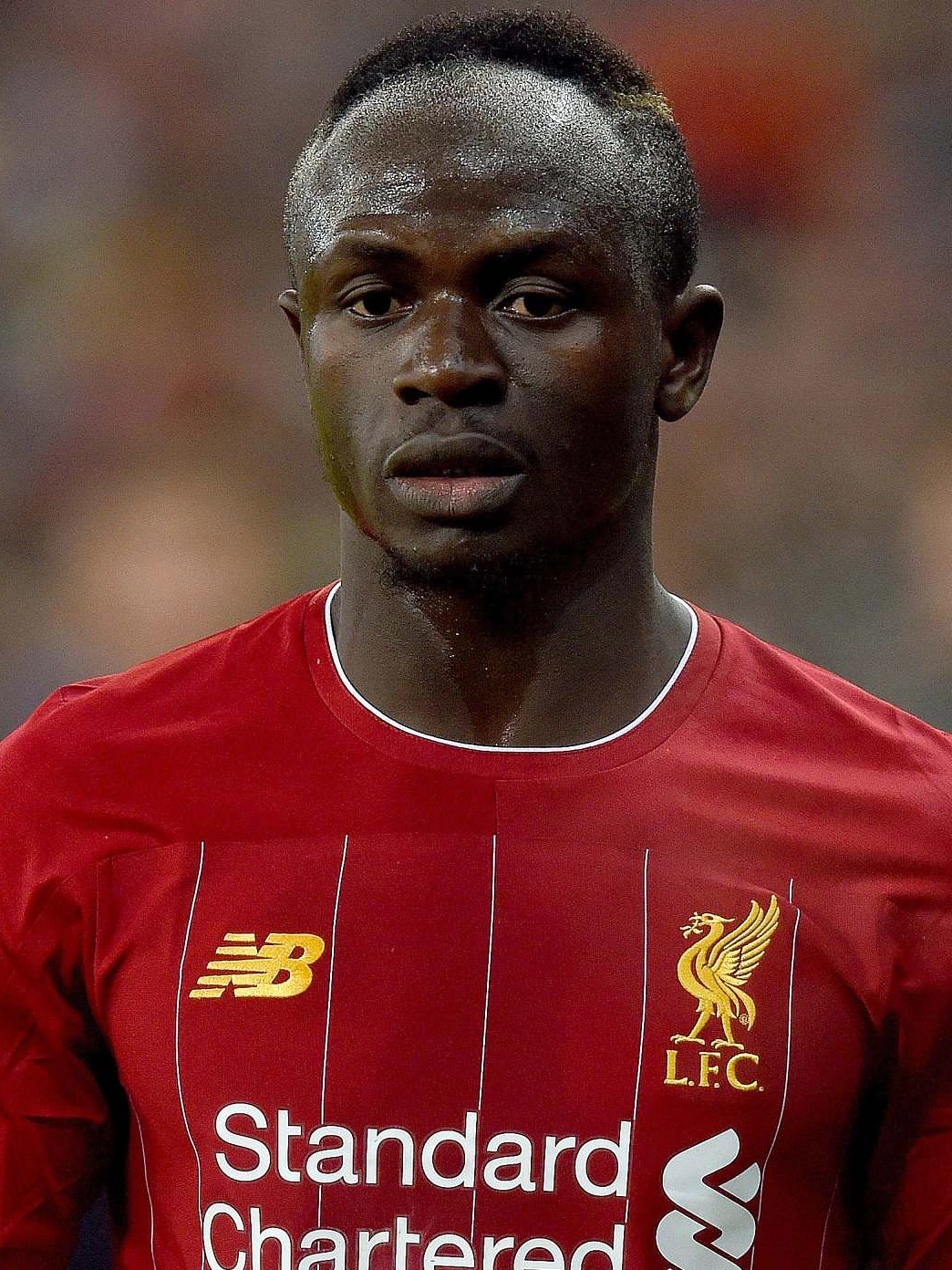
Attr: The Independent
| 6 Quotes | |
| Occup. | Athlete |
| From | Senegal |
| Spouse | Aïssata Tamba |
| Born | April 10, 1992 Bambali, Sédhiou Region, Senegal |
| Age | 33 years |
| Cite | |
Citation Formats
APA Style (7th ed.)
Sadio mané biography, facts and quotes. (2026, February 17). FixQuotes. https://fixquotes.com/authors/sadio-mane/
Chicago Style
"Sadio Mané biography, facts and quotes." FixQuotes. February 17, 2026. https://fixquotes.com/authors/sadio-mane/.
MLA Style (9th ed.)
"Sadio Mané biography, facts and quotes." FixQuotes, 17 Feb. 2026, https://fixquotes.com/authors/sadio-mane/. Accessed 30 Mar. 2026.
Early Life and Background
Sadio Mane was born on April 10, 1992, in Bambali, a small village in Senegal's Casamance region, an area long shaped by rural poverty, strong communal ties, and the aftershocks of a low-level separatist conflict that pushed many families to rely on farming, informal trade, and remittances. He grew up in a conservative, largely Muslim household where prestige came less from individual display than from duty to family and village. Football, played on dusty pitches with improvised gear, offered both escape and a local language of ambition.Family stories about scarcity hardened into purpose. Bambali lacked basic infrastructure that urban Senegalese could take for granted - clinics, paved roads, stable electricity - and this gap later became central to Mane's identity as a public figure. The child who left a village of limited opportunity would return as an adult with the means to alter it, carrying a sense that success was not complete unless it changed the conditions that produced his hunger in the first place.
Education and Formative Influences
Mane's early schooling ran alongside a single-minded devotion to the game, but his path was not smooth: relatives were initially skeptical of professional football, and the practical demands of rural life competed with training. He was shaped by Senegal's growing pipeline of youth academies and the example of earlier West African exports to Europe, yet his motivation remained intimate - to become a provider, to earn respect through work, and to represent Bambali with dignity. A decisive break came when he pursued formal training beyond the village, joining Generation Foot in Dakar, a club-academy with European links that professionalized his talent and introduced him to the regimen, diet, and tactical schooling that modern elite football requires.Career, Major Works, and Turning Points
In 2011, Mane moved to France with Metz, a leap that tested his adaptability and resilience. After Metz, he broke through at Red Bull Salzburg, where his speed, pressing intensity, and ruthless finishing made him a standout in Austria and in European competition. Southampton signed him in 2014, and he quickly became a Premier League force, setting a then-record with the fastest Premier League hat-trick (2 minutes 56 seconds) in 2015. The defining ascent came at Liverpool (2016-2022), where under Jurgen Klopp he became part of a transformative front line with Mohamed Salah and Roberto Firmino, winning the UEFA Champions League (2019), Premier League (2020), FA Cup and League Cup (both 2022), and multiple other honors while establishing himself among the world's best wide forwards. Internationally, he grew into Senegal's talisman, helping win the Africa Cup of Nations in 2021 (played in 2022) and earning CAF African Player of the Year (2022). A transfer to Bayern Munich in 2022 marked a new chapter, disrupted by injury and a shortened stay, followed by a move to Al Nassr in 2023 as the global football economy pivoted toward the Saudi Pro League.Philosophy, Style, and Themes
Mane's public persona is built around restraint, work ethic, and a refusal to inflate the self. “People say that about me, but I don't see myself as a global star at all. I don’t know where to start with that phrase. All I care about is being part of the team”. That line reads less like modesty for the cameras than a psychological anchor: in a sport that monetizes ego, he repeatedly frames identity as function - press, track back, finish, repeat - and the team's needs as the only stable compass. Even at his peak he often looked more relieved than triumphant, as if the real opponent was not the defender but the possibility of letting standards slip.His inner narrative also runs through responsibility and moral accounting. “Why would I want to have 10 Ferraris, 20 watches with diamonds or two planes? What would these objects do for me and for the world?” The question exposes a mind that measures worth by impact, not accumulation, and it helps explain his widely reported philanthropy in Senegal - support for schools, community projects, and a hospital in Bambali. That impulse is not abstract charity but memory turned into policy: “I remember my sister was also born at home because there is no hospital in our village. It was a really, really sad situation for everyone. I wanted to build one to give people hope”. In that sense, his football style and his life philosophy rhyme: direct, high-intensity, and unsentimental - effort aimed at outcomes that outlast applause.
Legacy and Influence
Mane's legacy sits at the intersection of modern African excellence and modern football's shifting power centers. On the pitch, he helped define Klopp's Liverpool era and expanded the image of what an elite winger-forward could be: a scorer who also defends, a celebrity who behaves like a worker. Off the pitch, he became a model of high-profile restraint and village-rooted giving, using global earnings to address local deficits and insisting that fame is only meaningful when converted into opportunity for others. For Senegalese and broader African audiences, he stands as proof that the journey from remote beginnings to the sport's highest stages can remain tethered to community - and that the most enduring trophies may be the institutions built back home.Our collection contains 6 quotes written by Sadio, under the main topics: Motivational - Hope - Student - Teamwork - Humility.
Frequently Asked Questions
- Sadio Mané religion: He is a Muslim.
- Sadio Mane Liverpool: He played for Liverpool from 2016 to 2022 and won the Premier League, UEFA Champions League, FIFA Club World Cup, FA Cup, and EFL Cup with the club.
- Sadio Mane height: He is 1.75 m (5 ft 9 in) tall.
- Sadio Mané dates joined: He joined Red Bull Salzburg on August 31, 2012; Southampton on September 1, 2014; Liverpool on June 28, 2016; Bayern Munich on June 22, 2022; and Al Nassr on August 1, 2023.
- Sadio Mane wife: He married Aisha Tamba in 2024.
- How old is Sadio Mané? He is 33 years old
Source / external links