
Saint Augustine Biography Quotes 56 Report mistakes
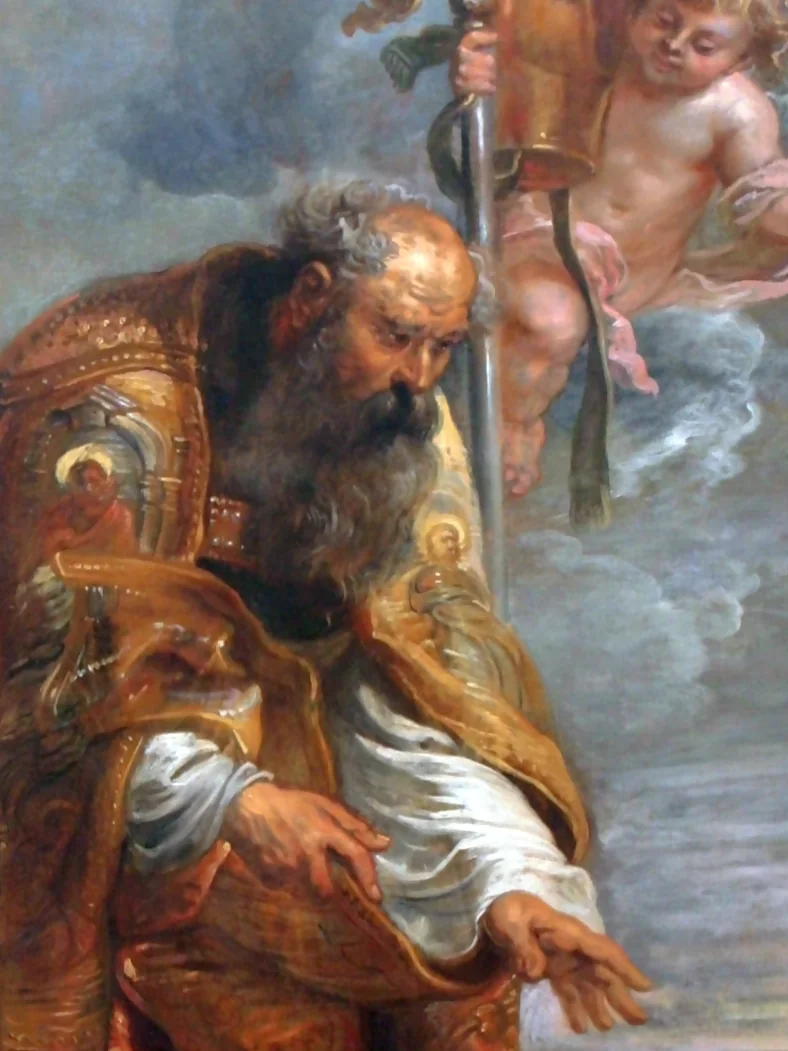
| 56 Quotes | |
| Occup. | Saint |
| From | Rome |
| Born | November 13, 354 |
| Died | August 28, 430 |
| Aged | 75 years |
| Cite | |
Citation Formats
APA Style (7th ed.)
Saint augustine biography, facts and quotes. (2026, February 2). FixQuotes. https://fixquotes.com/authors/saint-augustine/
Chicago Style
"Saint Augustine biography, facts and quotes." FixQuotes. February 2, 2026. https://fixquotes.com/authors/saint-augustine/.
MLA Style (9th ed.)
"Saint Augustine biography, facts and quotes." FixQuotes, 2 Feb. 2026, https://fixquotes.com/authors/saint-augustine/. Accessed 26 Mar. 2026.
Early Life and Background
Aurelius Augustinus was born on 354-11-13 in Thagaste (Numidia, in Roman North Africa; modern Souk Ahras, Algeria), a provincial town where Latin civic culture met Berber roots and Christian piety. His mother, Monica, was a devout Christian whose patience became a lifelong moral reference point; his father, Patricius, a modest municipal official, remained a pagan for most of Augustine's youth and converted late. The household embodied the late Roman world in miniature: ambitious, status-conscious, and pulled between inherited cults and an increasingly confident Christianity.Augustine grew up during an empire that was reorganizing itself after Constantine, with North Africa economically vibrant and intellectually combative. He learned early how reputation, rhetoric, and networks could carry a gifted boy upward, but also how restless desire could hollow out success. The Confessions later turns his youth into a case study in disordered love - not as melodrama, but as the inner weather of a clever adolescent formed by applause, sexual initiation, and the pressure to win.
Education and Formative Influences
Funded by family sacrifice and patronage, Augustine studied grammar at Madauros and rhetoric at Carthage, the North African metropolis of theaters, schools, and factional energy. There he absorbed Cicero's Hortensius, which ignited a hunger for wisdom beyond careerism, and he drifted into Manichaeism for nearly a decade, attracted by its promise of rational clarity and its way of excusing moral failure by blaming a divided cosmos. He read the Latin classics, trained as a teacher of persuasion, took a concubine (with whom he had a son, Adeodatus), and began to feel the split between what he could argue in public and what he could govern in himself. Disillusion with Manichaean leaders and a growing respect for Catholic intellectuals like Ambrose of Milan helped shift him from polemic to introspection.Career, Major Works, and Turning Points
After teaching in Carthage and Rome, Augustine became professor of rhetoric at Milan, close to imperial power yet increasingly dissatisfied; in 386, amid inner crisis and Monica's long pursuit, he underwent a decisive conversion, was baptized by Ambrose at Easter 387, and soon left his career. Monica died at Ostia the same year, a loss that sharpened his sense of pilgrimage and home. Returning to Africa, he formed a quasi-monastic community, then was ordained priest at Hippo Regius in 391 and became its bishop in 395/396, spending the rest of his life as pastor, judge, polemicist, and spiritual anatomist. He wrote the Confessions (c. 397-400), the sprawling City of God (begun after the sack of Rome in 410), and On the Trinity, while battling Manichaeans, Donatists, and later Pelagians; he died on 430-08-28 as Vandals besieged Hippo, the old Roman order collapsing around a mind that had already learned to detach ultimate meaning from empire.Philosophy, Style, and Themes
Augustine's inner life is the engine of his theology: he treats the self not as a stable unit but as a conflict of loves, habits, and memories laid bare before God. His most famous moral candor refuses heroic self-mastery; it stages the will's paralysis and the longing to delay surrender: “Give me chastity and continence, but not yet”. The line is not a joke but a psychological diagnosis - desire can admire the good while bargaining for time, and the mind can be divided against itself even when it "knows" what is right.His mature vision binds intellect to trust, and history to providence. Against both cynical fatalism and self-sufficient moralism, he argues that understanding ripens inside committed seeking: “Seek not to understand that you may believe, but believe that you may understand”. The City of God extends that interior drama to civilizations, insisting that Rome's disasters do not disprove meaning; rather, they reveal competing objects of worship. Augustine's providential confidence is neither naive nor callous about suffering - it is an attempt to defend hope without denying evil: “God judged it better to bring good out of evil than to suffer no evil to exist”. This conviction shapes his pastoral tone: exacting about truth, tender about weakness, and relentless in tracing how grace heals what pride fragments.
Legacy and Influence
Augustine became the West's most influential Christian psychologist and one of its foundational political theologians, shaping medieval spirituality, scholastic debates on grace and will, and later controversies in the Reformation and modern philosophy of mind. His Confessions pioneered an inward, time-conscious autobiography; his anti-Pelagian writings framed enduring arguments about freedom, sin, and divine aid; his City of God offered a template for thinking about nations without absolutizing them. Canonized as a saint and honored as a Doctor of the Church, Augustine remains a writer who makes readers feel watched - not by society, but by truth - and who turns private restlessness into a map of the human condition under God.Our collection contains 56 quotes written by Saint, under the main topics: Witty One-Liners - Ethics & Morality - Truth - Wisdom - Justice.
Other people related to Saint: Petrarch (Poet), Saint Aurelius Augustine (Theologian), Jean Guitton (Philosopher)
Source / external links