
Saint Francis de Sales Biography Quotes 18 Report mistakes
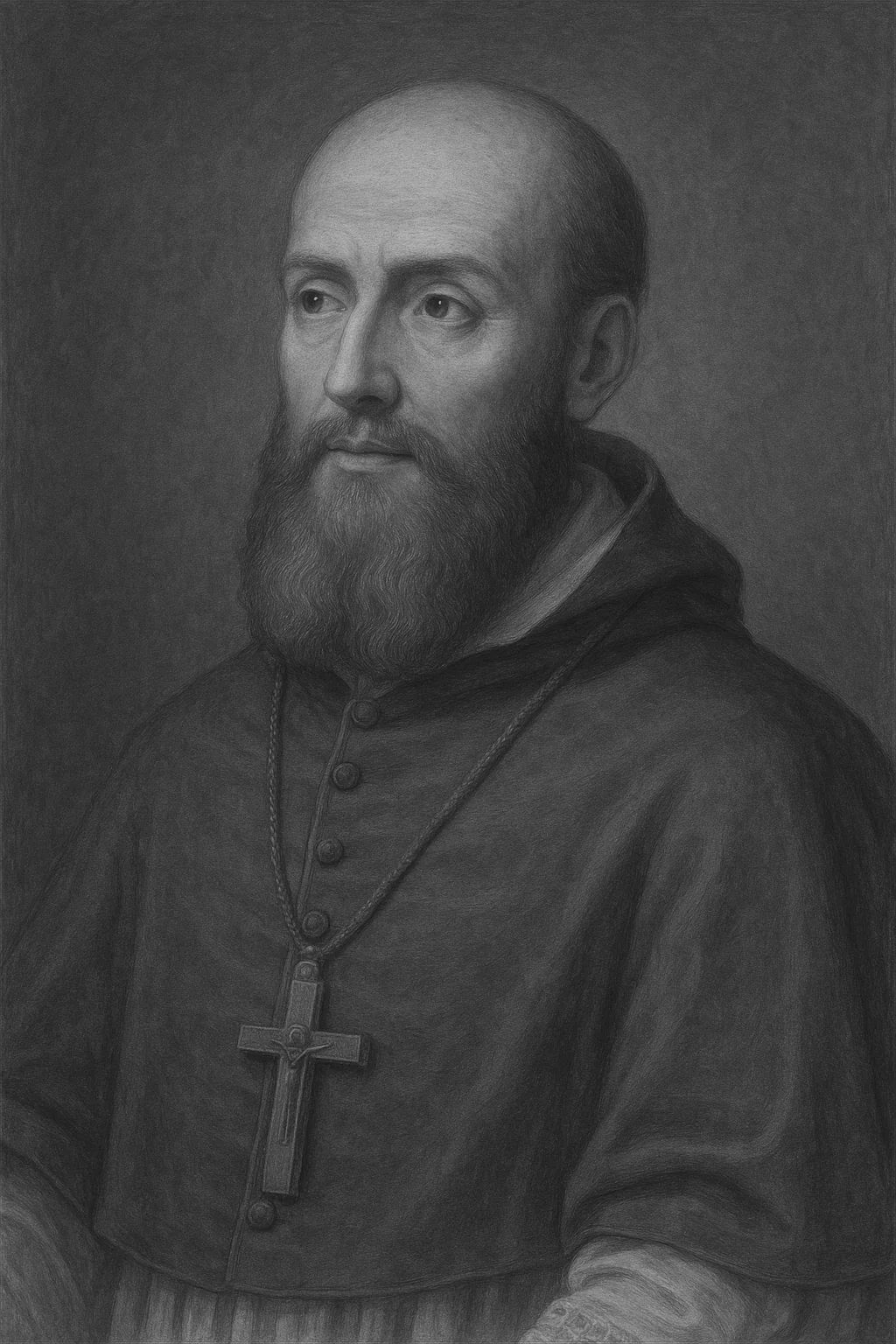
| 18 Quotes | |
| Born as | François de Sales |
| Occup. | Clergyman |
| From | Switzerland |
| Born | August 21, 1567 Château de Sales, Duchy of Savoy, Holy Roman Empire |
| Died | December 28, 1622 Lyon, Lyonnais, Kingdom of France |
| Cause | Stroke (apoplexy) |
| Aged | 55 years |
| Cite | |
Citation Formats
APA Style (7th ed.)
Saint francis de sales biography, facts and quotes. (2026, February 2). FixQuotes. https://fixquotes.com/authors/saint-francis-de-sales/
Chicago Style
"Saint Francis de Sales biography, facts and quotes." FixQuotes. February 2, 2026. https://fixquotes.com/authors/saint-francis-de-sales/.
MLA Style (9th ed.)
"Saint Francis de Sales biography, facts and quotes." FixQuotes, 2 Feb. 2026, https://fixquotes.com/authors/saint-francis-de-sales/. Accessed 24 Mar. 2026.
Early Life and Background
Francois de Sales was born on August 21, 1567, at the Chateau de Sales near Thorens in the Duchy of Savoy, a borderland culture tied to both Switzerland and France and soon pressured by the confessional conflicts of the post-Reformation age. His father, Francois de Boisy, was a Savoyard noble and magistrate who planned a legal and political career for his eldest son; his mother, Francoise de Sionnaz, raised him within a piety that was practical, disciplined, and intensely Marian. He grew up among Alpine estates and urban courts, learning early how power speaks in ceremony, and how ordinary people suffer when elites harden into factions.Savoy in his youth was a hinge region: Geneva had become a Calvinist stronghold under a rigorous moral regime, while nearby Catholic territories were reorganizing under the Catholic Reformation. That geography made identity feel contested and fragile. De Sales internalized the era's anxieties, but he also absorbed its possibility - that persuasion could replace coercion, and that holiness might be lived outside monasteries. The tension between noble ambition and spiritual vocation would become the psychological engine of his life: an attraction to excellence paired with fear of self-deception.
Education and Formative Influences
He studied at the Jesuit college of Clermont in Paris (1580s), where classical rhetoric and spiritual discipline trained him to think with precision and speak with warmth; he then pursued law at the University of Padua, receiving a doctorate in 1591 and returning fluent in canon and civil jurisprudence. In Paris, a crisis of scrupulosity and dread of damnation nearly broke him; he later described being delivered through prayer and surrender, a decisive interior turning that taught him to treat anxiety as a spiritual fact rather than a moral failure. Against his father's wishes, he chose ordination, and in 1593 was made a priest for the Diocese of Geneva, which, driven from its city, governed from Annecy.Career, Major Works, and Turning Points
His defining early mission was the Chablais (1594-1598), a largely Calvinist district along Lake Geneva; sent with minimal protection, he traveled on foot in winter, debated ministers, visited households, and wrote short tracts that were copied and passed hand to hand - an early use of pamphleteering as pastoral care. The mission, aided by political shifts and patient catechesis, brought many back to Catholic practice, and de Sales gained a reputation for firmness without cruelty. In 1602 he became Bishop of Geneva in exile at Annecy, where he reformed clergy, preached constantly, guided lay confraternities, and conducted a vast correspondence of spiritual direction. With Jeanne-Francoise de Chantal he founded the Visitation of Holy Mary (1610), a community intended for women drawn to devotion but not suited to harsh austerities. His major books, "Introduction to the Devout Life" (1609) and "Treatise on the Love of God" (1616), distilled decades of direction into a map of holiness for ordinary states of life. He died at Lyon on December 28, 1622, after preaching at the court of Savoy, his final years spent carrying counsel between cities like a man convinced that souls are won by attention.Philosophy, Style, and Themes
De Sales wrote with the cadence of a confessor who had known terror and learned to untie it. He distrusts spiritual heroics that feed vanity, and he normalizes gradual conversion. “Have patience with all things, But, first of all with yourself”. Behind that sentence lies his own youthful crisis: he understood how self-violence disguises itself as zeal, and how despair can borrow religious language. For him, sanctity is not a rare vocation but a craft practiced in schedule, speech, money, friendship, and fatigue; grace enters through small obediences rather than spectacular moods.His psychology of gentleness is not softness but strategy: love is more persuasive than dominance, and coercion corrupts both ruler and ruled. “Nothing is so strong as gentleness, nothing so gentle as real strength”. That paradox governed his public life in a century that often trusted force. He argued, corrected, and negotiated as a bishop, yet tried to keep a center of calm that made correction bearable. “Never be in a hurry; do everything quietly and in a calm spirit. Do not lose your inner peace for anything whatsoever, even if your whole world seems upset”. Stylistically, he favors clarity over ornament, images from ordinary labor, and a humane casuistry that respects conscience without flattering it - a pastoral humanism shaped by Jesuit pedagogy, Thomist order, and an acute sense of how fear distorts love.
Legacy and Influence
Saint Francis de Sales became one of the Catholic Reformation's most enduring voices because he relocated holiness from the cloister to the street and the household, without diluting doctrine. Canonized in 1665 and later named a Doctor of the Church (1877), he is remembered as patron of writers and journalists for prose that treats persuasion as a moral act. His influence runs through modern Catholic spirituality - especially the idea that devotion can be adapted to every legitimate vocation - and through communities formed in his spirit, including the Visitation and later Salesian movements inspired by his gentleness. In an age still tempted by outrage and spiritual performance, his calm insistence on patient, truthful love remains a quietly radical model.Our collection contains 18 quotes written by Saint, under the main topics: Wisdom - Friendship - Love - Resilience - Honesty & Integrity.
Frequently Asked Questions
- Francis de Sales books: Introduction to the Devout Life; Treatise on the Love of God
- Saint Francis de Sales Church: Many Catholic parishes worldwide bear his name.
- Saint Francis de Sales feast day: January 24
- Saint Francis de Sales pronunciation: saynt FRAN-sis duh SAYLZ
- Saint Francis de Sales patron saint of: Writers, journalists, the deaf, and the Catholic press.
- Saint Francis de Sales School: Catholic schools worldwide named in his honor.
- How old was Saint Francis de Sales? He became 55 years old
Source / external links