
Salvador Dali Biography Quotes 32 Report mistakes
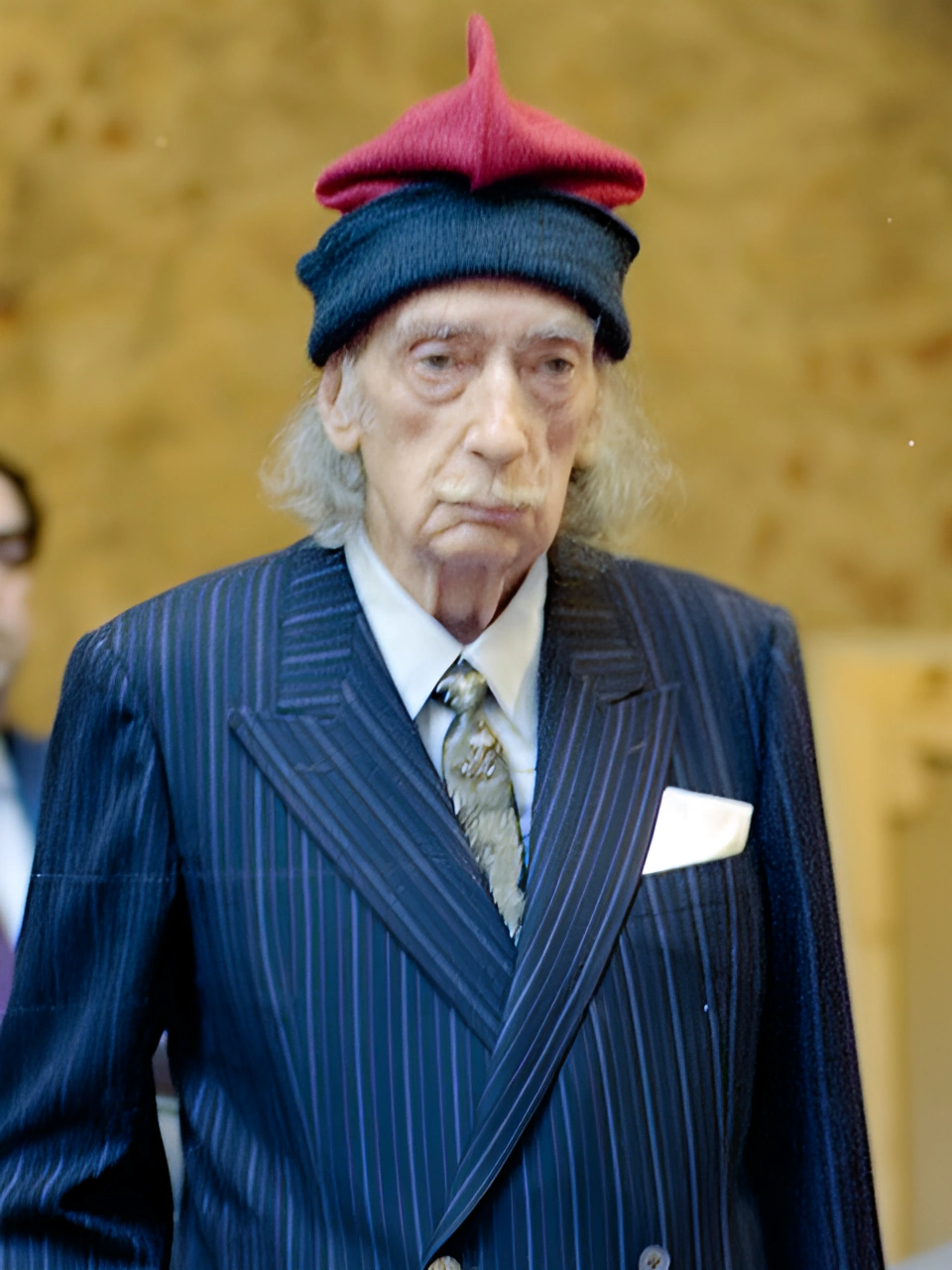
Attr: Generalitat de Catalunya
| 32 Quotes | |
| Born as | Salvador Domingo Felipe Jacinto Dali i Domenech |
| Occup. | Artist |
| From | Spain |
| Born | May 11, 1904 Figueres, Catalonia, Spain |
| Died | January 23, 1989 Figueres, Catalonia, Spain |
| Cause | heart failure |
| Aged | 84 years |
| Cite | |
Citation Formats
APA Style (7th ed.)
Salvador dali biography, facts and quotes. (2026, February 11). FixQuotes. https://fixquotes.com/authors/salvador-dali/
Chicago Style
"Salvador Dali biography, facts and quotes." FixQuotes. February 11, 2026. https://fixquotes.com/authors/salvador-dali/.
MLA Style (9th ed.)
"Salvador Dali biography, facts and quotes." FixQuotes, 11 Feb. 2026, https://fixquotes.com/authors/salvador-dali/. Accessed 27 Mar. 2026.
Early Life and Background
Salvador Domingo Felipe Jacinto Dali i Domenech was born on 1904-05-11 in Figueres, Catalonia, a small provincial town that nonetheless sat on the fault line of modern Spain: Catholic tradition, bourgeois order, and the rising tremors of avant-garde Europe. His father, Salvador Dali i Cusi, was a strict notary; his mother, Felipa Domenech Ferres, indulged the boy's theatricality and early talent. The household carried an additional, private myth: a brother named Salvador had died before his birth, and Dali grew up with the unnerving sense of being both replacement and resurrection - a psychological doubling that later fed his obsession with mirrors, twins, and the instability of identity.Catalonia in Dali's youth mixed rural ritual with modern commerce, and Dali absorbed both. Summers at Cadaques and the nearby cliffs of Cap de Creus etched themselves into his visual memory - crags, cypresses, and bleached horizons that later became the stage-set of his dreamscapes. Even before Surrealism gave him a banner, he cultivated the persona of the prodigy and provocateur, learning that shock could be a form of social power as well as aesthetic strategy.
Education and Formative Influences
After early instruction in Figueres and exposure to local artists, Dali entered the Real Academia de Bellas Artes de San Fernando in Madrid in 1922, lodging at the Residencia de Estudiantes, a crucible for Spain's modern culture. There he befriended the poet Federico Garcia Lorca and filmmaker Luis Bunuel, while testing identities through dress, rhetoric, and stylistic experiments that moved from Impressionism and pointillist touches toward Cubism and Italian Metaphysical painting. He was repeatedly disciplined and ultimately expelled (1926) after refusing to take final examinations, insisting no one at the academy was competent to judge him - a tantrum, but also an early sign that he would treat institutions as props in a drama whose author was himself.Career, Major Works, and Turning Points
Dali's decisive turn came through Paris and Surrealism: after meeting Andre Breton, he joined the movement in 1929, the same year he made Un Chien Andalou with Bunuel and met Gala (Elena Ivanovna Diakonova), who became his partner, manager, and emotional axis. He developed the "paranoiac-critical method", using self-induced associative delirium to mine double images and irrational linkages with the finish of an Old Master. The 1930s brought international fame - The Persistence of Memory (1931) and its soft clocks, The Great Masturbator (1929), and hallucinatory landscapes where desire and dread share the same horizon. Civil war and the rise of fascism strained his ties with Surrealist orthodoxy; Breton effectively excommunicated him in 1939 for politics and for what the group saw as mercenary showmanship. Dali and Gala relocated to the United States during World War II, where he expanded into fashion, set design, photography, and mass media, then returned to Spain in 1948, embracing Catholic imagery and atomic-age fascination in works like The Madonna of Port Lligat (1949) and The Sacrament of the Last Supper (1955). After Gala's death (1982) and a devastating fire at Pubol (1984), his health and output declined; he died in Figueres on 1989-01-23, closely associated with the museum-theater he had built as his own mausoleum of fame.Philosophy, Style, and Themes
Dali's inner life was a theater of controlled emergency: erotic anxiety, fear of decay, and an astonishing hunger to master attention. He cultivated a public image of exuberant excess not merely to sell paintings but to externalize his psychic pressure - turning private compulsion into a spectacle that could be managed. “There is only one difference between a madman and me. The madman thinks he is sane. I know I am mad”. That sentence is less a joke than a self-diagnosis and a shield: by declaring "madness" as performance, he claimed authorship over it, translating instability into method.Stylistically, Dali fused classical draftsmanship with modern rupture, insisting that illusion could be a weapon as sharp as abstraction. His canvases obsess over metamorphosis: ants, drawers in flesh, melting bodies, crutches propping up desire, landscapes that flip into faces - images that behave like symptoms, repeating until they are understood, or at least domesticated. Even his boast, “I don't do drugs. I am drugs”. , reads as a psychological manifesto: he sought intoxication without surrender, manufacturing altered states through attention, discipline, and theatrical self-myth. Underneath the grandiosity lies a persistent theme of duplication - the dead brother, the double image, the split between Dali the painter and Dali the brand - which helps explain his later insistence that “Painting is an infinitely minute part of my personality”. He wanted the world not only to see his art, but to inhabit his psyche as a total environment.
Legacy and Influence
Dali's legacy is paradoxical: he is both a technical traditionalist and a modern icon of disruption, a master draftsman who made the irrational feel crisply inevitable. His imagery has entered global visual language - the soft clock alone functions as shorthand for dream-time and existential unease - while his cross-media ambition prefigured the contemporary artist as celebrity, collaborator, and entrepreneur. Critics still argue over the cost of his self-promotion and his political evasions, yet his influence on Surrealist painting, advertising, cinema, and pop culture remains vast, sustained by the simple fact that his pictures continue to behave like dreams that refuse to fade after waking.Our collection contains 32 quotes written by Salvador, under the main topics: Witty One-Liners - Motivational - Truth - Wisdom - Art.
Other people related to Salvador: Elsa Schiaparelli (Designer), H. R. Giger (Artist), Gina Lollobrigida (Actress), Amanda Lear (Musician), Max Ernst (Artist)