
Sam Altman Biography Quotes 19 Report mistakes
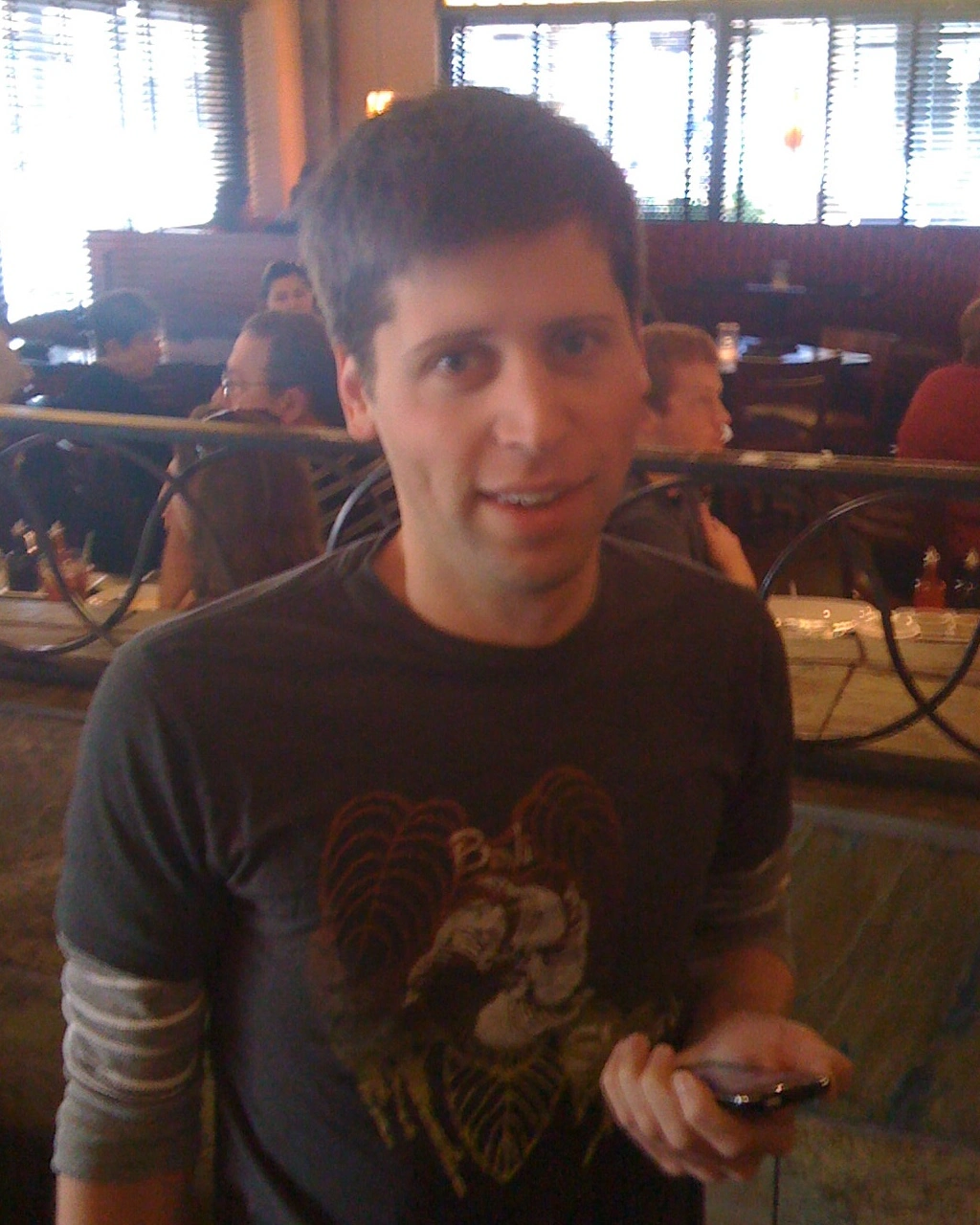
Attr: Phil Glockner, CC BY 2.0
| 19 Quotes | |
| Born as | Samuel Harris Altman |
| Occup. | Entrepreneur |
| From | USA |
| Born | April 22, 1985 Chicago, Illinois, USA |
| Age | 40 years |
| Cite | |
Citation Formats
APA Style (7th ed.)
Sam altman biography, facts and quotes. (2026, February 11). FixQuotes. https://fixquotes.com/authors/sam-altman/
Chicago Style
"Sam Altman biography, facts and quotes." FixQuotes. February 11, 2026. https://fixquotes.com/authors/sam-altman/.
MLA Style (9th ed.)
"Sam Altman biography, facts and quotes." FixQuotes, 11 Feb. 2026, https://fixquotes.com/authors/sam-altman/. Accessed 28 Mar. 2026.
Early Life and Background
Samuel Harris Altman was born on April 22, 1985, in Chicago, Illinois, and grew up in St. Louis, Missouri, in a Jewish family whose middle-class stability coincided with the internet becoming a household force. That timing mattered: Altman came of age in the long shadow of the dot-com boom and crash, watching technological optimism curdle into skepticism and then rebound as broadband, smartphones, and social networks remade daily life. The era trained him early to think in cycles - hype, collapse, consolidation - and to look for durable value beneath fashion.Family and community anchored him while his interests pulled outward. He showed an early attraction to systems: computers, incentives, and the way small design decisions could scale into mass behavior. As a teenager he was openly gay in a region not always hospitable to it, an experience that sharpened his sense of risk and self-authorship. The combination - technical curiosity plus social self-reliance - became a quiet through-line: he learned to treat uncertainty not as a threat but as a medium in which decisions are made.
Education and Formative Influences
Altman studied computer science at Stanford University but left before graduating, a familiar Silicon Valley fork in the road during the Web 2.0 years when products could outpace credentials. Stanford gave him proximity to venture capital, the startup playbook, and peers for whom building internet-native companies was normal rather than exotic. Dropping out also forced a practical education in leadership: persuading others without institutional backing, translating abstract ideas into shipped software, and living with the compounding consequences of early strategic bets.Career, Major Works, and Turning Points
In 2005 he co-founded Loopt, a location-based social networking startup, and became part of Y Combinator, the accelerator that would later define him as much as any single product; Loopt was acquired in 2012. Altman then shifted from founder to kingmaker-operator: in 2014 he became president of Y Combinator, expanding its scale, standardizing its advice, and building later-stage funding efforts that helped push YC from an experimental program into a central institution of the startup economy. His most consequential turn came with OpenAI, founded in 2015 and later reorganized around a capped-profit structure; as CEO he helped steer it through the leap from research lab to world-facing product company, including the release of ChatGPT in 2022 and the rapid commercialization and geopolitical scrutiny that followed. A public governance crisis in late 2023, and his swift return to leadership, tested the durability of his alliances and the institutional design of frontier AI organizations.Philosophy, Style, and Themes
Altman is a strategist of scale: he thinks in orders of magnitude, in flywheels, and in the moral hazards that appear when small teams gain civilization-level leverage. His public counsel distills to product realism and speed. “You should build something that people want”. That line is not just market advice; it reveals a psychology suspicious of prestige projects and allergic to self-deception. He tends to treat customer demand as an ethical constraint - evidence that a system is serving real human need rather than the founder's vanity.His style is also decisional. “It's important to be decisive”. In practice, decisiveness for Altman functions as a way to metabolize uncertainty: commit, measure, adjust, and keep momentum, even under criticism. The wager behind his AI work is explicit ambition aimed at public goods as well as private value: “If we can do this, then I think we can make a huge amount of progress on some of the world's hardest problems”. That blend of idealism and operational urgency is his signature tension - building systems powerful enough to transform education, science, and productivity while trying to keep governance, safety, and distribution from falling behind capability.
Legacy and Influence
Altman helped codify the modern startup catechism through Y Combinator, shaping how founders pitch, hire, ship, and raise capital across the globe; his influence is embedded in thousands of companies more than in any single manifesto. With OpenAI he became one of the defining architects of the current AI epoch, accelerating mass exposure to large language models and forcing governments, schools, and industries to confront automation, authorship, and trust at scale. His legacy will likely hinge on a question his career keeps posing: whether institutions built for speed can also earn legitimacy for stewardship when the technology they advance becomes infrastructural to society.Our collection contains 19 quotes written by Sam, under the main topics: Wisdom - Failure - Success - Vision & Strategy - Investment.
Source / external links
- The Guardian: Profile/interview-style feature on Sam Altman (Jan 25: 2026)
- The Guardian: OpenAI fires CEO Sam Altman (Nov 17: 2023)
- TIME: Sam Altman departs OpenAI after board loses confidence (Nov 17: 2023)
- Biography.com: Sam Altman
- Sam Altman blog (official site)
- Britannica: Sam Altman
- Wikipedia: Sam Altman