
Sam Houston Biography Quotes 12 Report mistakes
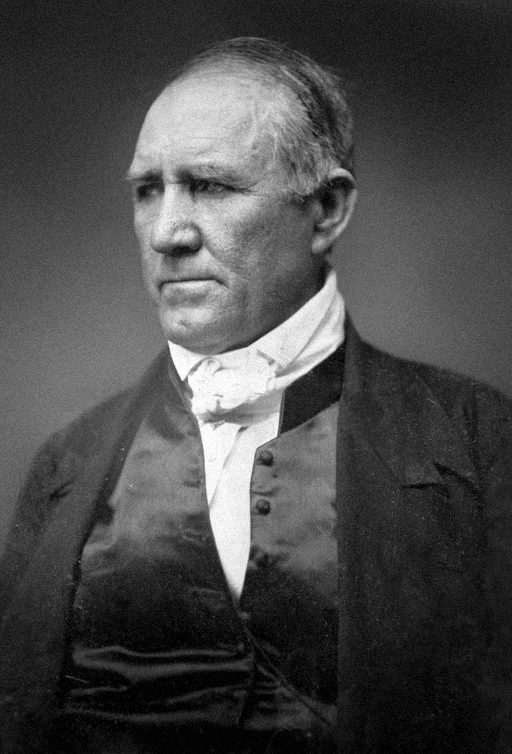
Attr: Oldag07
| 12 Quotes | |
| Occup. | Politician |
| From | USA |
| Born | March 2, 1793 Rockbridge County, Virginia, USA |
| Died | July 26, 1863 Huntsville, Texas, USA |
| Cause | Natural Causes |
| Aged | 70 years |
| Cite | |
Citation Formats
APA Style (7th ed.)
Sam houston biography, facts and quotes. (2026, February 11). FixQuotes. https://fixquotes.com/authors/sam-houston/
Chicago Style
"Sam Houston biography, facts and quotes." FixQuotes. February 11, 2026. https://fixquotes.com/authors/sam-houston/.
MLA Style (9th ed.)
"Sam Houston biography, facts and quotes." FixQuotes, 11 Feb. 2026, https://fixquotes.com/authors/sam-houston/. Accessed 5 Apr. 2026.
Early Life and Background
Sam Houston was born on March 2, 1793, in Rockbridge County, Virginia, into the aftershocks of the Revolutionary generation and the hard arithmetic of the early republic: land hunger, debt, and thin institutions on the frontier. His father, Major Samuel Houston, died in 1807, and the family drifted west to Maryville, Tennessee, near Cherokee country. The boy who would become a maker of states first learned what it meant to live without one - to be shaped by bereavement, by a widowed household, and by the pressure to earn authority before he possessed it.At sixteen he fled clerking and apprenticeship and lived for years among the Cherokee along the Hiwassee and Tennessee rivers, adopted into the community and given the name "Colonneh" (the Raven). That interlude mattered less as romance than as moral apprenticeship: Houston absorbed Indigenous diplomacy, the realities of removal, and the humiliations inflicted by "civilization" campaigns, experiences that later complicated his politics in ways many contemporaries found intolerable.
Education and Formative Influences
Houston's schooling was brief and irregular, and he never belonged to the genteel class that treated classical education as a birthright; he compensated through voracious reading, theatrical oratory, and a gift for personal persuasion. In Tennessee he was drawn into the orbit of Andrew Jackson, whose mix of frontier hardness, nationalism, and patronage politics became Houston's early template. The War of 1812 then supplied what his education could not: a battlefield credential and an intimate view of how the young republic used violence to consolidate authority along its margins.Career, Major Works, and Turning Points
He enlisted in 1813, fought under Jackson, and was severely wounded at Horseshoe Bend (1814) against the Red Stick Creeks, a wound that became both badge and burden. After law study and rapid rise, he served in Congress (1823-1827) and as governor of Tennessee (1827-1829), only to collapse spectacularly after a short marriage to Eliza Allen and resign - a personal rupture that sent him back toward Cherokee refuge and alcohol-fueled scandal, including a notorious 1832 beating of Congressman William Stanbery that led to trial and public humiliation. Reinventing himself again, he moved to Mexican Texas in 1832, entered the revolt against Santa Anna, and, as commander in chief, chose delay, retreat, and then a sudden strike at San Jacinto (April 21, 1836), capturing Santa Anna and securing Texan independence. As president of the Republic of Texas (1836-1838; 1841-1844), he pursued recognition, fiscal restraint, and peace with Native nations while balancing annexation pressures. After statehood he became U.S. senator (1846-1859) and then governor (1859-1861), opposing secession; in 1861 he refused to swear allegiance to the Confederacy and was deposed, spending his last years in Huntsville, dying July 26, 1863.Philosophy, Style, and Themes
Houston's inner life was a contest between craving and conscience: he wanted fame, yet feared becoming a caricature of power. That tension produced a politics of restraint unusual for an era addicted to maximal gestures. He distrusted mobs and self-anointed purists, preferring legitimacy, treaties, and time. Even his triumph at San Jacinto reflected this temperament - not the romantic charge, but the patient refusal to be forced into premature battle. Beneath the bravado was an anxious moral bookkeeping: he could live with enemies, even ridicule, but not with the sense that he had betrayed a standard he could name.Three themes recur: freedom anchored in learning, sympathy for the dispossessed, and loyalty to constitutional order over sectional passion. He argued that civic survival required broad literacy and practical knowledge - “The benefits of education and of useful knowledge, generally diffused through a community, are essential to the preservation of a free government”. - a remark that also reveals his insecurity about his own schooling and his determination to build the scaffolding he lacked. His Cherokee years became an ethical claim he would not surrender: “I am aware that in presenting myself as the advocate of the Indians and their rights, I shall stand very much alone”. And when the crisis of 1861 arrived, his identity as a Texan did not yield to the romance of rebellion; constitutional fidelity became the last refuge of his honor - “In the name of the constitution of Texas, which has been trampled upon, I refuse to take this oath. I love Texas too well to bring civil strife and bloodshed upon her”. His style in public mirrored the man: vivid, story-driven, sometimes coarse, but aimed at persuading ordinary voters rather than impressing elites.
Legacy and Influence
Houston endures because he embodied the contradictions of American expansion while refusing to be reduced to them: an architect of Texan independence who sought peace when war was popular, a slaveholding Southerner who rejected secession, a Jacksonian who defended Native rights, a frontier celebrity who feared dishonor more than defeat. Cities, schools, and monuments bear his name, but his deeper legacy is the example of a politician treating legitimacy as a moral boundary - the belief that a leader's duty is not merely to win, but to prevent the victories that poison the future.Our collection contains 12 quotes written by Sam, under the main topics: Wisdom - Freedom - Learning - Honesty & Integrity - Knowledge.
Other people related to Sam: William H. Wharton (Politician), Jake Roberts (Celebrity)
Source / external links