
Sam Keen Biography Quotes 4 Report mistakes
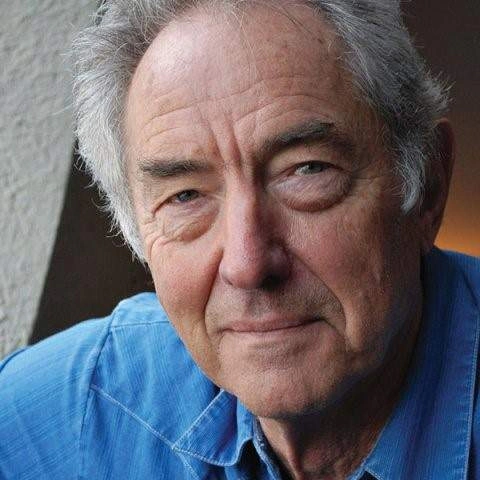
| 4 Quotes | |
| Born as | Samuel Keen |
| Occup. | Author |
| From | USA |
| Spouse | Kathleen Keen |
| Born | August 31, 1935 New York, USA |
| Died | June 27, 2020 Mill Valley, California, USA |
| Cause | Natural Causes |
| Aged | 84 years |
| Cite | |
Citation Formats
APA Style (7th ed.)
Sam keen biography, facts and quotes. (2026, February 11). FixQuotes. https://fixquotes.com/authors/sam-keen/
Chicago Style
"Sam Keen biography, facts and quotes." FixQuotes. February 11, 2026. https://fixquotes.com/authors/sam-keen/.
MLA Style (9th ed.)
"Sam Keen biography, facts and quotes." FixQuotes, 11 Feb. 2026, https://fixquotes.com/authors/sam-keen/. Accessed 27 Mar. 2026.
Early Life and Background
Samuel "Sam" Keen was born on August 31, 1935, in the United States, coming of age in the long American aftershock of the Great Depression and World War II - an era that promised stability through conformity while quietly breeding anxieties about meaning, masculinity, and the uses of power. His early adulthood unfolded alongside the Cold War and the rise of mass media, conditions that helped form his lifelong suspicion of borrowed identities and prefabricated certainty. Even before he became publicly known, Keen was drawn to questions that felt both intimate and political: What makes a life worth living, and what happens to the self when a culture rewards performance over presence?Keen later wrote and spoke as a man trying to reconcile inner life with public life, and his biography reads as a sustained attempt to rescue the personal from the impersonal. The postwar expansion offered Americans jobs, suburbs, and scripted aspirations; Keen kept returning to what those scripts cost. In his best work, he treated the private psyche as a legitimate site of history, arguing that wars, careers, romances, and ideologies all begin in the often-unexamined theater of the heart.
Education and Formative Influences
Keen was educated in the humanities and trained in philosophy and theology, settings that immersed him in classical questions about virtue, suffering, and the formation of conscience while also exposing him to the modern crisis of faith and authority. The intellectual climate of mid-century America - existentialism in the air, psychotherapy entering everyday language, and religious institutions rethinking their public role - offered him a vocabulary for inner conflict. Rather than become a narrowly academic philosopher, he moved toward a more public, essayistic mode, blending psychology, myth, ethics, and social critique in a way that reflected the era's hunger for meaning beyond credentials.Career, Major Works, and Turning Points
Keen became known as an author who translated big ideas into plain-spoken moral inquiry, often using contemporary life as his laboratory. His early prominence grew through books and lectures that treated the self as a project requiring courage rather than mere self-expression, and he became especially associated with explorations of modern manhood, spiritual longing, and the psychological roots of violence. A major turning point came with his widely read work on masculinity, Fire in the Belly, which reframed "male issues" not as cultural grievance but as a spiritual and ethical task, urging men to confront fear, aggression, and father-hunger without hiding behind either machismo or cynicism. Across his career, he occupied a distinctive space between scholarship and self-help, resisting the quick fix while still speaking to general readers.Philosophy, Style, and Themes
Keen's core theme was integrity - the alignment of desire, responsibility, and honest self-knowledge. He wrote as a diagnostician of disconnection: disconnection between work and calling, between intimacy and idealization, between civic life and interior life. His prose favored parable, psychological insight, and a quietly prophetic tone, as if he were less interested in winning arguments than in reawakening attention. When he warned that “A society in which vocation and job are separated for most people gradually creates an economy that is often devoid of spirit, one that frequently fills our pocketbooks at the cost of emptying our souls”. , he was exposing a moral psychology: people numb themselves to survive, then confuse numbness for normality.He was also a writer of relational realism, arguing that mature love is an art of perception rather than a reward for finding an ideal partner. “We come to love not by finding a perfect person but by learning to see an imperfect person perfectly”. The sentence functions as both ethic and therapy: it rejects fantasy, insists on attention, and implies that the lover must grow in vision. Underneath his work on men and violence was the same conviction: you cannot transform what you refuse to feel. Hence his insistence on inward inventory - “You can know what's in your life when you know what's in your heart”. - a line that captures his belief that biography is ultimately an inside story, and that cultural critique without self-critique becomes another form of evasion.
Legacy and Influence
Keen died on June 27, 2020, leaving a body of work that helped shape late-20th-century American conversations about masculinity, vocation, intimacy, and the spiritual costs of modern success. He influenced writers and therapists who sought a middle path between academic theory and pop inspiration, and he offered generations of readers a language for shame, longing, and ethical adulthood at a time when many public narratives reduced the self to consumption or ideology. His enduring impact lies in his insistence that the private life is not a retreat from history but one of its engines - and that cultural renewal begins with the courageous, sometimes painful work of seeing clearly.Our collection contains 4 quotes written by Sam, under the main topics: Love - Meaning of Life - Work - Contentment.
Sam Keen Famous Works
- 2005 Sightings: Extraordinary Encounters with Ordinary Birds (Book)
- 1999 Learning to Fly: Trapeze - Reflections on Fear, Trust, and the Joy of Letting Go (Book)
- 1996 To Love and Be Loved (Book)
- 1993 The Passionate Life: Stages of Loving (Book)
- 1991 Fire in the Belly: On Being a Man (Book)
- 1986 Faces of the Enemy: Reflections of the Hostile Imagination (Book)
Source / external links