
Sam Rainsy Biography Quotes 8 Report mistakes
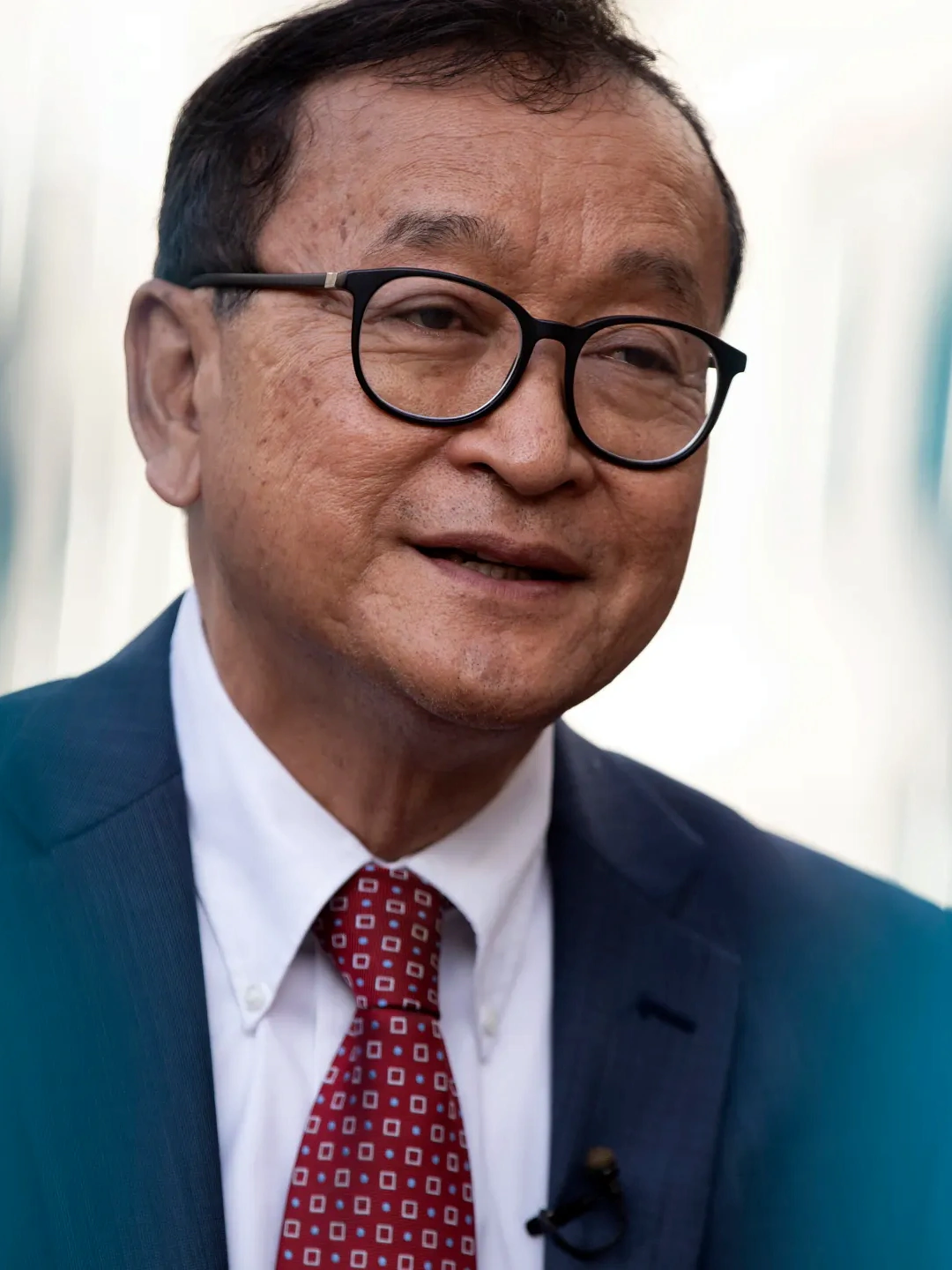
Attr: ABC4 Utah
| 8 Quotes | |
| Native name | សម រង្ស៊ី |
| Occup. | Politician |
| From | Cambodia |
| Spouse | Tioulong Saumura |
| Born | March 10, 1949 Phnom Penh, Cambodia |
| Age | 77 years |
| Cite | |
Citation Formats
APA Style (7th ed.)
Sam rainsy biography, facts and quotes. (2026, March 14). FixQuotes. https://fixquotes.com/authors/sam-rainsy/
Chicago Style
"Sam Rainsy biography, facts and quotes." FixQuotes. March 14, 2026. https://fixquotes.com/authors/sam-rainsy/.
MLA Style (9th ed.)
"Sam Rainsy biography, facts and quotes." FixQuotes, 14 Mar. 2026, https://fixquotes.com/authors/sam-rainsy/. Accessed 5 Apr. 2026.
Early Life and Background
Sam Rainsy was born in 1949 into one of the most politically exposed families in modern Cambodia, and that inheritance marked both his opportunities and his dangers. He was the son of Sam Sary, a prominent statesman under Prince Norodom Sihanouk, and Suon, a woman from an influential family. His childhood unfolded in Phnom Penh during the brief post-independence optimism of the 1950s, when Cambodia tried to balance monarchy, modernization, and Cold War pressure. Yet the household was shadowed by scandal and rupture: Sam Sary fell from favor, went into exile, and died abroad under dark circumstances. For the young Sam Rainsy, politics was never abstract statecraft. It was family drama, fear, and the early lesson that power in Cambodia could be intensely personal, unstable, and punitive.That early instability helps explain the two permanent notes in his public life: an almost moralized hostility to authoritarianism and a marked willingness to confront danger. He came of age as Cambodia slid from Sihanouk's neutralism into war, coup, American bombing, Khmer Republic collapse, and finally the Khmer Rouge catastrophe. Like many educated Cambodians abroad, he survived because he was outside the country when Democratic Kampuchea turned Cambodia into a field of execution and starvation. Exile was therefore not just geographic. It became the emotional condition of an entire generation - cut off from home, burdened by survivor's consciousness, and haunted by the destruction of a social world that had once seemed durable.
Education and Formative Influences
Rainsy studied in France, where he was formed less by a single doctrine than by a political atmosphere: republicanism, parliamentary contestation, and the language of rights. He attended institutions associated with economics, finance, and elite administration, including HEC and the Institut d'Etudes Politiques in Paris, and trained in financial matters that later gave his politics a technocratic edge. He worked in banking and finance, including at Paribas, acquiring the habits of numbers, budgets, and institutional critique that distinguished him from purely movement-based dissidents. France also offered distance from Cambodian fear. In Paris he could compare systems, absorb European liberal and social-democratic traditions, and join the anti-occupation Cambodian diaspora that opposed Vietnam's control after 1979. That combination - exile patriotism, financial literacy, and immersion in French democratic culture - made him unusually suited to become an opposition politician focused on corruption, state capture, and electoral legitimacy rather than guerrilla struggle.Career, Major Works, and Turning Points
Rainsy returned to frontline Cambodian politics through FUNCINPEC in the run-up to the UN-sponsored 1993 election, a watershed meant to restore pluralism after decades of war. Elected to parliament, he briefly served as minister of finance, where he built his reputation by attacking smuggling, patronage, and opaque revenue networks. His dismissal in 1994 after criticizing corruption was decisive: it transformed him from reformist insider into institutional dissenter. He founded the Khmer Nation Party, then after official obstruction and violence, the Sam Rainsy Party, which became the country's most visible democratic opposition. Through the late 1990s and 2000s he survived lawsuits, parliamentary expulsions, threats, and periods of exile, especially under the increasingly dominant rule of Hun Sen and the Cambodian People's Party. He challenged border policy, land grabs, electoral fraud, and the fusion of business and political power; detractors saw him as polarizing, but supporters saw a rare figure willing to name the system plainly. In 2012 his party merged with Kem Sokha's movement to form the Cambodia National Rescue Party, creating the strongest electoral challenge the regime had faced. The CNRP's gains in the 2013 election and 2017 local polls showed the depth of urban and youth discontent, but they also triggered harsher repression. The party was dissolved by the Supreme Court in 2017, Rainsy remained abroad, and his career entered a final phase defined by transnational opposition rather than parliamentary struggle at home.Philosophy, Style, and Themes
Rainsy's political philosophy is best understood as ethical anti-authoritarianism expressed through institutional language. Unlike revolutionaries who glorify rupture, he persistently framed Cambodia's crisis in terms of missing norms - dialogue, transparency, law, accountability, elections with meaning. “In order for international assistance to be effectively used, we need democracy. We need transparency. We need the rule of law. We need accountability”. That cadence is revealing: it is prosecutorial, almost auditor-like, the voice of a man trained to inspect systems for leakages and fraud. Yet beneath the administrative vocabulary lies an intensely personal drama of risk and duty. “I am prepared to sacrifice my freedom, and even my life, to give democracy a chance to help ensure freedom for my unfortunate people”. The sentence is not merely rhetorical militancy. It reflects the exile's burden - a man who survived national catastrophe and therefore casts political action as obligation rather than career.His style joined moral clarity to confrontation. He preferred naming enemies, exposing mechanisms, and mobilizing grievance, sometimes at the cost of broad coalition-building. Critics argued that this sharpened polarization; admirers answered that euphemism had long protected impunity. Still, one of his most consistent themes was that durable peace requires speech not fear: “Only a genuine culture of dialogue is the basis for genuine democracy and the basis of sustainable peace”. The tension between these impulses - combative opposition and principled dialogue - defines his public psychology. He is at once a tribune and an institutionalist, a man of the rally and the memorandum, animated by democratic hope but also by memory of betrayal, dispossession, and the repeated closure of lawful avenues in Cambodian politics.
Legacy and Influence
Sam Rainsy's legacy lies less in office held than in the political vocabulary he normalized in Cambodia: corruption as a structural issue, democracy as more than ritual voting, and opposition as a legitimate patriotic role rather than treason. For three decades he helped turn dissent into an organized, electorally credible force, especially among urban workers, students, overseas Cambodians, and younger voters impatient with one-party dominance. His influence also extends beyond his own fortunes: the CNRP's rise reshaped Cambodian politics even after its destruction, proving that the regime's aura of inevitability could crack. He remains divisive - celebrated as a democratic symbol, criticized for tactical missteps, personalistic leadership, and rhetoric that sometimes hardened divides - but his historical place is secure. In a country where fear has often been a governing method, he made defiance imaginable and gave institutional form to the idea that Cambodia's future should be argued over in public, under law, by citizens rather than settled by force or patronage.Our collection contains 8 quotes written by Sam, under the main topics: Justice - Freedom - New Beginnings - Peace - Investment.
Source / external links