
Sam Walton Biography Quotes 9 Report mistakes
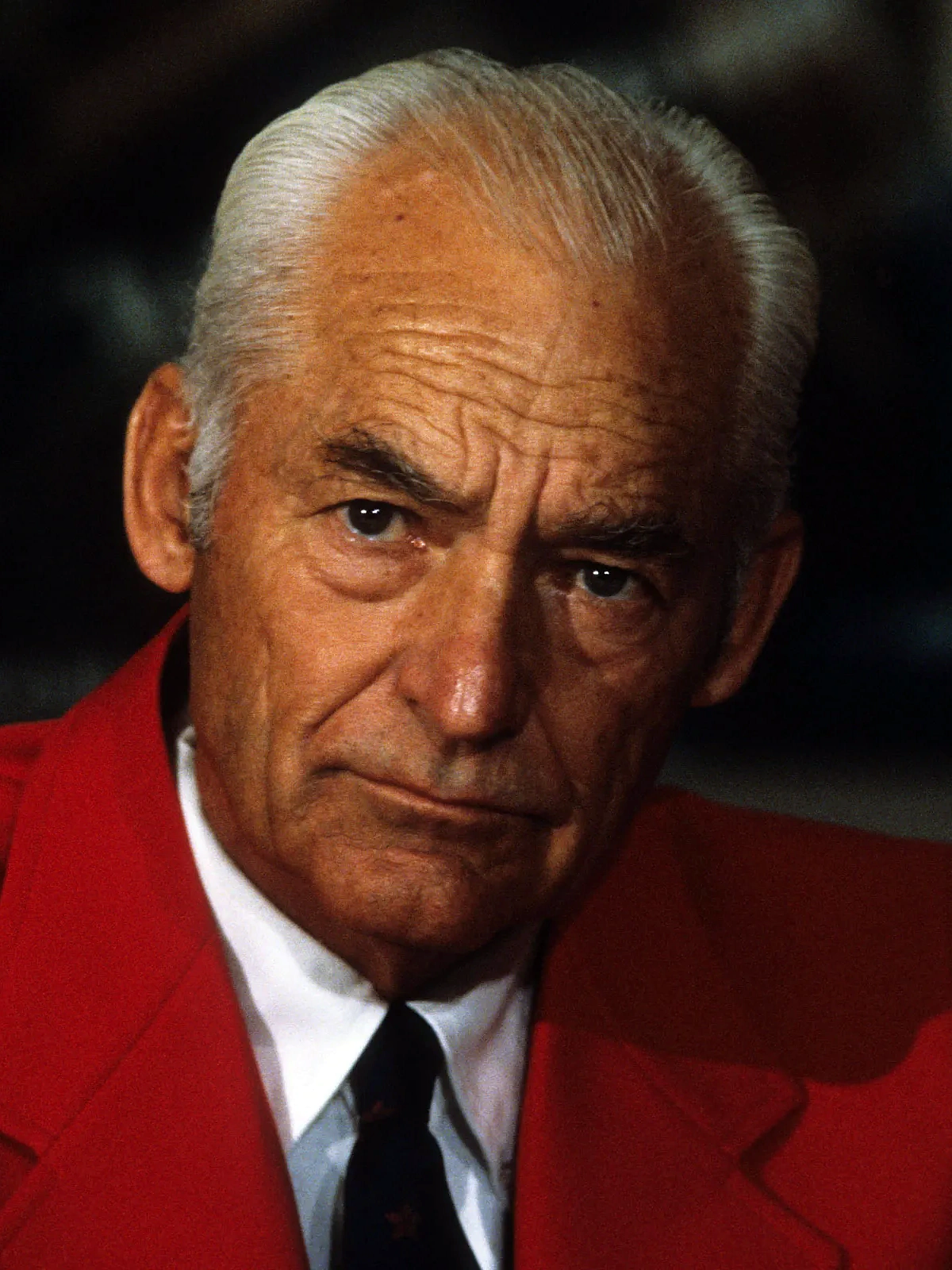
| 9 Quotes | |
| Born as | Samuel Moore Walton |
| Occup. | Businessman |
| From | USA |
| Born | March 29, 1918 Kingfisher, Oklahoma |
| Died | April 6, 1992 Little Rock, Arkansas |
| Cause | Multiple myeloma |
| Aged | 74 years |
| Cite | |
Citation Formats
APA Style (7th ed.)
Sam walton biography, facts and quotes. (2026, February 11). FixQuotes. https://fixquotes.com/authors/sam-walton/
Chicago Style
"Sam Walton biography, facts and quotes." FixQuotes. February 11, 2026. https://fixquotes.com/authors/sam-walton/.
MLA Style (9th ed.)
"Sam Walton biography, facts and quotes." FixQuotes, 11 Feb. 2026, https://fixquotes.com/authors/sam-walton/. Accessed 6 Mar. 2026.
Early Life and Background
Samuel Moore Walton was born on March 29, 1918, in Kingfisher, Oklahoma, as the United States tilted from agrarian life into mass consumer modernity. His parents, Thomas Gibson Walton and Nancy Lee, moved the family through Missouri during the lean interwar years, and the boy learned early that security was provisional. He sold magazine subscriptions, delivered newspapers, and took on odd jobs not as charming anecdotes but as practical rehearsals for a lifetime habit - watching margins, measuring demand, and absorbing how ordinary families made choices when money was tight.Walton came of age in a culture that prized self-reliance but offered little mercy during the Great Depression. Those constraints shaped his inner life: energetic, competitive, and intensely attentive to small efficiencies, yet also uneasy about waste and complacency. Friends and later colleagues noted his physical restlessness and his plainspoken, folksy manner - an outward modesty that coexisted with fierce ambition and a need to prove that scale could be achieved without losing the feel of a hometown store.
Education and Formative Influences
He attended the University of Missouri, graduating in 1940 with a degree in economics, and joined the student body culture of performance and persuasion that suited his sales instincts. After a stint at J.C. Penney in Des Moines, where he absorbed the disciplines of retail math and service, he served in the U.S. Army during World War II, an era that standardized logistics and expanded the American middle class. In 1943 he married Helen Robson, whose financial acumen and family support proved decisive: she steadied his risk-taking and helped anchor the family in Arkansas, the region where he would build his empire.Career, Major Works, and Turning Points
In 1945 Walton took a franchise Ben Franklin variety store in Newport, Arkansas, and began the pattern that defined him: relentless cost-cutting, aggressive pricing, and unusual attention to what customers actually bought. When a landlord later declined to renew his lease, Walton treated the loss as a tactical retreat, relocating to Bentonville and opening "Walton's 5 and 10" in 1950. He expanded into small towns other chains dismissed, betting that distribution and price would beat glamour. In 1962 he opened the first Wal-Mart Discount City in Rogers, Arkansas; by the 1970s and 1980s he fused rural saturation with sophisticated logistics, pioneering cross-docking and a data-driven supply chain that turned distance into advantage. The company went public in 1970, grew into a national force, and by the end of his life had reshaped the terms of American retail, even as Walton battled cancer and delegated day-to-day control without fully surrendering his feel for the sales floor.Philosophy, Style, and Themes
Walton's guiding psychology was a blend of impatience with convention and a moral belief that low prices were a kind of social good. He framed ambition as a discipline of standards rather than ego - “High expectations are the key to everything”. For him, the sentence was less motivational than diagnostic: raise the bar and you force the organization to find new methods, new vendors, new layouts, new routes. That internal pressure explains his habit of showing up unannounced, counting cars in the parking lot, and interrogating tiny operational choices - behaviors that could feel intrusive but were rooted in an anxiety that success breeds softness.He also cast retail as an act of service with sharp consequences, insisting that power flows upward from the cash register: “There is only one boss. The customer. And he can fire everybody in the company from the chairman on down, simply by spending his money somewhere else”. This was not rhetoric; it justified his refusal to chase fashionable locations and his willingness to offend competitors with brutal pricing. Yet Walton knew he could not scale his own intensity without creating a culture that distributed pride and responsibility. “We're all working together; that's the secret”. The line reveals his paradox: a famously competitive man who believed collaboration was the only sustainable engine, and who used rituals, store visits, and profit-sharing to turn frontline employees into participants in the mission.
Legacy and Influence
When Walton died on April 6, 1992, in Little Rock, Arkansas, Wal-Mart was already a template for the late-20th-century economy: big-box convenience, supply-chain mastery, and a managerial creed that treated information as a competitive weapon. His influence is enduring and contested - celebrated for lowering consumer costs and professionalizing logistics, criticized for labor pressures and for accelerating the decline of many small retailers. Through the Walton family's philanthropy and governance, and through the countless companies that copied his distribution tactics and pricing ethos, Walton remains a defining figure in how Americans buy daily life, and in the broader argument over what efficiency should cost a community.Our collection contains 9 quotes written by Sam, under the main topics: Motivational - Leadership - Kindness - Customer Service - Vision & Strategy.
Other people related to Sam: Michael Bergdahl (Author), Lee Scott (Businessman), Jim Walton (Businessman)
Sam Walton Famous Works
- 1992 Sam Walton: Made in America (Autobiography)