
Samantha Smith Biography Quotes 7 Report mistakes
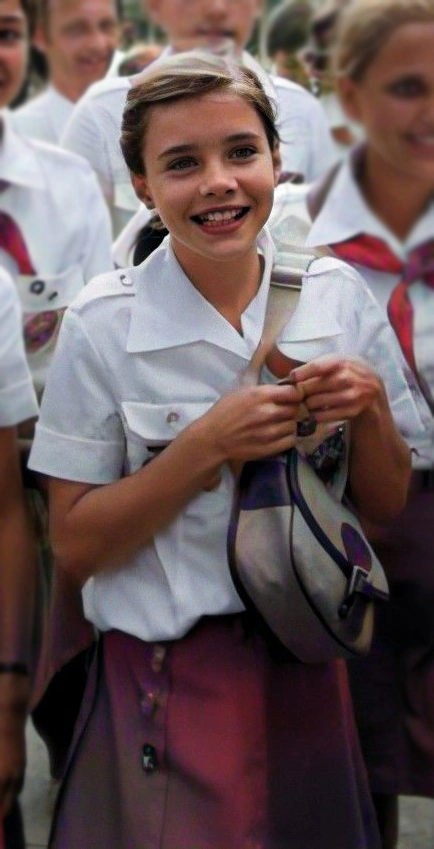
| 7 Quotes | |
| Born as | Samantha Reed Smith |
| Occup. | Celebrity |
| From | USA |
| Born | June 29, 1972 Houlton, Maine, U.S. |
| Died | August 25, 1985 Auburn, Maine, U.S. |
| Cause | Airplane crash |
| Aged | 13 years |
| Cite | |
Citation Formats
APA Style (7th ed.)
Samantha smith biography, facts and quotes. (2026, February 11). FixQuotes. https://fixquotes.com/authors/samantha-smith/
Chicago Style
"Samantha Smith biography, facts and quotes." FixQuotes. February 11, 2026. https://fixquotes.com/authors/samantha-smith/.
MLA Style (9th ed.)
"Samantha Smith biography, facts and quotes." FixQuotes, 11 Feb. 2026, https://fixquotes.com/authors/samantha-smith/. Accessed 28 Mar. 2026.
Early Life and Background
Samantha Reed Smith was born on June 29, 1972, in Houlton, Maine, a small border town shaped by long winters, tight civic ties, and a keen awareness of the wider world beyond its forests and rivers. Her father, Arthur Smith, taught English and later worked in academia; her mother, Jane Sherburne Smith, was a social worker. In a household where reading, conversation, and community service were ordinary habits, Samantha developed an early confidence in speaking to adults as equals - not as performance, but as curiosity.Her childhood unfolded in the shadow of late Cold War anxiety. In the early 1980s, American television and magazines regularly depicted nuclear catastrophe as plausible, and the rhetoric between Washington and Moscow hardened as Soviet leader Yuri Andropov and U.S. President Ronald Reagan faced each other across escalating mistrust. For a child with a literal sense of fairness and a strong moral compass, the threat was not abstract strategy but a personal question: why would grown-ups risk ending the world?
Education and Formative Influences
Samantha attended local schools in Maine, where teachers and classmates remembered a bright, socially engaged student with an aptitude for public speaking and a quick, unpretentious charm. Her formative influences were less ideological than ethical: a family environment that treated empathy as practical, civic life as participatory, and faith as a language for shared responsibility. Media coverage of nuclear tensions, including stories that personalized Soviet intentions as menacing, collided with her instinct to verify claims directly - a childlike method that, in her case, became a serious act of citizenship.Career, Major Works, and Turning Points
In late 1982, at age 10, Samantha wrote a letter to Yuri Andropov asking why the Soviet Union wanted war and whether peace was possible; the letter was published and then answered, turning her into an international symbol of grassroots diplomacy. In 1983 she traveled to the Soviet Union as Andropov's guest, visiting Moscow and Leningrad and spending time at the Artek Young Pioneer camp in Crimea, where cameras followed her as she met children her own age and performed a kind of unscripted cultural translation for audiences on both sides of the Iron Curtain. Her brief career expanded into media appearances and writing, including the book Journey to the Soviet Union, and acting work in the U.S., all while she remained, visibly, a school-aged girl navigating adult expectations. On August 25, 1985, she died at 13 in the crash of Bar Harbor Airlines Flight 1808 near Auburn, Maine, alongside her father; the tragedy froze her public image at the moment when her adolescence might have complicated, deepened, or redirected her role.Philosophy, Style, and Themes
Samantha's public philosophy was disarmingly direct: she treated geopolitics as a moral problem that should withstand an ordinary person's questions. Her style was not the rhetoric of policy - it was the insistence that leaders answer to the human consequences of their choices. She voiced what many adults felt but had been trained to compartmentalize, especially the raw fear beneath strategic language: “Sometimes I still worry that the next day will be the last day of the Earth”. That sentence captures her psychology - neither naive optimism nor fatalism, but a child's honest terror converted into a demand for reassurance grounded in action.Just as important, she refused to let reassurance remain vague. She pressed for specifics - “If you aren't please tell me how you are going to not have a war”. The question is revealing: she was not asking for slogans, but for a plan, a mechanism, a promise that could be examined. In her accounts of what Soviet officials told her, she modeled a careful, almost reporter-like relay of claims and counterclaims - “Well, I asked him who would start the war first”. - showing a mind testing propaganda by following it to its logical endpoint. Underneath the celebrity, her themes were consistent: peace as a shared moral obligation, children as legitimate stakeholders in political decisions, and dialogue as a tool not of softness but of verification.
Legacy and Influence
Samantha Smith's legacy rests on how briefly, and how convincingly, she widened the definition of who could speak in international affairs. In the culture of the early 1980s, when nuclear brinkmanship felt permanent and citizens often experienced politics as spectacle, she embodied a counter-model: personal initiative as public force. Memorials, schools, and peace-related awards in her name kept her story circulating, but her deeper influence is rhetorical - she remains a reference point for child-led activism and for the idea that moral clarity can puncture official narratives. Her life is remembered not because she solved the Cold War, but because she proved that a single, well-aimed question could make superpowers answer out loud.Our collection contains 7 quotes written by Samantha, under the main topics: War - Peace - Anxiety.
Other people related to Samantha: Yuri Andropov (Statesman)
Source / external links