
Samuel Richardson Biography Quotes 62 Report mistakes
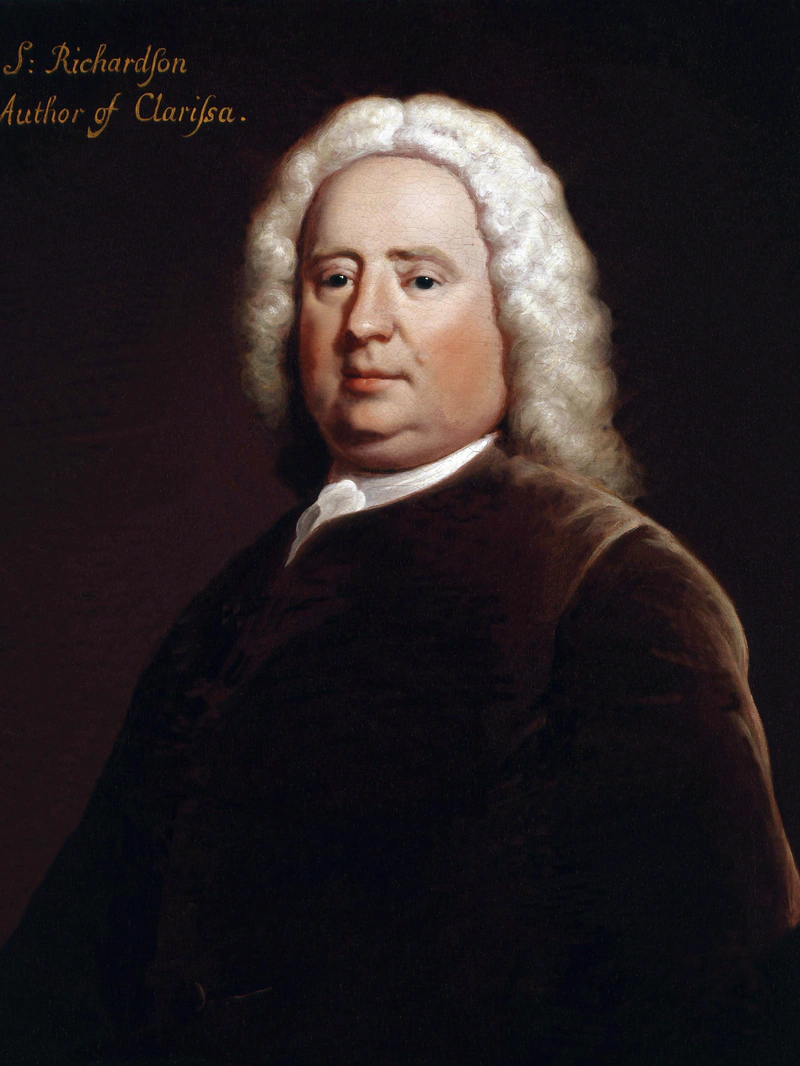
| 62 Quotes | |
| Occup. | Novelist |
| From | England |
| Born | August 19, 1689 Derby, England |
| Died | July 4, 1761 London, England |
| Aged | 71 years |
| Cite | |
Citation Formats
APA Style (7th ed.)
Samuel richardson biography, facts and quotes. (2026, February 11). FixQuotes. https://fixquotes.com/authors/samuel-richardson/
Chicago Style
"Samuel Richardson biography, facts and quotes." FixQuotes. February 11, 2026. https://fixquotes.com/authors/samuel-richardson/.
MLA Style (9th ed.)
"Samuel Richardson biography, facts and quotes." FixQuotes, 11 Feb. 2026, https://fixquotes.com/authors/samuel-richardson/. Accessed 12 Feb. 2026.
Early Life and Background
Samuel Richardson was born on August 19, 1689, in Derbyshire, England, into the unsettled afterglow of the Glorious Revolution and the new Protestant settlement of William and Mary. His father was a joiner whose fortunes rose and fell, and the family moved within the Midlands-London orbit typical of artisans chasing steadier work. Richardson grew up close to the moral language of dissent and the practical discipline of trade: a world that prized credit, reputation, and self-command, and that watched the inner life for signs of backsliding as closely as it watched the ledger.From boyhood he showed an instinct for language as social power. He later recalled being asked to write letters for young women in his neighborhood, a telling apprenticeship in the textures of desire, fear, and compromise - and in the risks a woman ran when her private words became public evidence. That early service, half sympathetic and half observant, foreshadowed the double vision that would define his novels: a faith in sincerity and a fascination with the pressures that distort it.
Education and Formative Influences
Richardson had little formal schooling and was largely self-taught, shaped by the Protestant habit of close reading and by the print culture that was rapidly expanding in early eighteenth-century London. Apprenticed as a printer, he absorbed the mechanics of authorship from the inside - type, paper, deadlines, patronage, and the politics of what could be safely said. The epistolary form was not an abstract literary choice for him; it was the daily instrument of commerce and conscience, a technology for managing relationships at a distance in an increasingly mobile, credit-based society.Career, Major Works, and Turning Points
After completing his apprenticeship, Richardson became a successful London printer and later Master of the Stationers' Company, respectable enough to publish for others before he dared publish himself. His turning point came when he was commissioned to compile a letter-writing manual, which became the seedbed for his first novel, "Pamela; or, Virtue Rewarded" (1740), a sensation that sparked imitators, parodies, and furious debate about class, chastity, and coercion. He followed it with "Clarissa, or, The History of a Young Lady" (1747-48), a massive tragedy of virtue under siege, and "The History of Sir Charles Grandison" (1753-54), an attempt to imagine exemplary masculinity without libertine glamour. His home at North End, Hammersmith, became a node in a wide correspondence network, and the novelist who had emerged from the printing house learned to manage fame like a publisher - revising, replying, and defending his moral intentions in public.Philosophy, Style, and Themes
Richardson wrote at the moment the English novel was becoming a moral laboratory. His epistolary method turns plot into lived time: hesitation, second thoughts, and the aftertaste of each choice appear on the page as dated entries, not as retrospective summary. The result is psychological intensity that can feel claustrophobic by design, because his central question is how an ordinary person survives the scrutiny of others and the tyranny of inward standards. In his world, identity is not a stable essence but a reputation negotiated under pressure - in families, courtship, workplaces, and above all in the gendered theater of observation.The animating drama is the collision between desire and duty, and he treats love less as romance than as compulsion and moral hazard: "Love is not a volunteer thing". That sentence captures the tremor beneath his scenes of persuasion - the sense that virtue must defend itself not only against villains but against the self's capacity to rationalize surrender. He is equally exacting about the social optics imposed on women, who are judged for visibility itself: "Women are always most observed when they seem themselves least to observe, or to lay out for observation". Richardson's heroines learn that innocence does not protect them from interpretation; it can intensify it. And his sternest moral insight is cumulative: character is tested by endurance, yet endurance invites further testing - "Those who will bear much, shall have much to bear". In "Clarissa" especially, this becomes a bleak theology of suffering in a secularizing age, where institutions meant to safeguard virtue - family, law, even polite society - can become instruments of domination.
Legacy and Influence
Richardson died on July 4, 1761, in London, having helped legitimize the novel as a serious form capable of ethical argument and intimate realism. His work reshaped reading habits by making interiority an event and by training audiences to treat letters, pauses, and revisions as revelations of character. The controversies around "Pamela" and the emotional vastness of "Clarissa" reverberated through European fiction, influencing writers such as Rousseau and later the psychological and domestic traditions of the nineteenth century. If his moral architecture can feel uncompromising, it is also historically precise: he captured a society learning that private feeling and public judgment were no longer separable - and he made that entanglement the engine of modern narrative.Our collection contains 62 quotes written by Samuel, under the main topics: Witty One-Liners - Ethics & Morality - Wisdom - Truth - Love.
Other people related to Samuel: Henry Fielding (Novelist), Christoph Martin Wieland (Poet), Sarah Fielding (Writer), Tobias Smollett (Writer)
Samuel Richardson Famous Works
- 1753 The History of Sir Charles Grandison (Novel)
- 1748 Clarissa; or, the History of a Young Lady (Novel)
- 1740 Pamela; or, Virtue Rewarded (Novel)