
Samuel Taylor Coleridge Biography Quotes 49 Report mistakes
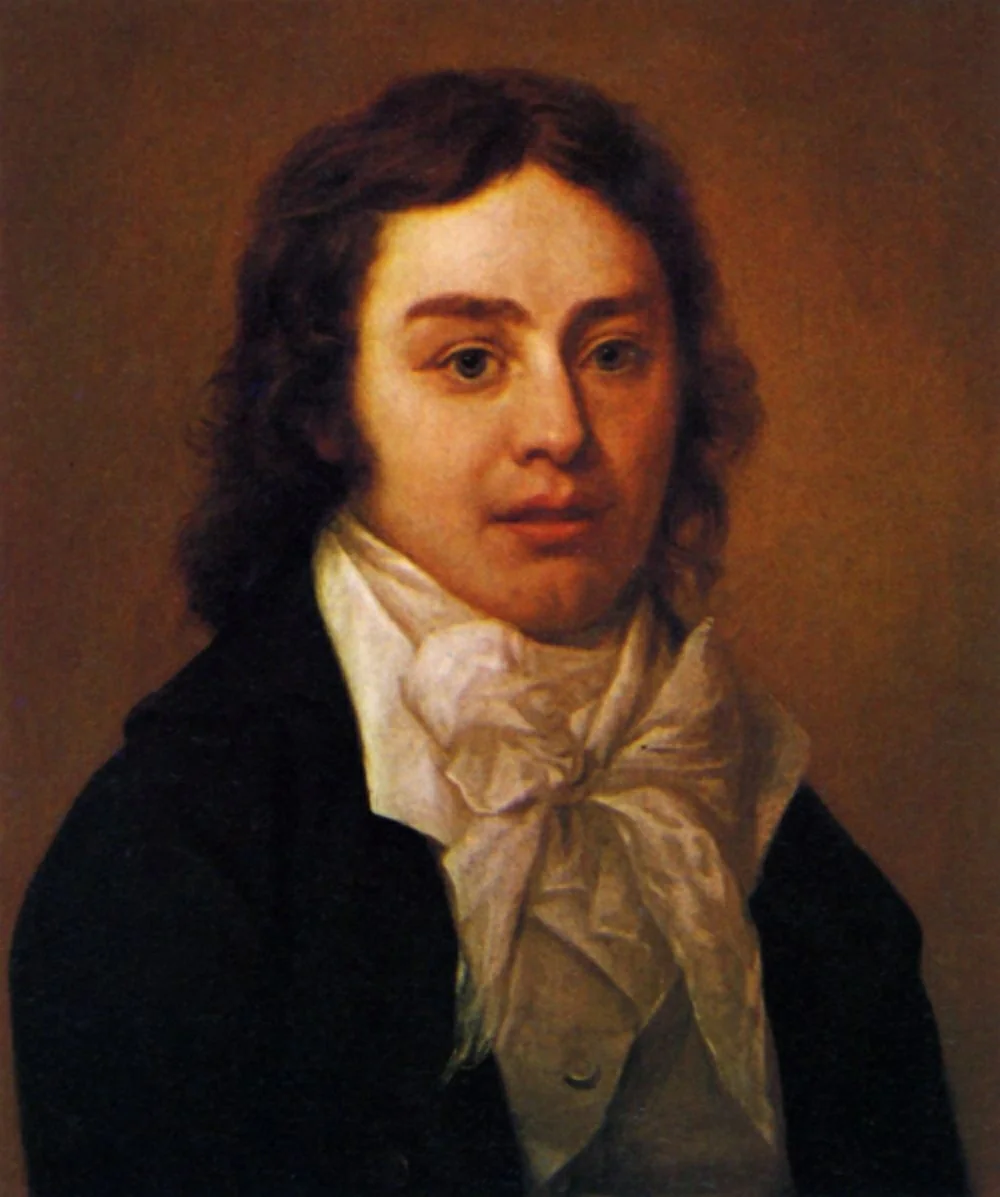
| 49 Quotes | |
| Occup. | Poet |
| From | England |
| Born | October 21, 1772 Ottery St. Mary, Devon, England |
| Died | July 25, 1834 Highgate, England |
| Cause | Heart Failure |
| Aged | 61 years |
| Cite | |
Citation Formats
APA Style (7th ed.)
Samuel taylor coleridge biography, facts and quotes. (2026, February 11). FixQuotes. https://fixquotes.com/authors/samuel-taylor-coleridge/
Chicago Style
"Samuel Taylor Coleridge biography, facts and quotes." FixQuotes. February 11, 2026. https://fixquotes.com/authors/samuel-taylor-coleridge/.
MLA Style (9th ed.)
"Samuel Taylor Coleridge biography, facts and quotes." FixQuotes, 11 Feb. 2026, https://fixquotes.com/authors/samuel-taylor-coleridge/. Accessed 22 Mar. 2026.
Early Life and Background
Samuel Taylor Coleridge was born on October 21, 1772, in Ottery St Mary, Devon, the youngest son of the Rev. John Coleridge, vicar and schoolmaster, and Ann Bowdon. His childhood mixed bookish intensity with the raw emotions of a large, uneven household: early praise for precocity, grief at his father's death in 1781, and a sense of being both cherished and displaced. The result was a temperament that swung between rapture and self-reproach, already drawn to the consolations of language and the idea that imagination might be a moral faculty, not a mere ornament.Sent away from Devon, he learned early the ache of separation and the habit of making inner weather into art. This inner life would remain his workshop and his battleground: a hunger for friendship and belonging, a fear of failure, and a susceptibility to physical pain that later met the era's easy remedies. The English 1790s formed him too - a decade of revolutionary hope and reactionary clampdown, when politics felt like a moral test and the poet could imagine himself a citizen-prophet.
Education and Formative Influences
At Christ's Hospital in London, Coleridge became a brilliant, unruly "Grecian", steeped in classics and dissenting argument, with Charles Lamb among his closest companions. He went on to Jesus College, Cambridge (1791), where debt, restlessness, and radical ideals competed with scholarship; in 1793 he briefly enlisted in the 15th Light Dragoons under an assumed name and was soon retrieved by family. He absorbed theologies of conscience, the rhetoric of the pulpit, Hartleyan associationism, and the new German currents he would later study firsthand, while also meeting Robert Southey and discovering a model of literary brotherhood that felt like salvation.Career, Major Works, and Turning Points
The mid-1790s brought his most visible political dreaming: with Southey he sketched "Pantisocracy", a utopian commune on the Susquehanna, then abandoned it for journalism, lecturing, and precarious family life after his 1795 marriage to Sara Fricker. His defining artistic partnership began in 1797 with William Wordsworth and Dorothy Wordsworth, yielding the joint miracle of Lyrical Ballads (1798): Coleridge's "The Rime of the Ancient Mariner" and "Kubla Khan" (composed in 1797, published 1816) displayed a visionary musicality, while "Christabel" (begun 1797, published 1816) explored psychological enchantment. A trip to Germany (1798-1799) deepened his philosophical range; yet illness and dependence on laudanum tightened their grip, straining friendships and collapsing the promise of sustained poetic production. His later years turned toward criticism and theology - Biographia Literaria (1817), lectures on Shakespeare, and the aphoristic Aids to Reflection (1825) - and, after 1816, a guarded stability under Dr. James Gillman at Highgate, where he died on July 25, 1834.Philosophy, Style, and Themes
Coleridge's central drama was the attempt to make imagination answerable to conscience. He distinguished fancy from imagination, treating the latter as a unifying power that could reconcile opposites - nature and mind, freedom and law, sensation and spirit. His best poems do not merely depict the supernatural; they stage moral causality as a felt experience, so that guilt becomes weather, blessing becomes light, and redemption arrives as renewed perception. His language aims at inevitability rather than decoration, and his celebrated definition, “Poetry: the best words in the best order”. , is less a technical quip than an ethic: order is what the scattered self longs for.That longing is visible in the way he wrote and lived: feverish starts, luminous fragments, then remorse at what he could not finish. The critic in him kept interrogating the performer, suspecting that eloquence could become a substitute for action; “Silence does not always mark wisdom”. reads like a rebuke to his own stalled will as much as to others. Yet he also understood the social electricity of ideas - how a room can be changed by belief - and his sense that “Nothing is so contagious as enthusiasm”. explains both his charisma in conversation and the volatility of his political and spiritual phases. Across poems and prose runs a persistent hope that inward transformation is real, not theoretical, and that thought must become life.
Legacy and Influence
Coleridge helped define English Romanticism: he expanded the permissions of poetic diction, made dream and dread legitimate instruments of truth, and gave criticism a new seriousness by binding aesthetics to psychology and metaphysics. His notions of imagination, symbol, and organic form shaped Victorian criticism and later modern accounts of creativity; his Shakespeare lectures influenced performance and interpretation; his theological writings fed an English tradition of reflective faith. The paradox of his reputation - a mind of vast reach, a life marked by dependency and delay - has only intensified his fascination, making him a case study in how genius negotiates suffering, and how fragments can outlast monuments.Our collection contains 49 quotes written by Samuel, under the main topics: Witty One-Liners - Motivational - Ethics & Morality - Truth - Wisdom.
Other people related to Samuel: Charles Lamb (Critic), John Sterling (Author), Sara Coleridge (Author), Charlotte Smith (Poet), John Wilson (Writer), Mervyn Peake (Writer)
Frequently Asked Questions
- Samuel Taylor Coleridge writing style: His writing style is characterized by vivid imagery, exploration of the supernatural, and philosophical depth.
- Samuel Taylor Coleridge cause of death: Coleridge died likely from heart failure exacerbated by his opium addiction.
- Samuel Taylor Coleridge education: Coleridge attended Christ's Hospital School and later, Jesus College, Cambridge, though he did not complete a degree.
- Samuel Taylor Coleridge as a Romantic poet: Coleridge was a pioneering figure in the English Romantic movement, emphasizing imagination and nature.
- 10 facts about Samuel Taylor Coleridge: 1. Born on October 21, 1772 in Devon, England. 2. Friend and collaborator of William Wordsworth. 3. Contributed to the launch of the Romantic movement. 4. Struggled with opium addiction. 5. Studied at Jesus College, Cambridge. 6. Received a government pension in 1798. 7. Co-founded 'The Watchman', a short-lived newspaper. 8. Married Sara Fricker in 1795. 9. Spent time in Germany to learn philosophy. 10. Died on July 25, 1834 in London.
- Samuel Taylor Coleridge poem: 'The Rime of the Ancient Mariner' is one of his most renowned poems.
- Samuel Taylor Coleridge famous works: Coleridge is best known for 'The Rime of the Ancient Mariner' and 'Kubla Khan'.
- How old was Samuel Taylor Coleridge? He became 61 years old
Samuel Taylor Coleridge Famous Works
- 1817 Biographia Literaria (Autobiography/Philosophical Collection)
- 1816 Christabel (Poem)
- 1816 Kubla Khan (Poem)
- 1798 Lyrical Ballads (Poetry Collection)
- 1798 The Rime of the Ancient Mariner (Poem)
Source / external links