
Samuel Wesley Biography Quotes 1 Report mistakes
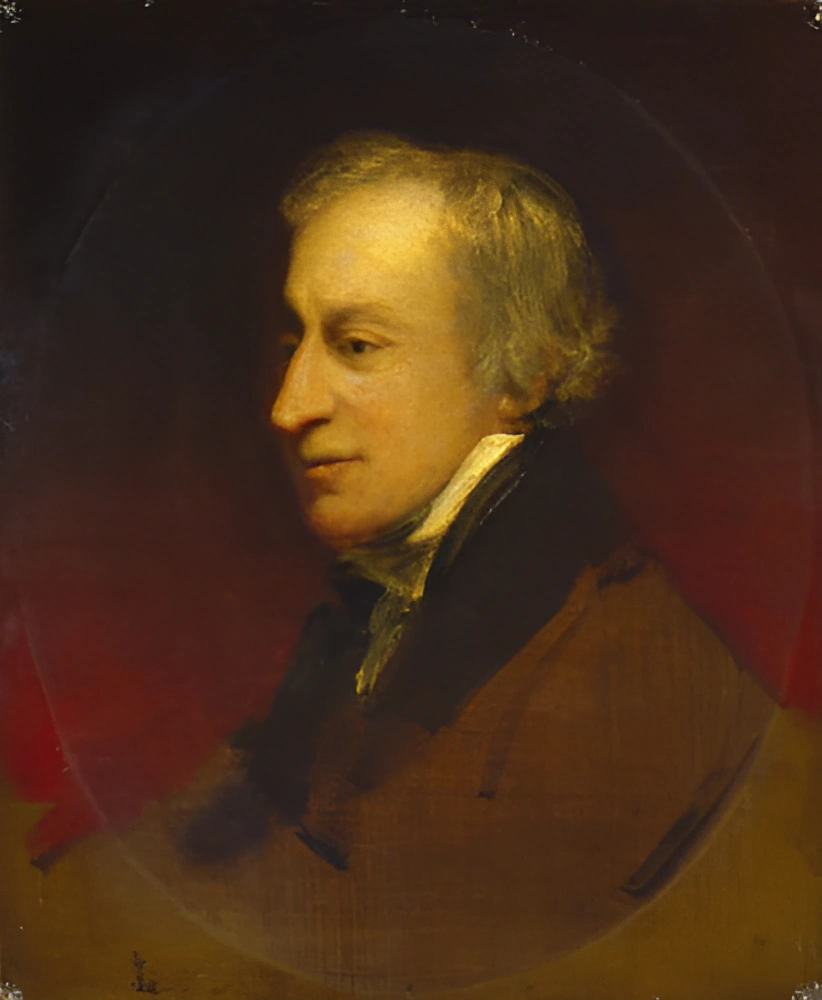
Attr: John Jackson (painter)
| 1 Quotes | |
| Occup. | Composer |
| From | England |
| Born | February 10, 1766 Bristol, England |
| Died | October 11, 1837 London, England |
| Cause | stroke |
| Aged | 71 years |
| Cite | |
Citation Formats
APA Style (7th ed.)
Samuel wesley biography, facts and quotes. (2026, February 11). FixQuotes. https://fixquotes.com/authors/samuel-wesley/
Chicago Style
"Samuel Wesley biography, facts and quotes." FixQuotes. February 11, 2026. https://fixquotes.com/authors/samuel-wesley/.
MLA Style (9th ed.)
"Samuel Wesley biography, facts and quotes." FixQuotes, 11 Feb. 2026, https://fixquotes.com/authors/samuel-wesley/. Accessed 28 Mar. 2026.
Early Life and Background
Samuel Wesley was born on February 10, 1766, in Bristol, England, into a household where music was both trade and inheritance. He was the son of the hymn-writer and theologian Charles Wesley and the nephew of John Wesley, the leaders whose Methodist revival reshaped English religious life. That lineage gave him an early intimacy with sacred poetry, congregational song, and the moral seriousness of dissenting Christianity, even as the Wesleys themselves were becoming an establishment presence through sheer cultural force.In London, where the family later lived, Wesley grew up amid the late-Georgian worlds of chapel, drawing room, and concert hall, at a moment when English musical institutions were reorganizing themselves around public subscription concerts and the prestige of Handel. From childhood he displayed startling facility at the keyboard and in composition, and contemporaries quickly marked him as a prodigy. The tension that would define much of his inner life was already visible: a fiercely independent temperament housed within a famous religious dynasty, and a mind drawn as much to intellectual experiment as to devotional propriety.
Education and Formative Influences
Wesley was largely educated at home, a pattern common among gifted children in ambitious London families, and he absorbed counterpoint and keyboard practice with unusual speed. The chief shaping forces were the English Handelian tradition still dominant in cathedral and oratorio culture, and the newer classical clarity arriving from the Continent. As a young man he came into contact with leading London musicians and thinkers, and his curiosity pushed him beyond local taste: he studied older contrapuntal craft while also following the rhetorical, expressive ideals of the classical era, building a technical foundation that would later make him one of England's most persuasive advocates for J.S. Bach.Career, Major Works, and Turning Points
Wesley worked as organist, composer, conductor, teacher, and writer in London during a period when England was renegotiating its musical identity between Handel-worship and continental classicism. He wrote church music and larger-scale pieces, including an oratorio, Ruth, that shows his attempt to reconcile English choral expectations with a more searching harmonic and contrapuntal language. A major turning point came in his championing of Bach: through friendships with musicians and intellectuals and through practical advocacy, he helped introduce and normalize Bach's music in England, promoting the study and performance of works that would become central to nineteenth-century musical education. His professional life was marked by bursts of intense productivity and by personal complications that strained reputation and stability, yet his musical authority as an organist and his intellectual energy as a proselytizer for "learned" music remained consistent.Philosophy, Style, and Themes
Wesley's musical psychology mixed devotion with contrarian brilliance. Raised in the aura of sacred text and moral exhortation, he nevertheless sought a language in sound that could be both disciplined and daring. His attraction to Bach was not mere antiquarianism but a conviction that complexity could be spiritually and emotionally direct when governed by craft. In his church works and keyboard writing, the pull of English ceremonial breadth meets an insistence on structure - fugue, imitation, and tightly argued harmonic movement - as if he needed musical logic to hold together a mind that often ran ahead of social convention.His aesthetic values can be read as a self-portrait of restraint under pressure. “Style is the dress of thought; a modest dress, Neat, but not gaudy, will true critics please”. For Wesley, that maxim aligns with the way he wielded virtuosity: he could astonish at the organ, but he also respected the severe beauty of counterpoint and the moral authority of musical order. The theme that recurs across his career is reconciliation - between the Wesleys' piety and the artist's autonomy, between public taste and private conviction, between English tradition and German discipline - and the best of his music suggests an inner demand to make feeling intelligible without decorating it into sentimentality.
Legacy and Influence
Wesley died on October 11, 1837, having helped shift English musical culture toward the serious study of Bach and the broader German canon that would dominate Victorian musical life. If some of his own compositions remained less frequently performed than those of the masters he promoted, his influence persisted through pedagogy, performance practice, and the changing standards of what English musicians considered intellectually and spiritually weighty. In biography as in music history, he stands as a hinge figure: a child of evangelical England who became, by force of taste and argument, one of the key agents in England's nineteenth-century reorientation toward contrapuntal rigor and continental depth.Our collection contains 1 quotes written by Samuel, under the main topics: Poetry.
Other people related to Samuel: Charles Wesley (Clergyman)
Source / external links