
Sarah Hughes Biography Quotes 5 Report mistakes
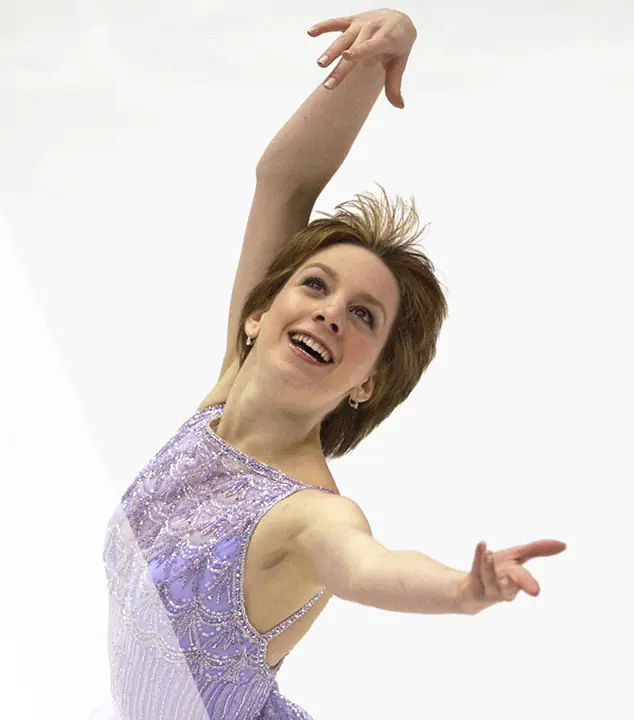
| 5 Quotes | |
| Born as | Sarah Elizabeth Hughes |
| Occup. | Athlete |
| From | USA |
| Born | May 2, 1985 Great Neck, New York, USA |
| Age | 40 years |
Sarah Elizabeth Hughes was born in 1985 and grew up in Great Neck, New York, in a close-knit American family that prized both education and effort. Surrounded by siblings who were active and curious, she developed an early sense of discipline that helped her manage the demanding routine required by elite sport. The rink quickly became a second home, and her parents organized life around early-morning practices and long weekends at competitions. Among her siblings, Emily Hughes would become especially significant: a training partner, confidante, and later a U.S. Olympian in her own right. The shared experience of rising through the ranks created a family dynamic centered on mutual support, car rides to rinks, and the rhythm of school, training, and competition.
Beginnings in Figure Skating
Introduced to skating as a child, Hughes progressed rapidly through regional and national levels. She trained under experienced coaches who emphasized edges, flexibility, and jump technique, and she benefited from choreographers and rink communities that encouraged musicality and performance quality. Based with the Skating Club of New York and spending periods training in storied rinks like Lake Placid, she learned to combine athletic difficulty with expressive skating. Early junior successes signaled her potential, and by her mid-teens she had established herself as one of the United States' leading ladies, known for jump combinations and a calm competitive temperament.
Breakthrough on the World Stage
Hughes's first major international acclaim came when she medaled at the World Championships as a teenager, a sign that she could contend with the sport's elite. That podium finish placed her alongside the era's most formidable competitors and foreshadowed the Olympic showdown to come. The women dominating the landscape, Michelle Kwan, Irina Slutskaya, and Sasha Cohen, each brought distinct strengths. Hughes's emergence in that field was a statement of depth in U.S. skating and evidence of her ability to deliver under pressure. Her team, including coach Robin Wagner and a circle of trainers and family members, focused on refining jump consistency and maximizing the second half of programs, where bonus points could tip the balance.
Salt Lake City 2002
At the 2002 Winter Olympics in Salt Lake City, Hughes arrived as an underdog compared with pre-event favorites Kwan and Slutskaya. After the short program she sat off the lead, which meant her free skate would need both technical difficulty and clean execution. In one of the sport's most memorable nights, she produced a dynamic long program packed with triple jumps and confident transitions, sustaining speed and control through each element. The performance vaulted her past the leaders and secured the Olympic gold medal. It was an upset defined not by others' mistakes but by the completeness of her own skate, athletic, intricate, and delivered at the moment of greatest scrutiny. The image of Hughes finishing her program, then waiting with her coach for scores that would rewrite expectations, became a defining snapshot of the Games.
After the Olympics
In the seasons that followed, Hughes balanced the demands of public life with a desire to keep growing beyond competitive titles. She continued to compete for a time while also performing in professional exhibitions and tours, connecting with audiences in a way that competition schedules sometimes limit. Appearances with major skating ensembles brought her together with peers and former rivals, turning the intensity of Olympic competition into camaraderie on the ice. Throughout, she stayed close to her support network, her family, Robin Wagner, trusted medical and conditioning staff, who helped her navigate the shift from teenage champion to young adult setting longer-term goals.
Education and Professional Life
A consistent theme in Hughes's story is her commitment to academics. Even during her competitive peak, she prioritized schoolwork and public service opportunities. After stepping back from full-time competition, she pursued higher education at a leading university and built a career that drew on the same traits that once drove her training: preparation, poise under pressure, and an appetite for hard problems. She remained engaged with the skating community through mentoring, occasional performances, and appearances that promoted youth sport. Balancing professional endeavors with outreach work, she used her platform to encourage young athletes, especially girls, to see education as a partner to sport rather than a rival.
Relationships and Influences
The people around Hughes were central to her trajectory. Emily Hughes was more than a sister; she was a day-to-day presence on the ice and a reminder that careers in sport are shared enterprises. Coach Robin Wagner provided the technical blueprint and psychological steadiness that enabled Hughes to peak at the right time. In competition, Michelle Kwan's peerless consistency, Irina Slutskaya's power, and Sasha Cohen's flexibility and line set a standard that sharpened Hughes's own skating. Judges, officials, and the club volunteers who staffed events formed a broader network of support. Together, this community shaped her understanding of excellence as a collective effort.
Legacy
Sarah Hughes's legacy rests on more than a single gold medal. She represents the idea that preparation creates the conditions for transformative moments, and that the most dramatic victories are rooted in years of quiet work. For American figure skating, her Olympic win broadened the narrative beyond perpetual favorites, proving the depth of the field and the sport's capacity for surprise. For parents, coaches, and young skaters, her path highlights the value of balance: education alongside practices, humility alongside ambition, community alongside individual achievement. As an athlete, student, professional, and mentor, she has carried forward the lessons learned on cold mornings at the rink, translating them into a life defined by persistence, gratitude, and the confidence to deliver when it matters most.
Our collection contains 5 quotes who is written by Sarah, under the main topics: Victory - Sports - Training & Practice.
Source / external links