
Saul Bellow Biography Quotes 30 Report mistakes
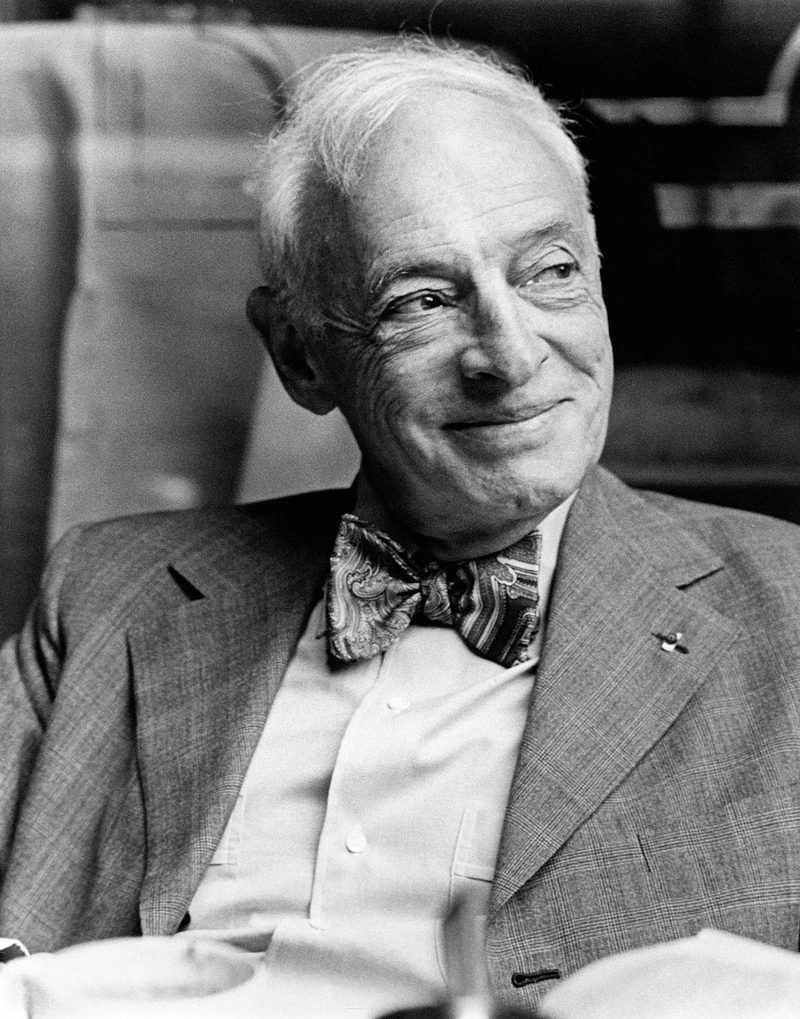
Attr: The New Yorker
| 30 Quotes | |
| Occup. | Novelist |
| From | USA |
| Born | June 10, 1914 |
| Died | April 5, 2005 |
| Aged | 90 years |
| Cite | |
Citation Formats
APA Style (7th ed.)
Saul bellow biography, facts and quotes. (2026, February 13). FixQuotes. https://fixquotes.com/authors/saul-bellow/
Chicago Style
"Saul Bellow biography, facts and quotes." FixQuotes. February 13, 2026. https://fixquotes.com/authors/saul-bellow/.
MLA Style (9th ed.)
"Saul Bellow biography, facts and quotes." FixQuotes, 13 Feb. 2026, https://fixquotes.com/authors/saul-bellow/. Accessed 26 Mar. 2026.
Early Life and Education
Saul Bellow was born on June 10, 1915, in Lachine, Quebec, to Russian Jewish parents, and grew up in a Yiddish-speaking household. In 1924, the family moved to Chicago, the city that would become the deep reservoir of his subjects, voices, and settings. He came of age in the Humboldt Park neighborhood, where the friction and vitality of immigrant life impressed themselves on him as indelible material. Libraries and public schools offered him both refuge and ambition; he read widely and early and developed a durable sense that the American city and the life of the mind could meet in fiction without either being diminished.Bellow studied at Northwestern University, graduating in 1937. He pursued graduate work in anthropology before turning decisively to literature. In these years he entered circles of the New York and Chicago intellectuals, reading and arguing with vigor. He married young and supported himself with a variety of jobs while beginning to write. Close friendships with writers and critics would shape his early path, among them Delmore Schwartz and Isaac Rosenfeld, whose brilliance and volatility left marks on Bellow's imagination.
Emergence as a Novelist
Bellow's first two novels, Dangling Man (1944) and The Victim (1947), introduced a voice that was at once skeptical, comic, and metaphysical. They are spare books about isolation and conscience in wartime and postwar America, and they announced a novelist intent on probing the inner weather of his protagonists rather than merely recording social surfaces. Around the same time, he began publishing in Partisan Review, the crucible of the "New York intellectuals", where editors Philip Rahv and William Phillips fostered debates that mattered to him. He was also a crucial mediator between Yiddish and English when he translated Isaac Bashevis Singer's "Gimpel the Fool" into English in 1953, a translation that helped introduce Singer to a broad American readership.The Adventures of Augie March (1953) changed the scale and sound of his work. Its opening declaration, and the exuberant, comic, and resourceful Chicago picaresque that followed, made clear that Bellow had found an American idiom roomy enough to carry his philosophical inquiry. Seize the Day (1956) compressed the drama of a floundering man into a short, devastating book, while Henderson the Rain King (1959) took a wealthy, tormented American to Africa to test the reach of his yearning and the limits of self-knowledge. In this period Bellow befriended and debated other novelists, including Ralph Ellison, with whom he shared a concern for the pressures of American modernity on identity and voice.
Mature Work and Recognition
Herzog (1964), perhaps his most iconic work, uses the form of unsent letters to reveal a man in crisis, thinking through betrayal, marriage, intellect, and the fate of his own life with a ferocious, funny, self-surveying energy. Mr. Sammler's Planet (1970) brought a European survivor's gaze to the upheavals of the 1960s, while Humboldt's Gift (1975) returned to the vexed drama of friendship and art, drawing on his long, complicated bond with Delmore Schwartz. These books secured Bellow's standing as a novelist who could join street talk to metaphysical questioning without forfeiting either.Recognition followed at the highest level. He won the National Book Award three times, for The Adventures of Augie March, Herzog, and Mr. Sammler's Planet, a record that underlined his dominance in postwar American fiction. Humboldt's Gift earned the Pulitzer Prize in 1976. Later that same year he received the Nobel Prize in Literature, cited for a work that combined human understanding with a subtle analysis of contemporary culture. The Swedish Academy recognized what many critics, including Alfred Kazin and Irving Howe, had long been saying: that Bellow had found a new amplitude for the American novel.
Teacher and Public Figure
Bellow spent many years teaching, most influentially at the University of Chicago on the Committee on Social Thought, where he worked alongside scholars such as Allan Bloom and Edward Shils. The arrangement suited him: he could converse across philosophy, politics, and literature while continuing to write. He later taught at Boston University, carrying the Chicago sensibility to another urban campus and remaining accessible to students and younger writers. He was a trusted friend and interlocutor for colleagues and protégés, and he inspired admiration from novelists and critics across generations, including Martin Amis and James Wood, who often wrote about his prose.He also wrote essays and reportage, most notably To Jerusalem and Back (1976), a searching account of a visit to Israel that combined observation with moral inquiry. Bellow was an unapologetic public intellectual, drawn into arguments about the fate of cities, the burdens and gifts of immigrant life, and the responsibilities of culture in a democratic society. His quips and provocations made him a figure in larger debates about multiculturalism and the university, and his correspondence with fellow writers, among them Philip Roth, tracked the changing landscape of American letters.
Personal Life
Bellow's personal life was complex and often turbulent. He married five times: to Anita Goshkin; to the painter Alexandra Tschacbasov; to Susan Glassman; to the Romanian-born mathematician Alexandra Ionescu-Tulcea (widely known as Alexandra Bellow); and, late in life, to Janis Freedman. He had three sons, Gregory, Adam, and Daniel, and, with Janis Freedman Bellow, a daughter, Naomi. Family life, with its fractures and loyalties, furnished material for his fiction: the quarrels of love and intellect in Herzog, the generational reckonings of later books, and the abiding sense that domestic life and metaphysical urgency are not separable but mutually illuminating.Friends and companions left unmistakable traces. Delmore Schwartz's brilliance and decline haunt Humboldt's Gift. Allan Bloom, with whom Bellow sustained a longstanding intellectual friendship, is at the heart of Ravelstein (2000), a late novel that became both a portrait and a reckoning with mortality. The losses of friends and the strains of fame did not diminish his appetite for the street's vitality, for what he once called the "zest of existence" that runs through the talk, jokes, and moral frictions of city life.
Later Years and Legacy
After his great midcentury run, Bellow continued to publish significant work. The Dean's December (1982) set Chicago beside Eastern Europe to consider the will to truth under different political pressures. More Die of Heartbreak (1987), and novellas such as The Bellarosa Connection and A Theft (both 1989), showed his undiminished capacity for comedy in the presence of grief. The Actual (1997) offered a late compact meditation on love's persistence, and Ravelstein (2000) transformed personal friendship into an inquiry into memory, learning, and death.Bellow died on April 5, 2005, in Brookline, Massachusetts. By then he had become a canonical figure, frequently paired with Bernard Malamud and Philip Roth as a central architect of postwar Jewish American fiction, and equally named with Chicago writers whose work made the city legible in world literature. His pages retain their brio: learned but never merely academic, alive to street slang and philosophical argument, alive to jokes and to suffering. He showed that the American novel could be an instrument not only for social observation but for the grander project of human self-understanding.
Across his life he moved easily among writers, critics, and scholars who shaped the culture of his century: editors at Partisan Review, novelists such as Ralph Ellison, and academic colleagues who shared his appetite for debate. He made his classrooms and his books places where the noise of the city and the echoes of tradition met. For readers after him, the vitality of Augie March, the wounded intelligence of Herzog, the rueful comedy of Humboldt's Gift, and the elegiac candor of Ravelstein continue to exemplify what the novel can do when it refuses to choose between the quotidian and the questing mind.
Our collection contains 30 quotes written by Saul, under the main topics: Witty One-Liners - Ethics & Morality - Wisdom - Art - Love.
Other people related to Saul: Theodore Dreiser (Novelist), Cynthia Ozick (Novelist)
Saul Bellow Famous Works
- 2000 Ravelstein (Novel)
- 1989 The Bellarosa Connection (Novel)
- 1987 More Die of Heartbreak (Novel)
- 1982 The Dean's December (Novel)
- 1976 To Jerusalem and Back (Non-fiction)
- 1975 Humboldt's Gift (Novel)
- 1970 Mr. Sammler's Planet (Novel)
- 1964 Herzog (Novel)
- 1959 Henderson the Rain King (Novel)
- 1956 Seize the Day (Novella)
- 1953 The Adventures of Augie March (Novel)
- 1944 Dangling Man (Novel)