
Saul Kripke Biography Quotes 4 Report mistakes
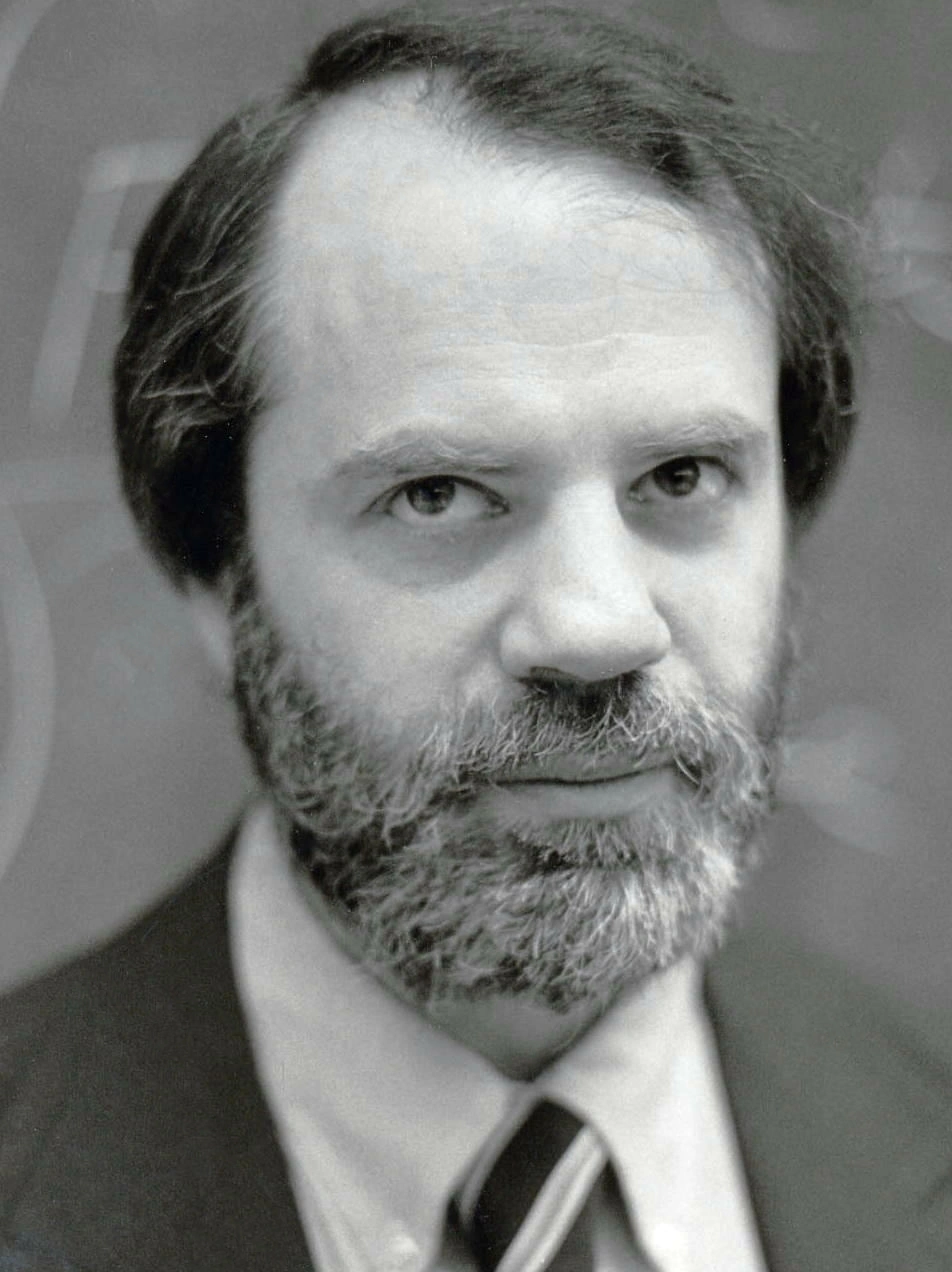
| 4 Quotes | |
| Born as | Saul Aaron Kripke |
| Occup. | Philosopher |
| From | USA |
| Born | November 13, 1940 Bay Shore, New York |
| Age | 85 years |
| Cite | |
Citation Formats
APA Style (7th ed.)
Saul kripke biography, facts and quotes. (2026, February 11). FixQuotes. https://fixquotes.com/authors/saul-kripke/
Chicago Style
"Saul Kripke biography, facts and quotes." FixQuotes. February 11, 2026. https://fixquotes.com/authors/saul-kripke/.
MLA Style (9th ed.)
"Saul Kripke biography, facts and quotes." FixQuotes, 11 Feb. 2026, https://fixquotes.com/authors/saul-kripke/. Accessed 27 Mar. 2026.
Early Life and Background
Saul Aaron Kripke was born on November 13, 1940, in Bay Shore, New York, into a Jewish family whose intellectual life centered on texts, argument, and careful attention to language. His father, Rabbi Myer S. Kripke, combined religious scholarship with a broad humanistic curiosity; his mother, Dorothy Kripke, wrote and edited, bringing a literary sensibility into the home. In that household, verbal precision was not ornament but duty, and the young Kripke absorbed early the idea that meanings and commitments can be tested in the smallest turns of phrase.Postwar America also mattered: the rise of analytic philosophy in the United States, the prestige of mathematics and logic, and the broader Cold War faith in formal methods created an atmosphere where a teenage prodigy could be taken seriously if his results were real. Kripke was precocious in exactly the right way for the era - not merely quick, but unusually rigorous about what follows from what, and unusually impatient with hand-waving. He began doing original work in logic while still in high school, entering the professional conversation before he had entered a university classroom.
Education and Formative Influences
Kripke studied at Harvard University, where the mid-century analytic tradition was being reshaped by developments in logic, the philosophy of language, and modal reasoning. He was strongly influenced by the legacy of Gottlob Frege, Bertrand Russell, and Ludwig Wittgenstein, and by the technical revival of modal logic then underway. As an undergraduate he produced what became his first major contribution: semantics for modal logic using possible worlds and an accessibility relation, a framework that rapidly matured into the standard toolset for necessity and possibility. Harvard did not so much make him a philosopher as give an institutional stage for abilities already apparent: a talent for isolating the crux of an argument and then rebuilding the surrounding terrain with new distinctions.Career, Major Works, and Turning Points
After early appointments and visiting positions, Kripke became a leading figure at Rockefeller University and later at Princeton University, where he taught for decades and shaped multiple generations of philosophers and logicians. His 1970 Princeton lectures, published in 1980 as Naming and Necessity, were the pivotal public turning point: they reoriented debates about reference, identity, and modality by arguing that names refer not by descriptive fit but by causal-historical chains, and that necessity and a priori knowledge come apart in surprising ways. He deepened these lines in "Identity and Necessity" (1971) and transformed Wittgenstein scholarship with Wittgenstein on Rules and Private Language (1982), which launched the enduring "Kripkenstein" controversy about meaning, rule-following, and skepticism. Across these works, the pattern is consistent: a small set of carefully chosen examples - a person, a name, an imagined counterfactual - used to force a wholesale reconfiguration of what philosophers think they are doing.Philosophy, Style, and Themes
Kripke's philosophy is defined by the disciplined use of modal imagination and by an insistence that ordinary language contains metaphysical commitments we cannot dissolve by stipulation. His slogan-level result, “Proper names are rigid designators”. , was not a mere linguistic thesis but a lever: if a name picks out the same individual in every possible world in which that individual exists, then the old picture of reference as disguised description collapses. That collapse matters psychologically as well as technically. Kripke's work repeatedly shows a preference for anchoring thought in contact with objects and persons, rather than in the mind's inventory of descriptions. It is a temperament suspicious of substitutes - of replacing the world with what we happen to think about it.He also made necessity feel less like an airy logical operator and more like a constraint on reality. “Any necessary truth, whether a priori or a posteriori, could not have turned out otherwise”. That line captures a recurring theme: epistemology is about how we know, but modality is about how things could have been. From there, Kripke pushes against the instinct to equate the necessary with the knowable-from-the-armchair. He is equally resistant to philosophical overconfidence, and his aphoristic deflation - “It really is a nice theory. The only defect I think it has is probably common to all philosophical theories. It's wrong”. - functions as a method: admire a theory's elegance, then interrogate the one place where it stops tracking our actual practices of reference, meaning, or sensation. Even when he treats pain, rules, and the private language problem, the style remains the same: do not accept an explanation that leaves untouched the phenomenon it claims to explain.
Legacy and Influence
Kripke's influence is both technical and cultural within philosophy. In logic, Kripke semantics became foundational for modal logic and a gateway into contemporary work on knowledge, time, and obligation. In philosophy of language and metaphysics, he helped revive metaphysical necessity as a respectable topic after mid-century suspicion, while also reshaping debates about identity, kinds, and essentialism. In epistemology and philosophy of mind, his arguments about a posteriori necessity and about sensation and meaning sharpened fault lines that still structure current disputes. He left a model of philosophical writing that is at once austere and dramatic: few claims, carefully chosen cases, and the sense that a single well-aimed distinction can alter the map of an entire field.Our collection contains 4 quotes written by Saul, under the main topics: Truth - Reason & Logic.
Other people related to Saul: Peter Frederick Strawson (Philosopher), David Chalmers (Philosopher)
Saul Kripke Famous Works
- 2011 Philosophical Troubles: Collected Papers, Volume 1 (Book)
- 1982 Wittgenstein on Rules and Private Language (Book)
- 1980 Naming and Necessity (Book)
Source / external links