
Saul Perlmutter Biography Quotes 26 Report mistakes
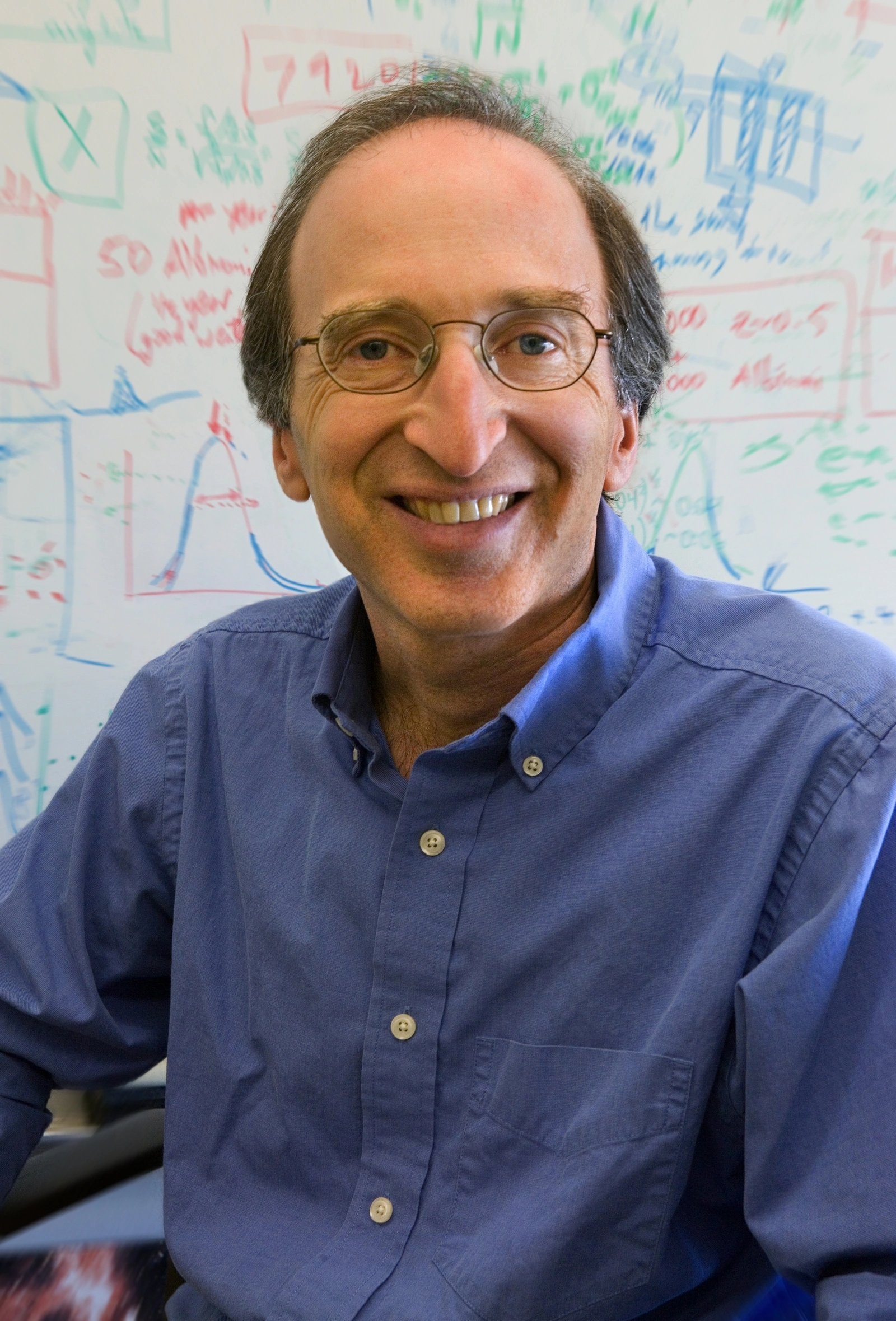
| 26 Quotes | |
| Occup. | Scientist |
| From | USA |
| Born | September 22, 1959 Champaign-Urbana, Illinois, U.S. |
| Age | 66 years |
| Cite | |
Citation Formats
APA Style (7th ed.)
Saul perlmutter biography, facts and quotes. (2026, February 11). FixQuotes. https://fixquotes.com/authors/saul-perlmutter/
Chicago Style
"Saul Perlmutter biography, facts and quotes." FixQuotes. February 11, 2026. https://fixquotes.com/authors/saul-perlmutter/.
MLA Style (9th ed.)
"Saul Perlmutter biography, facts and quotes." FixQuotes, 11 Feb. 2026, https://fixquotes.com/authors/saul-perlmutter/. Accessed 7 Mar. 2026.
Early Life and Background
Saul Perlmutter was born on September 22, 1959, in the United States, into a household shaped by science as a lived culture rather than an abstract subject. His father, a physicist who worked in materials science, and his mother, trained in philosophy and education, modeled a blend of rigor and reflection that would later surface in his own willingness to press fundamental questions while staying cautious about final answers.He came of age during the late Cold War and the post-Apollo period, when physics carried both public prestige and existential weight: nuclear anxieties, space exploration, and the new confidence of precision measurement. That era rewarded people who could build instruments, manage teams, and convert faint signals into claims strong enough to survive hostile scrutiny. Those pressures helped form Perlmutter into a scientist whose temperament favored careful calibration, transparent methods, and collaborative proof over solitary pronouncement.
Education and Formative Influences
Perlmutter studied at Harvard University, earning his AB in physics, then completed a PhD in physics at the University of California, Berkeley, where the culture of Lawrence Berkeley National Laboratory (LBNL) encouraged bold questions backed by engineering discipline. At Berkeley he absorbed the pragmatic traditions of experimental physics: designing surveys, quantifying uncertainties, and treating statistics not as decoration but as the main arena where discovery is won or lost.Career, Major Works, and Turning Points
At LBNL, Perlmutter became the driving organizer of the Supernova Cosmology Project, which in the 1990s turned Type Ia supernovae into precision distance markers to test cosmic expansion. The turning point came with evidence that distant supernovae were dimmer than expected in a decelerating universe, implying the expansion is accelerating - a result soon mirrored by the competing High-Z Supernova Search Team. In 1998-1999 the accelerating-universe papers helped establish the case for a dominant, repulsive component now called dark energy, and in 2011 Perlmutter shared the Nobel Prize in Physics with Brian Schmidt and Adam Riess. Beyond the headline, his influence came from the craft: building a discovery pipeline (search, confirm, calibrate, analyze) sturdy enough that a counterintuitive conclusion could be believed.Philosophy, Style, and Themes
Perlmutter is often associated with one of the most dramatic reversals in modern cosmology, yet his personal style runs against triumphalism. He speaks like an experimentalist trained by hard-won error bars, emphasizing that cosmology is an inference discipline where confidence is earned through redundancy and the patient elimination of alternatives. That posture is also psychological: a way to protect curiosity from ideology, keeping the mind elastic even when the world demands definitive narratives.His comments on dark energy reveal a scientist wary of premature metaphysics and attentive to ignorance as an active tool. “If you're puzzled by what dark energy is, you're in good company”. Rather than treating acceleration as a solved mystery, he frames it as a diagnostic of what the standard model of cosmology may be missing: “We have a remarkably complete picture in many ways - and it could be that we're not accounting for something that's almost three-quarters of the entire universe”. Even his broader view of theory feels exploratory, almost anti-dogmatic: “If you ask almost any of them, 'Do you stand behind your theory? Is this the answer?' I think almost everyone would say, 'No, no, no. I'm just trying to expand the range of possibilities.' We really don't know what's going on”. In that insistence, his inner life shows through - ambition disciplined by humility, and a preference for expandable frameworks over final creeds.
Legacy and Influence
Perlmutter helped shift cosmology from a parameter-tuning debate to a data-rich, survey-driven science, where the universe is mapped with industrial-scale teamwork and quantified uncertainty. The accelerating-universe result forced new theoretical work on the cosmological constant, vacuum energy, and modified gravity, and it strengthened the empirical foundations that later surveys and missions would build upon. Just as important, his example normalized a model of modern discovery: multinational collaboration, transparent statistics, and the courage to report what the sky says even when it contradicts what gravity "should" do.Our collection contains 26 quotes written by Saul, under the main topics: Witty One-Liners - Funny - Deep - Learning - Science.
Source / external links