
Scholastique Mukasonga Biography Quotes 6 Report mistakes
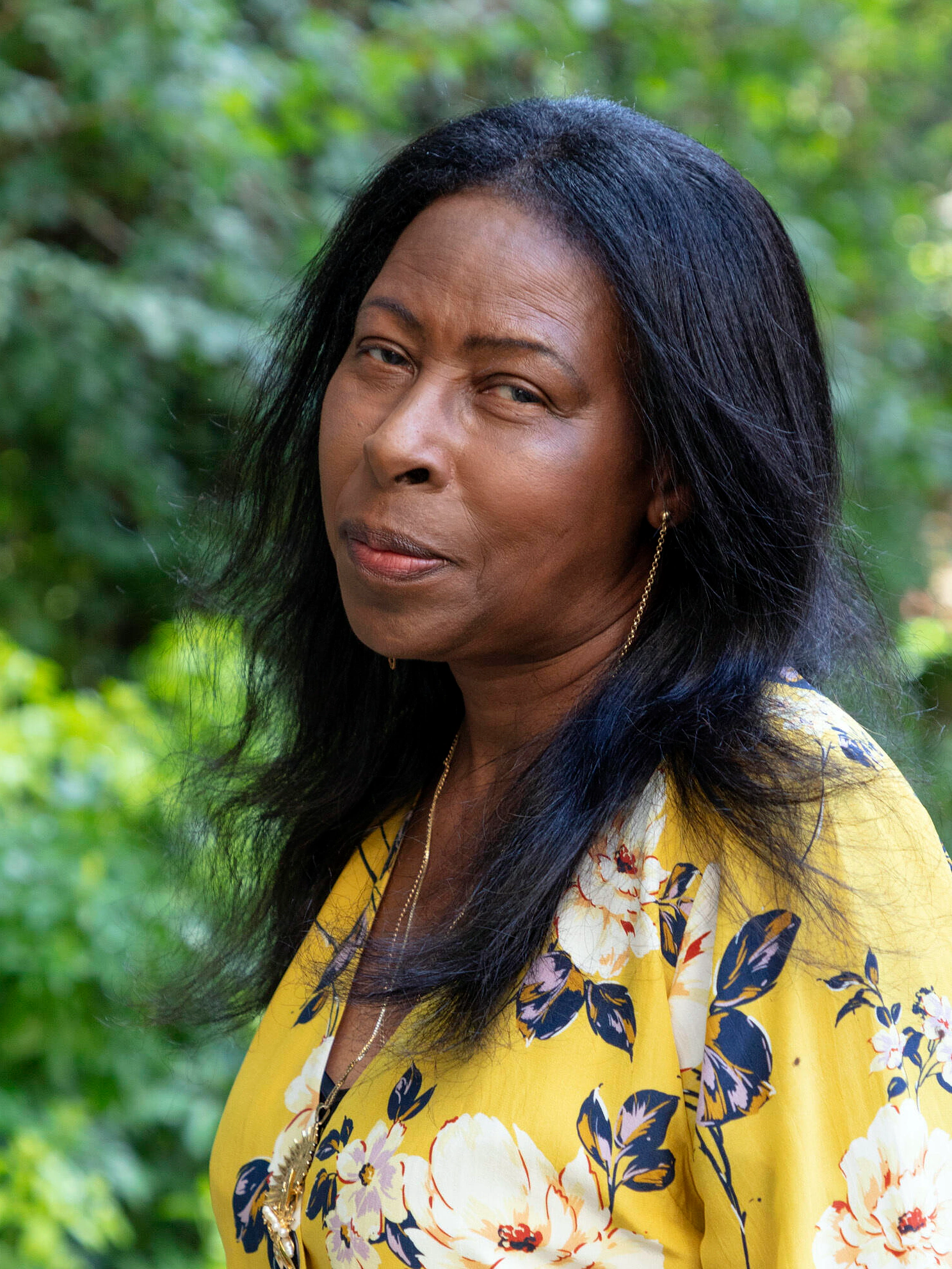
Attr: Livres Hebdo
| 6 Quotes | |
| Occup. | Writer |
| From | Rwanda |
| Born | 1956 Gikongoro Prefecture (now Southern Province), Rwanda |
| Cite | |
Citation Formats
APA Style (7th ed.)
Scholastique mukasonga biography, facts and quotes. (2026, February 15). FixQuotes. https://fixquotes.com/authors/scholastique-mukasonga/
Chicago Style
"Scholastique Mukasonga biography, facts and quotes." FixQuotes. February 15, 2026. https://fixquotes.com/authors/scholastique-mukasonga/.
MLA Style (9th ed.)
"Scholastique Mukasonga biography, facts and quotes." FixQuotes, 15 Feb. 2026, https://fixquotes.com/authors/scholastique-mukasonga/. Accessed 5 Apr. 2026.
Early Life and Background
Scholastique Mukasonga was born in Rwanda around 1956, a child of the Tutsi minority in a country already hardened by the aftershocks of the 1959 revolution and the violent reordering that followed. Her earliest memories formed under the logic of ethnic classification, forced displacement, and the constant recalibration of what could safely be said out loud. In the south, where many Tutsi families were pushed into precarious settlements, everyday life carried the double burden of poverty and surveillance - a childhood in which home could be made temporary by decree.Within her family, Mukasonga absorbed a domestic culture of endurance: women managing food scarcity, neighbors measuring trust, and parents teaching children to read danger in small signs. Her mother, Stefania, became the emotional center of her later work - not as an emblem, but as a practical moral intelligence shaped by exile, hospitality, and fear. The family story was not only personal; it was tethered to a national pattern in which periodic anti-Tutsi campaigns trained communities to live with the expectation of the next purge.
Education and Formative Influences
As a student, Mukasonga encountered the narrowing gates of Rwandan education during the years when quotas and exclusion increasingly structured access for Tutsi children. She trained as a social worker and, in 1992, left Rwanda for France, a move that read as professional migration but carried the deeper meaning of escape as the country slid toward catastrophe. In France she lived as an expatriate marked by distance and dread, watching Rwanda from afar as political radicalization accelerated and, in 1994, the genocide against the Tutsi consumed much of her family.Career, Major Works, and Turning Points
Mukasonga began publishing in France after the genocide, turning the tools of testimony and the shaping powers of literature into a sustained project of memory. Her breakthrough came with Inyenzi ou les cafards (Cockroaches), an account that fuses childhood recollection with the social mechanics of persecution; she followed with La femme aux pieds nus (The Barefoot Woman), a portrait of her mother and the ethics of domestic life under threat. Her fiction and hybrid works widened the frame: Notre-Dame du Nil (Our Lady of the Nile) set its narrative in a girls boarding school as ethnic ideology metastasizes into violence; it won the Prix Renaudot in 2012 and brought her international prominence. Later books such as Ce que murmurent les collines (What the Hills Whisper) continued to braid story, elegy, and inquiry, returning repeatedly to the question of how a shattered community can remain speakable.Philosophy, Style, and Themes
Mukasonga writes from the pressure point where private grief meets collective obliteration. Her work is animated by a self-imposed mandate: “I had an urgent duty of remembrance to perform, because I was living with the threat of losing that memory. I had to work with what I had, simply trusting in the blank page and making it my confidant”. The psychology here is not nostalgia but panic disciplined into craft - a fear that time, assimilation, and the sheer weight of loss will dissolve the last living archive. She repeatedly stages the page as a shelter, a place to store names, recipes, proverbs, paths, and gestures - the small cultural units genocide tries to erase because they prove a people existed.Her style is plainspoken but formally strategic, moving between memoir, ethnographic detail, and novelistic distance. She is explicit about the protective function of invention: “Fiction makes it possible to take on subjects that would be too difficult or painful to address in the first person. It allows me also to maintain a certain distance from what I write”. That distance is not coldness; it is a survival mechanism that lets her approach scenes of humiliation and murder without collapsing the narrator. Across the books, mourning becomes labor and method: “Writing has been a way of mourning for me and, with my books, I’ve woven a shroud for those whose bodies, buried in mass graves or scattered in ossuaries, are lost forever”. The recurring motifs - the maternal household, the refugee road, the school as an incubator of ideology, the bureaucratic stamp that decides who may live - show a mind committed to preserving intimate textures while diagnosing the systems that made annihilation administratively possible.
Legacy and Influence
Mukasonga has become one of the most lucid literary witnesses of postcolonial Rwanda and one of the central Francophone voices on genocide, exile, and the ethics of remembering. Her influence lies in how she expands testimony beyond courtroom fact into cultural reconstruction: she restores a destroyed world through its ordinary materials and makes grief legible without turning it into spectacle. For readers in France and far beyond, her work has helped shift the conversation from abstract numbers to named lives, while also modeling how a survivor of collective loss can claim artistic agency - using literature to hold memory in place when the historical record, and even the land itself, has been made to deny that a family ever lived there.Our collection contains 6 quotes written by Scholastique, under the main topics: Writing - Kindness - Peace - Legacy & Remembrance.
Source / external links