
Scott McNealy Biography Quotes 7 Report mistakes
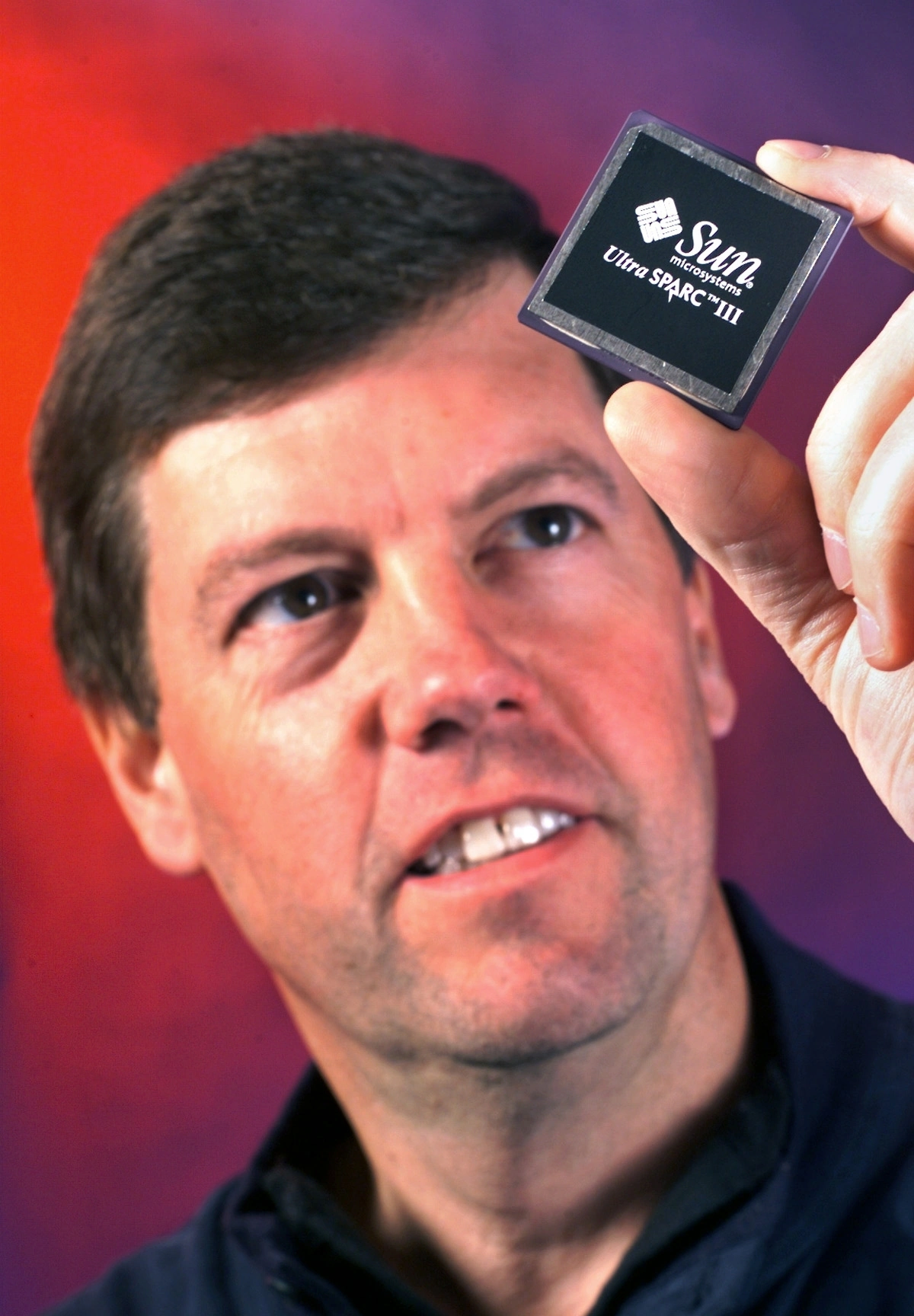
| 7 Quotes | |
| Occup. | Businessman |
| From | USA |
| Born | November 13, 1954 Columbus, Indiana |
| Age | 71 years |
| Cite | |
Citation Formats
APA Style (7th ed.)
Scott mcnealy biography, facts and quotes. (2026, February 11). FixQuotes. https://fixquotes.com/authors/scott-mcnealy/
Chicago Style
"Scott McNealy biography, facts and quotes." FixQuotes. February 11, 2026. https://fixquotes.com/authors/scott-mcnealy/.
MLA Style (9th ed.)
"Scott McNealy biography, facts and quotes." FixQuotes, 11 Feb. 2026, https://fixquotes.com/authors/scott-mcnealy/. Accessed 8 Mar. 2026.
Early Life and Background
Scott McNealy was born on November 13, 1954, in the United States, into a postwar America newly organized around aerospace, universities, and the early silicon economy. He grew up in Los Angeles County in a family that mixed technical curiosity with entrepreneurial confidence. His father, a manufacturer and businessman, modeled the idea that making things and selling them were not separate arts but two halves of the same discipline - an outlook that later surfaced in McNealy's insistence that engineering must answer to markets.The Southern California of his youth was also a geography of systems: freeways, defense contracts, corporate campuses, and the first waves of computing moving from laboratories into organizations. McNealy came of age as business culture was shifting from mid-century managerialism to the harder-edged shareholder era. That transition mattered to his temperament. Friends and colleagues would later describe him as plainspoken, combative on principle, and unusually comfortable in public conflict - traits shaped in a period when technology firms were learning that persuasion and narrative could be as strategic as patents.
Education and Formative Influences
McNealy studied economics and graduated from Harvard University, then earned an MBA from Stanford Graduate School of Business. Harvard gave him a language for markets, incentives, and competition; Stanford placed him in the gravitational field of Silicon Valley at the moment when venture capital and workstation computing were accelerating. The combination produced a CEO who could argue both balance sheets and architecture, and who took competition personally - not as a blood sport, but as a test of whether a company was building something durable rather than merely fashionable.Career, Major Works, and Turning Points
In 1982, McNealy co-founded Sun Microsystems in Santa Clara, California, with Vinod Khosla, Andy Bechtolsheim, and Bill Joy, and became its chief executive. Sun rode the rise of Unix workstations and then enterprise servers, selling networked computing to engineers, universities, and Fortune 500 data centers. Under his leadership Sun helped normalize the idea that "the network is the computer", and it bet heavily on open systems, Java (launched in the mid-1990s), and the commercialization of internet infrastructure. The late 1990s made Sun a defining firm of the dot-com boom; the early 2000s crash tested McNealy's grit as demand collapsed, layoffs mounted, and Sun tried to pivot toward services and open-source software. He stepped down as CEO in 2006, remaining as chairman for a time, and later co-founded Wayin, pursuing data-driven marketing in a business climate now dominated by platforms.Philosophy, Style, and Themes
McNealy's public philosophy fused network optimism with a bruising realism about power. He believed computing would become an infrastructure utility, and he argued that scale would migrate toward services delivered over networks rather than boxed products: “The utility model of computing - computing resources delivered over the network in much the same way that electricity or telephone service reaches our homes and offices today - makes more sense than ever”. That conviction was not abstract futurism; it was a strategic justification for Sun's server-and-network emphasis, its evangelism around Java, and its long-running attempt to make interoperability an economic weapon against proprietary lock-in.His style was famously blunt, often sharpened into provocation to puncture what he saw as corporate hypocrisy. On privacy, he expressed a worldview in which technology erodes old expectations faster than law or etiquette can respond: “You already have zero privacy - get over it”. The psychology underneath was not mere cynicism; it was an operator's impatience with comforting myths, and a willingness to absorb reputational damage to force a debate onto new ground. The same antagonistic clarity powered his attacks on monopoly pricing and software rent-seeking, distilled into a linguistic thought experiment: “The only thing that I'd rather own than Windows is English, because then I could charge you two hundred and forty-nine dollars for the right to speak it”. Beneath the humor sat an enduring preoccupation - that control over standards becomes control over prosperity, and that technical ecosystems are ultimately political economies.
Legacy and Influence
McNealy's legacy is inseparable from Sun's: the mainstreaming of network-centric computing, the cultural confidence of late-1990s Silicon Valley, and the long arc toward cloud infrastructure that echoed many of Sun's arguments even after Sun itself lost momentum and was acquired by Oracle in 2010. He also left a template for the combative, media-savvy tech CEO who treats ideology as a competitive tool and candor as a brand. For admirers, he was an executive who could speak architecture as fluently as strategy; for critics, a rhetorician who sometimes underestimated how quickly markets punish even brilliant platforms when timing, cost, or distribution turn against them. Either way, his era runs through him: a businessman shaped by the moment when the internet stopped being a research network and became the nervous system of commerce.Our collection contains 7 quotes written by Scott, under the main topics: Witty One-Liners - Father - Privacy & Cybersecurity - Business - Technology.
Source / external links