
Sean O'Casey Biography Quotes 12 Report mistakes
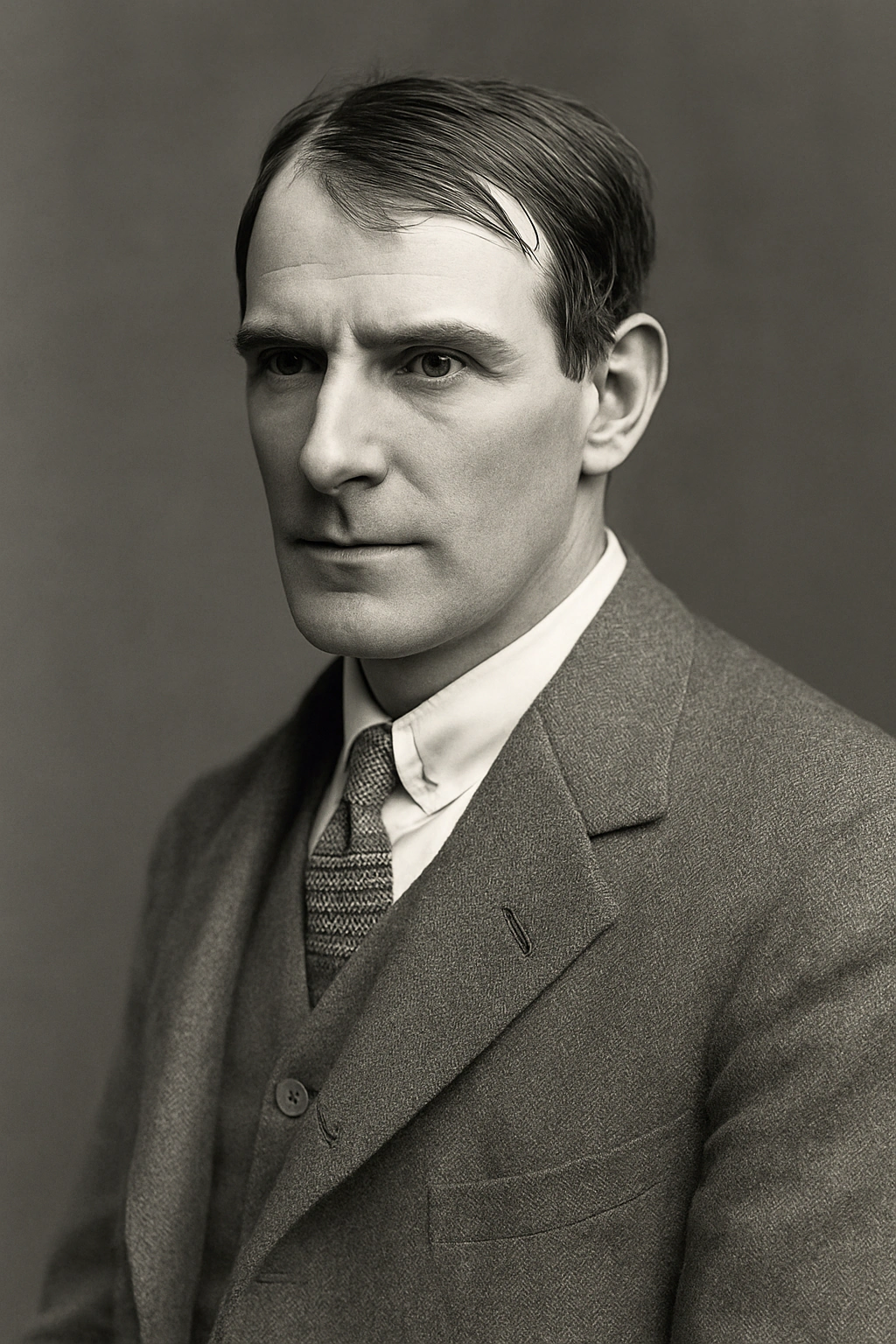
| 12 Quotes | |
| Born as | John Casey |
| Known as | Seán O'Casey |
| Occup. | Playwright |
| From | Ireland |
| Spouse | Eileen Carey Reynolds (1927) |
| Born | March 30, 1880 Dublin, County Dublin, Ireland |
| Died | September 18, 1964 Torquay, Devon, England |
| Cause | Heart attack |
| Aged | 84 years |
| Cite | |
Citation Formats
APA Style (7th ed.)
Sean o'casey biography, facts and quotes. (2026, February 11). FixQuotes. https://fixquotes.com/authors/sean-ocasey/
Chicago Style
"Sean O'Casey biography, facts and quotes." FixQuotes. February 11, 2026. https://fixquotes.com/authors/sean-ocasey/.
MLA Style (9th ed.)
"Sean O'Casey biography, facts and quotes." FixQuotes, 11 Feb. 2026, https://fixquotes.com/authors/sean-ocasey/. Accessed 26 Mar. 2026.
Early Life and Background
Sean O'Casey was born John Casey on 1880-03-30 in Dublin, Ireland, into the fraying lower-middle and working-class world that would become the bedrock of his theater. His father, a clerk whose health failed early, died when Casey was young, and the family slid into harder circumstance. In the lanes and tenement streets of north Dublin, he absorbed the sounds of hawkers, parish rhetoric, political meetings, and domestic quarrels - the city speaking in a mixture of bravado and bruised tenderness.Childhood illness and poverty sharpened his inwardness. He suffered periods of poor eyesight that curtailed steady schooling and pushed him toward self-education and an intense ear for speech. That combination - bodily constraint and verbal abundance - later shaped the peculiar O'Casey balance: grand public events heard through doorways, and history measured by the cost of coal, the hunger in a room, the quick joke that keeps despair from winning.
Education and Formative Influences
With limited formal education, O'Casey educated himself through voracious reading, street observation, and political apprenticeship. Dublin at the turn of the century offered an improvised university: the Gaelic revival, the labor movement, and the developing Irish theater all competed for allegiance. He was drawn to nationalism and the Irish language movement (he joined the Gaelic League), but his deepest practical schooling came through trade-union and socialist politics, especially around Jim Larkin and James Connolly; he served as secretary of the Irish Citizen Army for a time before breaking with its leadership, a rupture that left him both skeptical of heroic postures and convinced that ordinary lives carry the true cost of revolution.Career, Major Works, and Turning Points
O'Casey turned to playwriting in midlife, and his breakthrough came at the Abbey Theatre in Dublin, where W.B. Yeats and Lady Gregory recognized a rare dramatist of working-class speech and tragedy. His Dublin Trilogy - "The Shadow of a Gunman" (1923), "Juno and the Paycock" (1924), and "The Plough and the Stars" (1926) - set political violence against the fragile architecture of family life, exposing how rhetoric enters the kitchen and becomes rent, hunger, and grief. "The Plough and the Stars", with its unsparing depiction of the 1916 Easter Rising's aftermath, provoked riots and denunciations, confirming him as a writer willing to offend national pieties. Disillusioned with Irish cultural politics and censorship pressures, he moved to England in 1926 and remained there, writing a long, uneven but often daring later body of work - including the expressionist-leaning "The Silver Tassie" (1928) and later plays such as "Red Roses for Me" (1943) - alongside a multi-volume autobiography that turned memory into both evidence and argument.Philosophy, Style, and Themes
O'Casey's drama insists that history is not an abstract pageant but a pressure system that crushes the poor first and excuses itself afterward. He distrusted moralizing institutions - nationalist, clerical, or bourgeois - when they demanded reverence at the expense of truth; his instinct was to protect the human from the slogan. That posture surfaces in his refusal to let religion settle political disputes: “There's no reason to bring religion into it. I think we ought to have as great a regard for religion as we can, so as to keep it out of as many things as possible”. It is less a sneer than a defense mechanism - a way of keeping sanctimony from colonizing compassion, and of keeping the stage clear enough to show what power does to bodies.His style fuses raucous comedy with sudden bereavement, often within a single scene. Tenement talk becomes music - boasting, flirting, cursing, praying - and then collapses into the plain fact of death or eviction. Under the laughter sits a social diagnosis of money's double edge: “Money does not make you happy but it quiets the nerves”. In O'Casey, the quieted nerves are never mere comfort; they are the difference between a child eating and a child not eating, between a rent paid and a door broken down. Yet he also framed life as a restless education, memory itself a moral instrument: “The hallway of every man's life is paced with pictures; pictures gay and pictures gloomy, all useful, for if we be wise, we can learn from them a richer and braver way to live”. That idea powers his autobiographical writing and his dramatic habit of juxtaposing public ceremony with private recollection - as if wisdom arrives only when one can hold comedy and catastrophe in the same gaze.
Legacy and Influence
O'Casey, who died on 1964-09-18, endures as one of the defining playwrights of modern Ireland and a major voice of twentieth-century social theater. The Dublin Trilogy remains central to the repertoire because it refuses easy binaries - patriot and traitor, saint and sinner - and instead shows how political myth is made in rooms where women bear the bills and men bear the boasts. His influence runs through later Irish drama that prizes speech as character and history as lived experience, from realist tenement worlds to more experimental forms, and his life in self-imposed exile became a cautionary parable about national culture: a country can celebrate its rebels and still reject the artist who insists on counting the cost.Our collection contains 12 quotes written by Sean, under the main topics: Witty One-Liners - Wisdom - Justice - Writing - Life.
Frequently Asked Questions
- Sean o Casey pronunciation: Shawn oh-KAY-see.
- Sean O Casey Dublin Trilogy: The Shadow of a Gunman; Juno and the Paycock; The Plough and the Stars.
- Sean o casey books: Plays and memoirs, incl. Juno and the Paycock; The Plough and the Stars; The Shadow of a Gunman; The Silver Tassie; The Green Crow (essays); his six-volume autobiography.
- Sean O'Casey autobiography: Six-volume memoir: I Knock at the Door; Pictures in the Hallway; Drums Under the Windows; Inishfallen, Fare Thee Well; Rose and Crown; Sunset and Evening Star.
- Sean o Casey plays: The Shadow of a Gunman; Juno and the Paycock; The Plough and the Stars; The Silver Tassie; Red Roses for Me.
- eileen o'casey: Eileen Carey O'Casey (1902–1995), Irish actress and Sean O'Casey's wife.
- Sean O'Casey famous works: Juno and the Paycock; The Plough and the Stars; The Shadow of a Gunman; The Silver Tassie.
- How old was Sean O'Casey? He became 84 years old
Sean O'Casey Famous Works
- 1928 The Silver Tassie (Play)
- 1926 The Plough and the Stars (Play)
- 1924 Juno and the Paycock (Play)
- 1923 The Shadow of a Gunman (Play)
Source / external links