
Sebastian Vettel Biography Quotes 32 Report mistakes
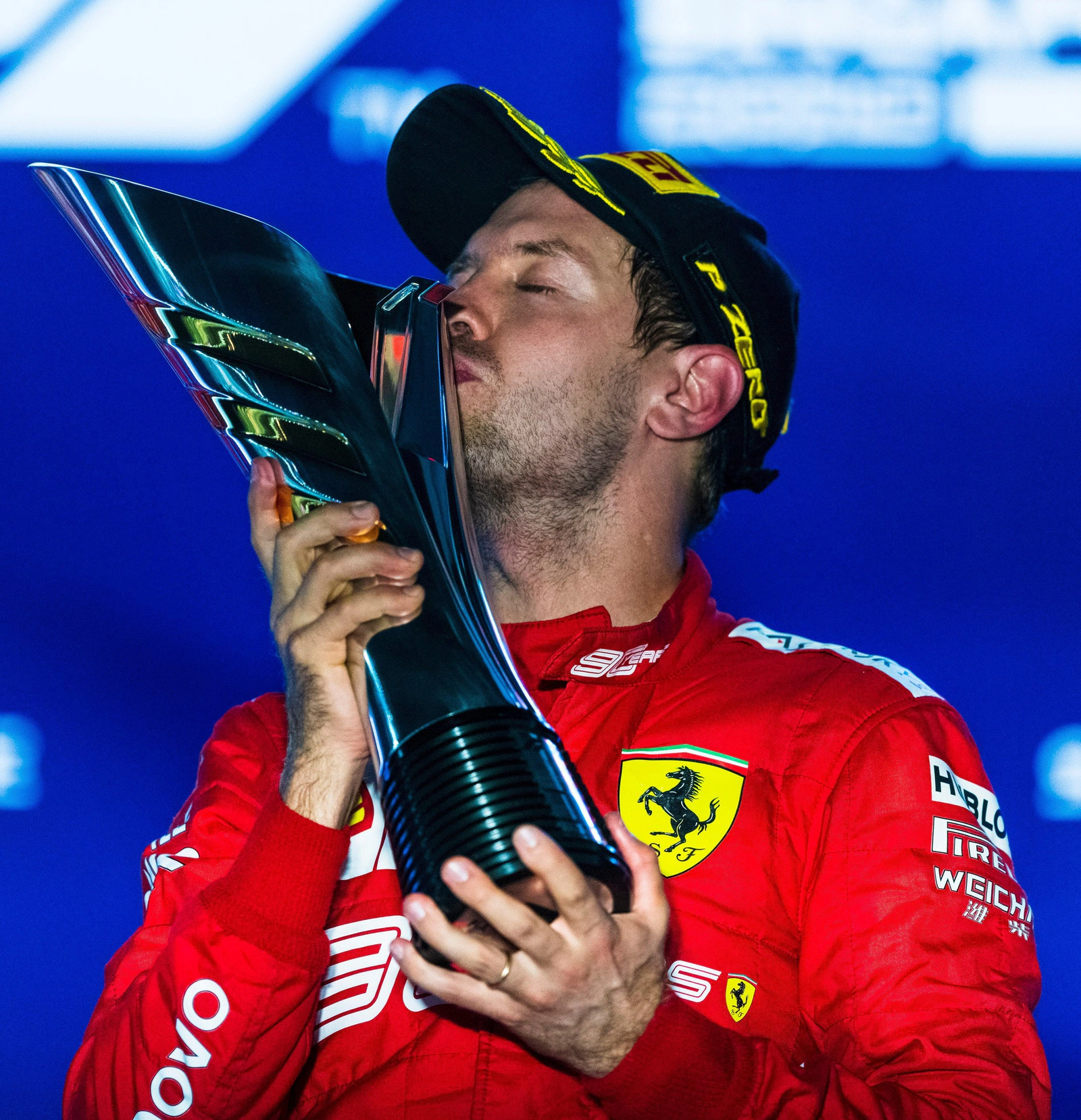
| 32 Quotes | |
| Occup. | Celebrity |
| From | Germany |
| Spouse | Hanna Prater |
| Born | July 3, 1987 Heppenheim, Hesse, Germany |
| Age | 38 years |
| Cite | |
Citation Formats
APA Style (7th ed.)
Sebastian vettel biography, facts and quotes. (2026, March 20). FixQuotes. https://fixquotes.com/authors/sebastian-vettel/
Chicago Style
"Sebastian Vettel biography, facts and quotes." FixQuotes. March 20, 2026. https://fixquotes.com/authors/sebastian-vettel/.
MLA Style (9th ed.)
"Sebastian Vettel biography, facts and quotes." FixQuotes, 20 Mar. 2026, https://fixquotes.com/authors/sebastian-vettel/. Accessed 7 Apr. 2026.
Early Life and Background
Sebastian Vettel was born on July 3, 1987, in Heppenheim, in the German state of Hesse, and grew up in nearby Bergstrasse country during a period when German motor sport was being transformed by the rise of Michael Schumacher. He was the third of four children in a close, practical family, and the social texture of his childhood mattered: this was not a dynastic racing household but a disciplined middle-class home in which craft, effort, and routine were normal expectations. His father Norbert worked as a carpenter and roofer, his mother Heike helped anchor family life, and the atmosphere around Vettel was less glamorous than industrious. That grounding would remain visible even after fame, in his discomfort with celebrity excess and his persistent preference for privacy, bicycles, and family rituals over Formula 1 theater.
Karting entered his life early and decisively. Germany in the 1990s offered an unusually fertile environment for young drivers - strong karting structures, a Schumacher-inspired boom, and a culture that treated engineering and precision as virtues rather than abstractions. Vettel showed precocious speed as a child, but what stood out to those around him was not only raw pace; it was concentration, memory, and a capacity to absorb technical feedback. He was small, intense, and serious without seeming joyless. Racing became the arena in which he could organize his temperament: competitive, exacting, emotionally deep, yet capable of shutting out distraction once the visor dropped.
Education and Formative Influences
Vettel attended school in Heppenheim while climbing through karting and junior formulas, eventually facing the same dilemma as many elite young athletes: formal education could continue only in fragments once competition schedules became international. His real education came through systems - junior teams, telemetry rooms, engineers' briefings, and the apprenticeship culture of German driver development. He was supported by Red Bull's young driver program and shaped by an era in which modern Formula 1 demanded more than bravery: drivers had to be technically literate, media-aware, and physically disciplined. Schumacher's example loomed large, but Vettel also absorbed lessons from mentors inside BMW Sauber and Red Bull - how to build trust with mechanics, how to translate feeling into setup language, and how to carry pressure without theatricality. By his late teens he was already marked by a paradox that would define him: outwardly polite and almost old-fashioned, inwardly relentless.
Career, Major Works, and Turning Points
After dominating lower categories, including Formula BMW and succeeding in Formula 3 and the Formula Renault 3.5 environment, Vettel entered Formula 1 through BMW Sauber in 2006 as a test driver and made his race debut in 2007 as a substitute for the injured Robert Kubica at Indianapolis, scoring points immediately. That same year Toro Rosso - Red Bull's junior team - gave him a full-time chance, and in 2008 he produced one of the sport's great breakthrough performances by winning the Italian Grand Prix at Monza in wet conditions, then the youngest winner in F1 history. Promoted to Red Bull Racing, he became world champion in 2010, then again in 2011, 2012, and 2013, combining qualifying speed, technical precision, and a capacity to dominate from the front. His four straight titles made him the defining driver of the blown-diffuser, Adrian Newey-designed Red Bull era, though they also brought backlash from fans who mistook sustained excellence for coldness. The next turning point was Ferrari: from 2015 he pursued the emotionally loaded project of restoring the sport's most mythic team, winning often but falling short of the championship amid strategic errors, reliability failures, and some costly mistakes of his own, especially under the pressure of battling Lewis Hamilton's Mercedes. His final chapter came with Aston Martin from 2021 to 2022, where results were modest but his public stature deepened as he became a more openly reflective figure - engaged with environmental issues, social questions, and the moral contradictions of racing - before retiring at the end of 2022.
Philosophy, Style, and Themes
Vettel's inner life has always been more complex than the statistics suggest. In youth he was often cast as a machine for lap time - meticulous, almost unnervingly complete - but beneath that was a driver who felt deeply the absurdity and beauty of his craft. “When you walk the track and you see a corner and realise you were going round it at 160mph, you wonder who could be so stupid to take a corner at that speed. But in the car, you don't even think about that”. That remark captures his psychology exactly: reflective in hindsight, instinctive in action. He could live in two registers at once - the thinker and the racer. Equally revealing is his insistence that “Simply racing a Formula 1 car is an achievement”. For all his titles, he never entirely lost the apprentice's awe. This humility was not false modesty; it was a way of resisting the sport's distortions, of reminding himself that mastery begins in gratitude.
That same tension shaped his values. “I come from an ordinary family - my dad is a carpenter, a roof-maker - and we've always loved racing together”. The sentence explains much about Vettel's public reserve and private loyalty. He was never naturally seduced by image-making, and as he aged he became increasingly skeptical of success measured only by wealth, status, or noise. His style as a driver - especially at his peak - mirrored this moral economy: clean preparation, devastating rhythm, and an almost craftsmanlike devotion to repetition until perfection appeared effortless. Later, when victories became rarer, the philosophical side of Vettel moved to the foreground. He spoke more often about time, responsibility, fatherhood, and the need to step back from acceleration itself. The mature Vettel was not repudiating the younger champion; he was trying to understand what all that speed had cost and what it had made possible.
Legacy and Influence
Sebastian Vettel's legacy rests on more than four world championships, 53 Grand Prix victories, and a place among Formula 1's most successful drivers. He helped define an era of aerodynamic dominance and set standards for qualifying precision, race management, and teamwork, yet his later importance may prove even broader. In a sport long shaped by stoicism and self-protection, he became a rare champion willing to evolve in public - to admit doubt, to criticize his own industry, to support younger drivers, and to connect sporting excellence with ethical awareness. For Germans he was the heir to Schumacher and also his contrast: less imperial, more openly introspective. For Formula 1, he stands as proof that greatness need not end in caricature. He left the cockpit not diminished but enlarged, remembered as a champion who learned, before the end, how to become fully human in view of the world.
Our collection contains 32 quotes written by Sebastian, under the main topics: Friendship - Victory - Sports - Live in the Moment - New Beginnings.
Source / external links