
Seneca the Younger Biography Quotes 135 Report mistakes
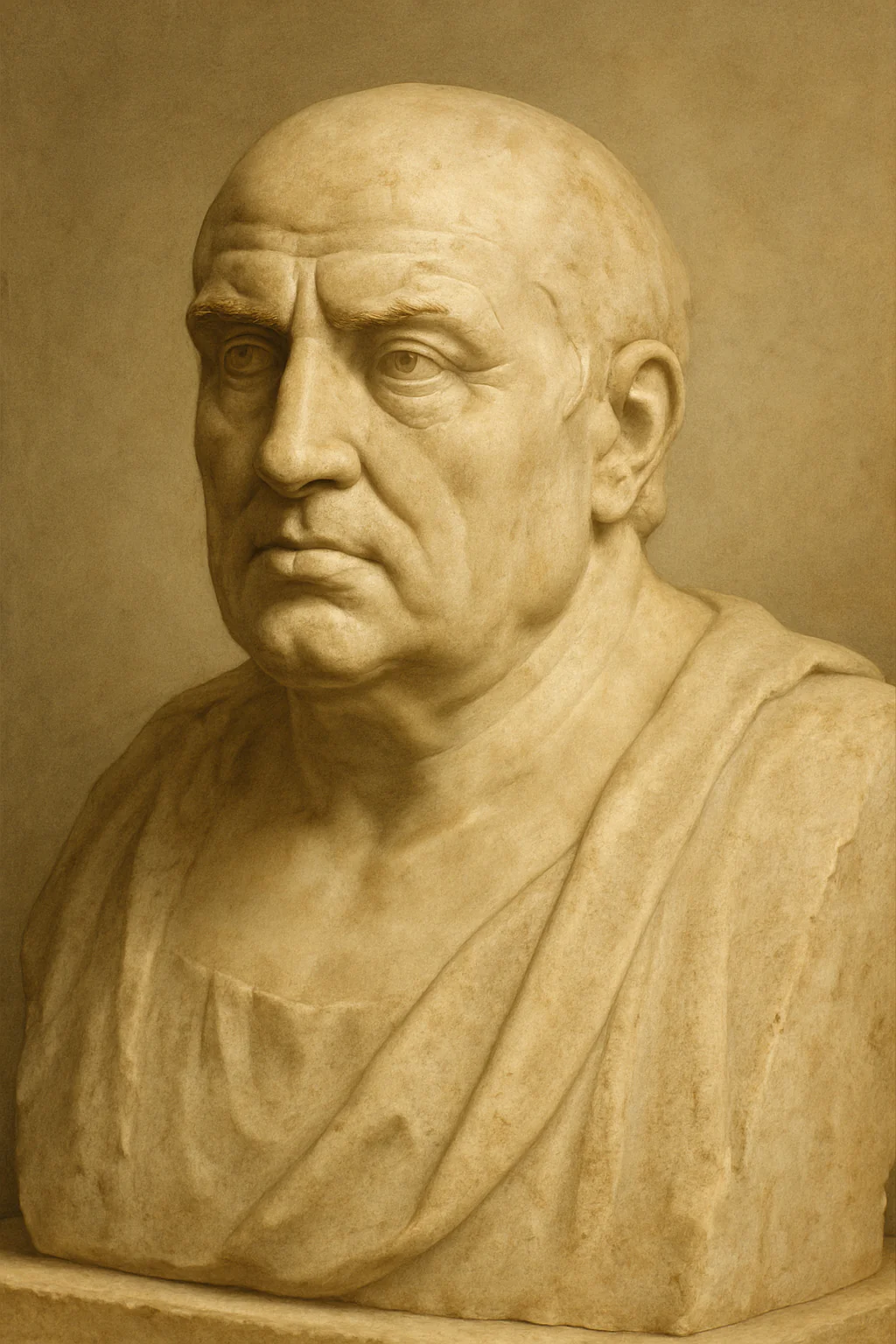
| 135 Quotes | |
| Born as | Lucius Annaeus Seneca the Younger |
| Known as | Seneca |
| Occup. | Statesman |
| From | Rome |
| Born | 5 BC Córdoba, Hispania Baetica (now Spain) |
| Died | 65 AC Rome |
| Cite | |
Citation Formats
APA Style (7th ed.)
Seneca the younger biography, facts and quotes. (2026, February 7). FixQuotes. https://fixquotes.com/authors/seneca-the-younger/
Chicago Style
"Seneca the Younger biography, facts and quotes." FixQuotes. February 7, 2026. https://fixquotes.com/authors/seneca-the-younger/.
MLA Style (9th ed.)
"Seneca the Younger biography, facts and quotes." FixQuotes, 7 Feb. 2026, https://fixquotes.com/authors/seneca-the-younger/. Accessed 25 Mar. 2026.
Early Life and Background
Lucius Annaeus Seneca, later called Seneca the Younger, was born around 4 BCE in Corduba (modern Cordoba) in Roman Hispania, not in Rome, into a family already fluent in ambition and letters. His father, Seneca the Elder, was a noted rhetorician whose collections of declamatory style preserved the sound of late Republican eloquence as it hardened into imperial performance. The household belonged to the equestrian order and moved within the empire's administrative circuits, giving the young Seneca an early double vision - provincial origin and metropolitan destiny - that would later sharpen his sensitivity to power, exile, and the fragile status of favor.The Rome he entered as a young man was a city where Augustus' settlement had exchanged civil war for surveillance and patronage, and where the old language of liberty survived largely as art. Seneca's life unfolded under Tiberius, Caligula, Claudius, and Nero - a sequence of rulers who made the court the empire's true weather system. Chronic illness (he speaks of weak lungs and long periods of debility) forced him into inwardness and self-observation early, habits that became the engine of his moral prose. He learned, too, that personal vulnerability and political danger were not separate categories in an autocracy - both could arrive suddenly, and both demanded a discipline of mind.
Education and Formative Influences
In Rome he trained in rhetoric for public life, but he was pulled more strongly toward philosophy, especially Stoicism, while sampling other schools common in the cosmopolitan capital. He studied with the Stoic Attalus and absorbed the Romanized Stoic project: ethics as daily regimen rather than abstract system, a craft meant to steady the soul amid wealth, grief, and coercion. The model of Cato and the memory of Republican virtue haunted this generation, yet Seneca's temperament was not that of a martyr by instinct; he was a counselor, a stylist, and an analyst of passions, shaped by the realities of imperial patronage even as he tried to moralize it.Career, Major Works, and Turning Points
Seneca rose as a celebrated advocate and senator, attracting jealousy under Caligula and then suffering a decisive reversal under Claudius: in 41 CE he was exiled to Corsica, likely on political and sexual charges tied to court intrigue. Exile became both wound and laboratory, producing the Consolation to Helvia and other writings that combine philosophical posture with the practical pleadings of a man who wanted to return. Recalled in 49 through Agrippina, he was appointed tutor to the young Nero and, after Nero's accession in 54, served as leading adviser with the praetorian prefect Burrus during the regime's early, comparatively restrained years. Seneca accumulated immense wealth, which fed later accusations of hypocrisy, while he drafted speeches and helped shape policy in a court that increasingly rewarded brutality. As Nero turned toward theatrical absolutism - the murder of Britannicus, then Agrippina, and a widening circle of executions - Seneca sought retirement, composing major prose works (On Mercy, On the Happy Life, On the Shortness of Life, On the Tranquility of Mind) and the Letters to Lucilius, along with tragedies such as Thyestes and Phaedra that stage power as appetite. In 65, implicated in the Pisonian conspiracy whether by fact or convenient suspicion, he was ordered to die and met the command with the composed, staged suicide that turned his end into a final lesson in Stoic bearing.Philosophy, Style, and Themes
Seneca's Stoicism is not a cold metaphysics but a psychology of emergency. He writes as a man who knew how quickly fortune could invert and how habit, not inspiration, must carry the mind through fear, pain, and temptation. His ethical center is teleological: without an end, life becomes drift, and drift is the easiest condition for tyranny to exploit. “If one does not know to which port one is sailing, no wind is favorable”. In his letters he returns obsessively to the management of time, arguing that waste - not death - is the great human scandal, and that the metric of a life is qualitative rather than chronological: “Not how long, but how well you have lived is the main thing”. These are not slogans but coping mechanisms forged in a world where tomorrow depended on an emperor's mood.His style matches his moral aim: compressed, epigrammatic, argumentative in quick turns, designed to strike the reader into wakefulness. The tragedies amplify what the essays diagnose - passion as a civil war inside the self, and political power as permission for inner monsters. Yet Seneca never lets catastrophe have the last word; he insists that trials can be converted into training, that adversity can become a school for freedom. “A gem cannot be polished without friction, nor a man perfected without trials”. That emphasis also exposes his lifelong tension: he preached detachment while living near the summit of wealth and influence, and his work often reads like a continuous cross-examination of his own compromises.
Legacy and Influence
Seneca became the most widely read Latin moralist after antiquity, transmitted through monastic copying and revived by Renaissance humanists who admired his prose and mined his maxims for civic life. His letters shaped European introspective writing, while his tragedies helped form the violent, rhetorical drama of early modern theater, from the Renaissance stage to Elizabethan revenge tragedy. Politically, his career remains a cautionary case - the philosopher at court, trying to moderate a prince and discovering the limits of counsel under absolutism. Yet his enduring influence lies in the practical intensity of his Stoicism: an ethics written for people who cannot escape the world, only learn to stand upright within it.Our collection contains 135 quotes written by Seneca, under the main topics: Motivational - Ethics & Morality - Truth - Wisdom - Art.
Other people related to Seneca: William Shakespeare (Dramatist), Euripides (Poet), Michel de Montaigne (Philosopher), Pierre Corneille (Dramatist), Petrarch (Poet), Christopher Marlowe (Dramatist), Luc de Clapiers (Writer), Ryan Holiday (Author), Citium Zeno (Philosopher), Lucan (Poet)
Frequently Asked Questions
- Lucius Annaeus Seneca books: Letters to Lucilius, On the Shortness of Life, On Anger, On Mercy, Natural Questions, plus tragedies like Thyestes and Medea.
- Seneca College: Public college in Toronto; unrelated to the Roman Stoic.
- Seneca book: Start with Letters from a Stoic, On the Shortness of Life, and On Anger.
- Seneca #philosophy: Stoicism, virtue, reason, and mastering the passions.
- Oedipus Seneca: Seneca’s Latin tragedy retelling the Oedipus myth.
Seneca the Younger Famous Works
- 65 Letters from a Stoic (Collection of philosophical letters)
- 49 On the Shortness of Life (Philosophical essay)
- 41 On Anger (Philosophical essay)