
Serena Williams Biography Quotes 16 Report mistakes
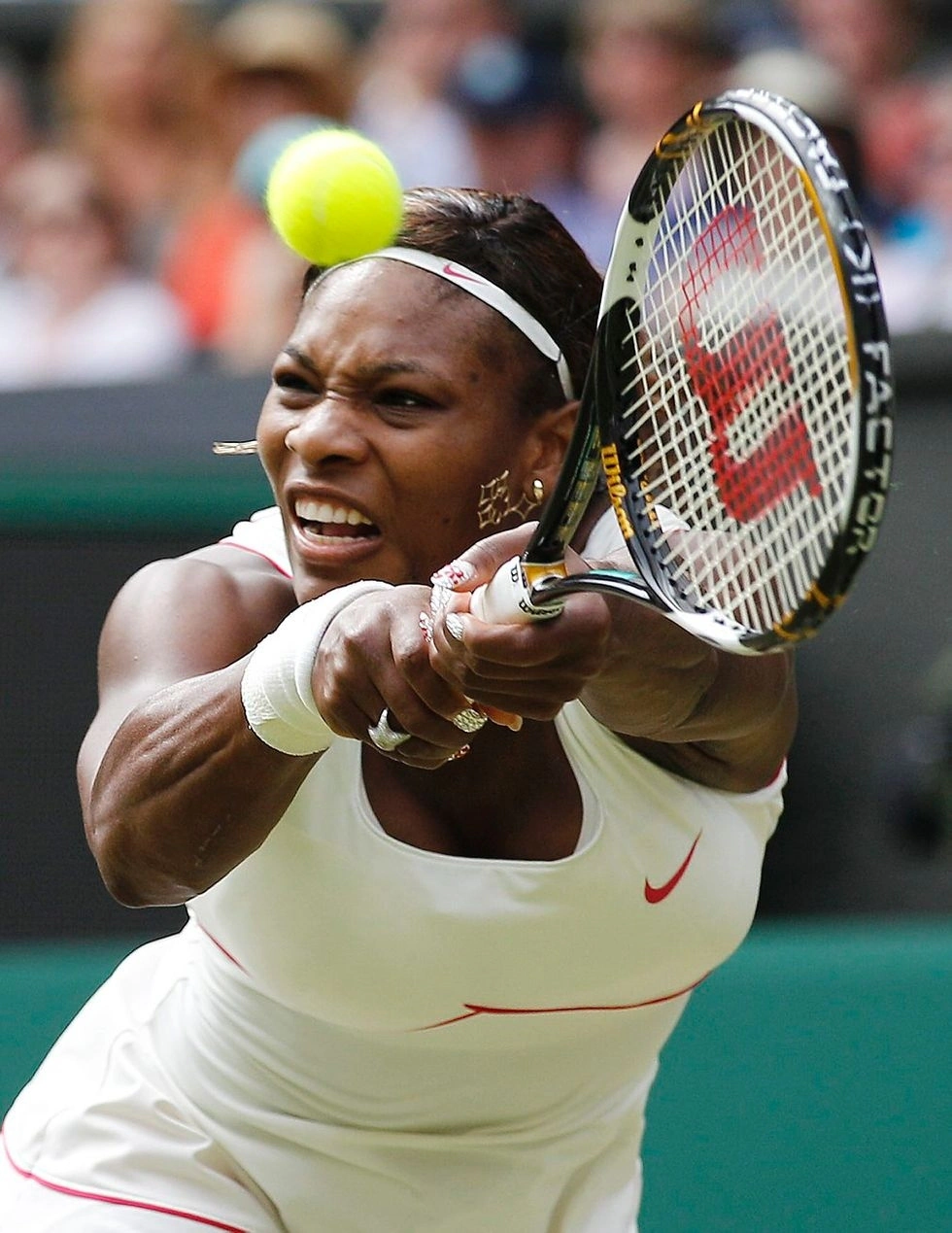
| 16 Quotes | |
| Born as | Serena Jameka Williams |
| Occup. | Athlete |
| From | USA |
| Born | September 26, 1981 Palm Beach Gardens, Florida |
| Age | 44 years |
| Cite | |
Citation Formats
APA Style (7th ed.)
Serena williams biography, facts and quotes. (2026, February 11). FixQuotes. https://fixquotes.com/authors/serena-williams/
Chicago Style
"Serena Williams biography, facts and quotes." FixQuotes. February 11, 2026. https://fixquotes.com/authors/serena-williams/.
MLA Style (9th ed.)
"Serena Williams biography, facts and quotes." FixQuotes, 11 Feb. 2026, https://fixquotes.com/authors/serena-williams/. Accessed 22 Mar. 2026.
Early Life and Background
Serena Jameka Williams was born on September 26, 1981, in Saginaw, Michigan, and grew up largely in Compton, California, in a household engineered for improbable excellence. Her parents, Richard Williams and Oracene Price, built a family culture that mixed discipline with protective love, raising Serena and her older sister Venus alongside their siblings in a neighborhood where poverty, racism, and street violence were not abstractions but daily weather. From the beginning, Serena absorbed a paradox that would define her inner life: she was taught to imagine global stages while learning to survive local danger.Compton also forged her competitive temperament. Practice courts were public, scrutiny was constant, and opponents were rarely gentle. That early exposure to pressure produced a calm that could look like defiance - a refusal to be hurried by other people's expectations. The Williams family relocated to Florida so the sisters could train more systematically, but the imprint of Compton remained central to Serena's public identity and private fuel: she carried the sense that every match was both sport and statement.
Education and Formative Influences
Williams was shaped less by conventional institutions than by an unusual, parent-led apprenticeship. Richard Williams studied tennis with an outsider's rigor, crafting training plans and media boundaries that kept his daughters from being consumed by the junior circuit. Oracene Price provided steadiness and moral ballast, and Venus served as Serena's closest rival, model, and mirror. Their formation unfolded in the 1990s, when American tennis was still sorting itself after the Evert-Navratilova era and before the full globalization of power tennis - a gap Serena would eventually dominate with a game that looked like the future arriving early.Career, Major Works, and Turning Points
Turning professional in the mid-1990s, Serena announced herself with fearless shotmaking and an uncommon appetite for big points, winning the 1999 US Open as a teenager and later building one of the sport's defining resumes: 23 Grand Slam singles titles, multiple Olympic gold medals, and long stretches as world No. 1. Her rivalry and partnership with Venus - including repeated Grand Slam finals and a transformative run in doubles - became a cultural event as much as an athletic one, especially after the sisters faced racist heckling and hostility, most notoriously around Indian Wells in 2001 and the years of boycott that followed. Williams' career repeatedly bent around crises: injuries, public criticism, and in 2010-2011 a sequence of health emergencies including pulmonary emboli that threatened her life and forced a recalibration from inevitability to gratitude. Later, her return to elite tennis after a difficult pregnancy and emergency C-section in 2017 recast her greatness in maternal terms, even as she continued to chase an elusive 24th major with the relentlessness that had always been her signature.Philosophy, Style, and Themes
Williams' tennis was built on controlled violence: a serve that functioned like a starting gun, returns that seized initiative, and baseline power disciplined by timing rather than mere force. Yet her real instrument was psychology - the ability to keep a clear mind inside chaos. She framed resilience as a decision, not a mood, insisting, “I decided I can't pay a person to rewind time, so I may as well get over it”. That sentence captures the inner mechanism that allowed her to metabolize losses, controversies, and pain quickly: regret was treated as a luxury she could not afford.Her mental narrative also rejected the myth of effortless greatness. “Luck has nothing to do with it, because I have spent many, many hours, countless hours, on the court working for my one moment in time, not knowing when it would come”. The emphasis is not only on labor, but on uncertainty - training without guarantees, trusting process over prophecy. And beneath her bravado ran an unromantic clarity about what mattered most. “Tennis just a game, family is forever”. In a career often interpreted as individual conquest, that theme explains her durability: she could fight ferociously on court without letting the sport fully own her identity.
Legacy and Influence
Serena Williams changed the geometry of women's tennis, normalizing a level of athleticism and power that forced an era of adaptation across training, tactics, and talent pipelines. She also widened the cultural bandwidth of what a tennis champion could look like and sound like - unapologetically Black, loudly ambitious, fashion-forward, emotionally visible, and commercially formidable - while enduring scrutiny that frequently policed her body and temperament more than her results. Her influence persists in the generation that followed, in the business and philanthropic ventures she expanded beyond sport, and in the enduring image of a competitor who repeatedly turned pressure into performance, not by denying vulnerability, but by mastering it.Our collection contains 16 quotes written by Serena, under the main topics: Victory - Sports - Work Ethic - Training & Practice - Perseverance.
Other people related to Serena: Martina Hingis (Athlete), Philip Knight (Businessman), Venus Williams (Athlete)
Source / external links