
Sergei Bubka Biography Quotes 22 Report mistakes
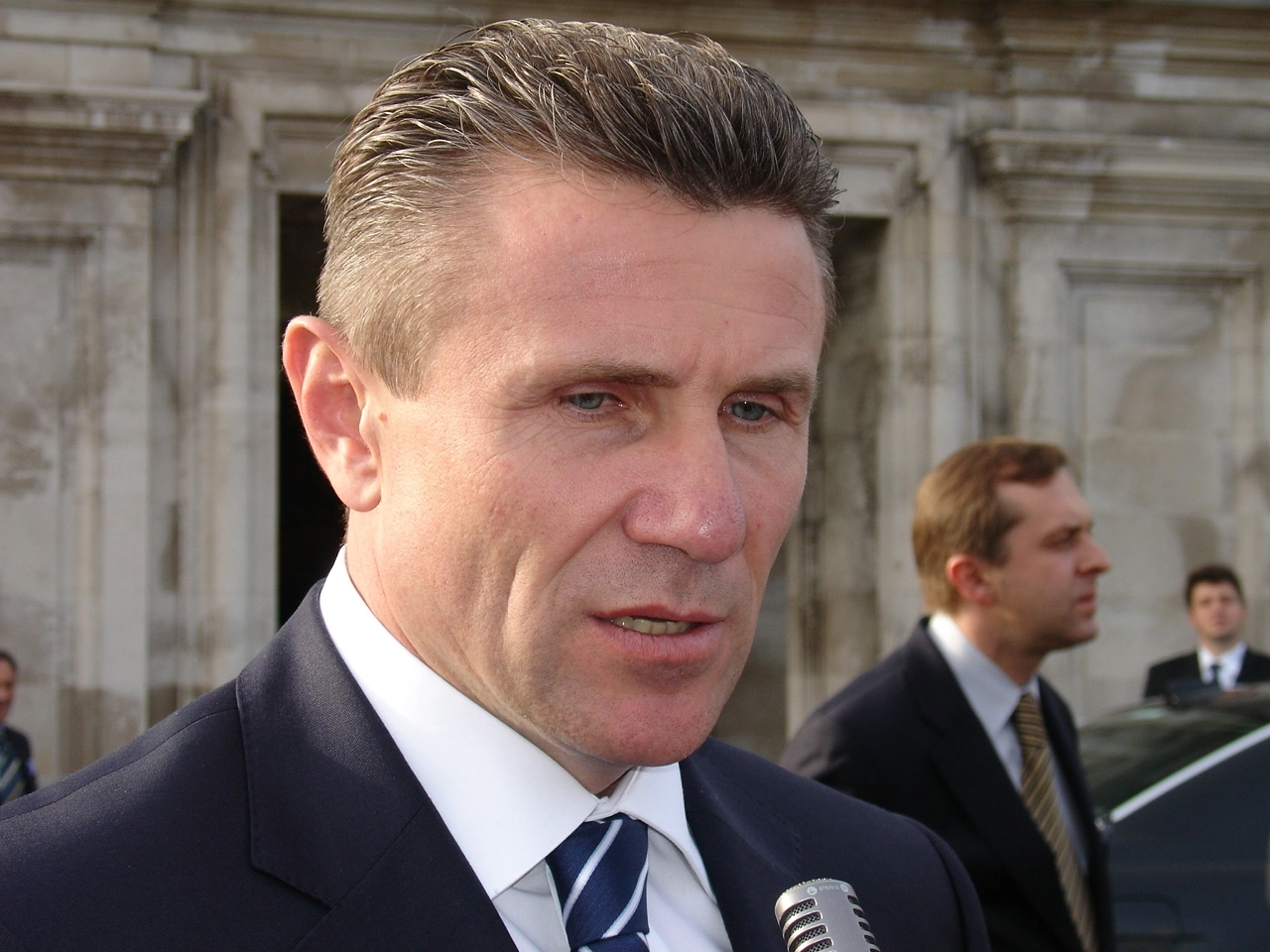
| 22 Quotes | |
| Born as | Serhiy Nazarovych Bubka |
| Occup. | Athlete |
| From | Ukraine |
| Born | February 4, 1963 Voroshilovgrad, USSR (now Luhansk, Ukraine) |
| Age | 63 years |
| Cite | |
Citation Formats
APA Style (7th ed.)
Sergei bubka biography, facts and quotes. (2026, February 11). FixQuotes. https://fixquotes.com/authors/sergei-bubka/
Chicago Style
"Sergei Bubka biography, facts and quotes." FixQuotes. February 11, 2026. https://fixquotes.com/authors/sergei-bubka/.
MLA Style (9th ed.)
"Sergei Bubka biography, facts and quotes." FixQuotes, 11 Feb. 2026, https://fixquotes.com/authors/sergei-bubka/. Accessed 12 Feb. 2026.
Early Life and Introduction to Athletics
Serhiy Nazarovych Bubka, known internationally as Sergei Bubka, was born on December 4, 1963, in Luhansk, then known as Voroshilovgrad in the Ukrainian SSR of the Soviet Union. As a schoolboy he displayed versatile athletic ability, first as a sprinter and long jumper. His path changed decisively when he began pole vaulting under the guidance of coach Vitaliy Petrov. Petrov, a meticulous technician, emphasized speed on the runway, a high grip on increasingly flexible fiberglass poles, and a smooth, efficient takeoff and clearance. That partnership, forged in Donetsk where Bubka trained extensively, shaped a career that would redefine the event.Breakthrough and Global Emergence
Bubka emerged on the international stage at the inaugural IAAF World Championships in 1983 in Helsinki, claiming the gold medal while still a teenager. The performance introduced a new standard of aggression and confidence in pole vaulting: long approaches, blistering runway speed, and a repeated readiness to raise the bar. Over the next several years he traded early world records with leading vaulters like Thierry Vigneron, but soon began to outpace his rivals with a mix of raw speed and Petrov's methodical technique.World Records and Technical Innovations
From 1984 onward, Bubka became synonymous with world records. He was the first man to clear 6.00 meters, a barrier he vaulted in 1985, and in 1988 he was the first to go beyond 6.10. In total, he broke the world record dozens of times, indoors and outdoors, crafting a reputation for consistent incremental progress that kept the event in the headlines. His outdoor world record of 6.14 meters, set in Sestriere in 1994, stood as the outdoor best until 2020, while his absolute world record of 6.15 meters indoors, set in Donetsk in 1993 at the Pole Vault Stars meeting he helped create, remained the global benchmark until Renaud Lavillenie surpassed it in 2014. In later years Armand "Mondo" Duplantis would push the bar even higher, but Bubka's sequence of records and the longevity of his marks illustrated how thoroughly he had redrawn the limits of the discipline.Bubka's technique became a reference point. The Petrov model emphasized a tall, elastic plant, converting runway speed into upward energy through an efficient takeoff and swing. He gripped high on the pole, trusted aggressive poles and a long, accelerating run, and executed a fast, powerful inversion. Many future stars, including Yelena Isinbayeva, would work within the same technical framework developed by Petrov and exemplified by Bubka.
Championship Dominance
Beyond records, Bubka displayed unmatched consistency in championship settings. He captured six consecutive world titles: 1983, 1987, 1991, 1993, 1995, and 1997. That run, achieved across the tumultuous end of the Soviet era and the emergence of independent Ukraine, remains one of the most dominant streaks in athletics. He often outdueled Soviet teammates and later international rivals such as Rodion Gataullin and Igor Trandenkov, demonstrating a capacity to win in different conditions and tactical scenarios.Olympic Champion and Mixed Fortunes
Bubka won the Olympic gold medal at the 1988 Seoul Games while representing the Soviet Union. His Olympic story also included frustrations: injuries disrupted his plans in 1992, when he withdrew before competition, and in 1996 he failed to record a valid height. He aimed to return in 2000 for Sydney but again was forced to withdraw due to injury. Despite those setbacks, his singular Olympic victory and his extensive world championship record underscored a career defined by excellence at the highest level.From the Soviet Union to Independent Ukraine
After the dissolution of the Soviet Union in 1991, Bubka represented Ukraine and continued to collect world titles, including in 1993, 1995, and 1997. Competing for his newly independent country, he became a symbolic figure for Ukrainian sport, combining elite performance with a growing role as an ambassador for athletics. The Donetsk-based Pole Vault Stars meeting he promoted became one of the sport's premier indoor gatherings, and the site of his 6.15-meter indoor world record.Leadership, Advocacy, and Sports Governance
Following his competitive years, Bubka transitioned into sports leadership. He served for many years in the National Olympic Committee of Ukraine, becoming its president in 2005 and holding that role until 2022. On the global stage he joined the council of the international federation for athletics and served as a vice president, and in 2015 he stood for the presidency of the federation, with Sebastian Coe ultimately elected. Bubka also became a member of the International Olympic Committee, contributing to commissions and advocacy efforts for athlete development and event hosting. In these roles he drew on his athlete's perspective, pressing for improved facilities, youth programs, and responsible event organization.Family and Influences
Athletics ran in the family. Bubka's older brother, Vasyl Bubka, was himself an accomplished pole vaulter at the international level, providing a close-at-hand measure of competition and support. The family's next generation also leaned toward sport: his son, Sergei Bubka Jr., pursued a professional tennis career. In coaching, Vitaliy Petrov remained the most significant influence on Bubka's athletic development, and the combination of Petrov's philosophy and Bubka's power and daring reshaped the event for decades.Legacy and Lasting Impact
Sergei Bubka's impact on pole vaulting is measured not only by the heights he cleared but by the standards he set for preparation, technique, and competitive mindset. His record-breaking sequence captivated audiences and inspired rivals, while the endurance of his marks highlighted the sophistication of his approach. The transitions from the Soviet era to independent Ukraine and from athlete to sports leader revealed a figure able to adapt and contribute in multiple contexts.Later champions like Renaud Lavillenie and Armand Duplantis built upon a technical lineage that Bubka and Petrov helped codify, ensuring that his influence persisted long after his final vault. In recognition of his sporting achievements and service, he received high national honors in Ukraine, including the title of Hero of Ukraine, and he was inducted into the IAAF Hall of Fame. Across competition, mentorship, and governance, Bubka left a durable imprint on athletics: a benchmark of excellence in the pole vault and a model of sustained engagement with the Olympic movement and the development of sport in Ukraine and beyond.
Our collection contains 22 quotes written by Sergei, under the main topics: Freedom - Sports - Training & Practice - Business - Decision-Making.
Source / external links