
Shaquille O'Neal Biography Quotes 30 Report mistakes
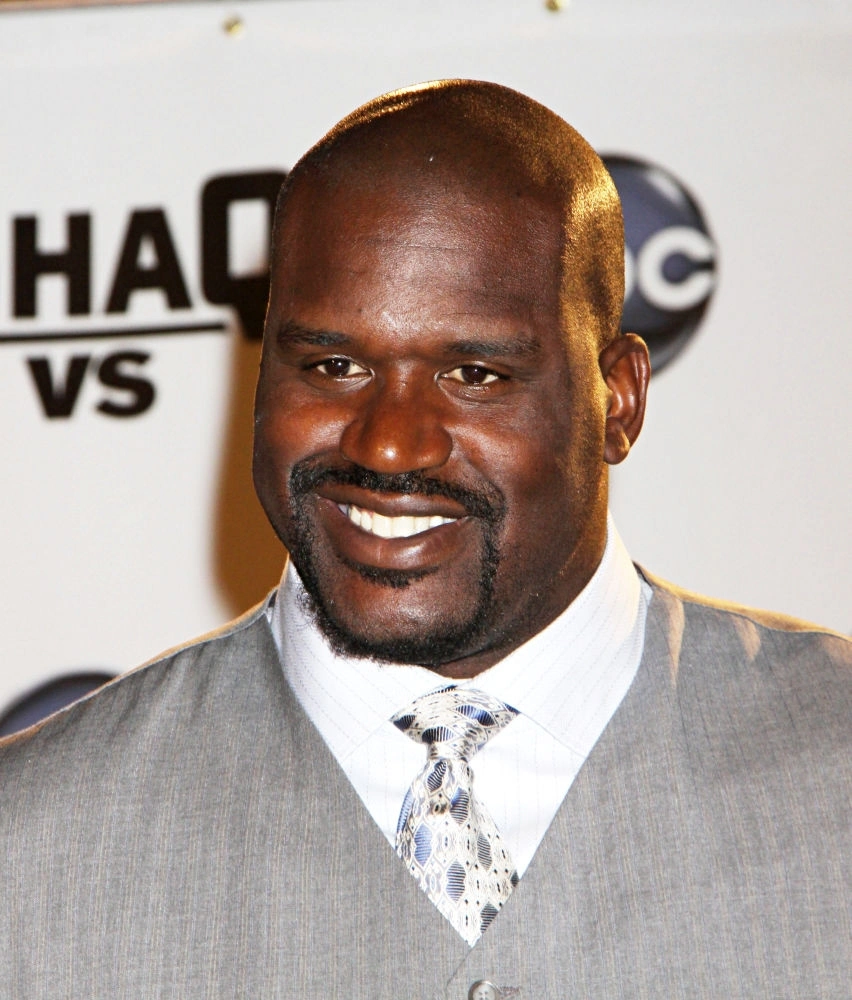
| 30 Quotes | |
| Occup. | Athlete |
| From | USA |
| Born | March 6, 1972 |
| Age | 54 years |
| Cite | |
Citation Formats
APA Style (7th ed.)
Shaquille o'neal biography, facts and quotes. (2026, February 11). FixQuotes. https://fixquotes.com/authors/shaquille-oneal/
Chicago Style
"Shaquille O'Neal biography, facts and quotes." FixQuotes. February 11, 2026. https://fixquotes.com/authors/shaquille-oneal/.
MLA Style (9th ed.)
"Shaquille O'Neal biography, facts and quotes." FixQuotes, 11 Feb. 2026, https://fixquotes.com/authors/shaquille-oneal/. Accessed 24 Mar. 2026.
Early Life and Background
Shaquille Rashaun O'Neal was born March 6, 1972, in Newark, New Jersey, into a period when American cities were wrestling with deindustrialization and crack-era violence. His early childhood carried instability - his biological father, Joseph Toney, was largely absent - and the emotional center of his home became his mother, Lucille O'Neal, and later his stepfather, Phillip Harrison, an Army sergeant whose discipline and steadiness Shaq would repeatedly credit for giving him a workable sense of order. The combination of size, vulnerability, and a craving for structure shaped the young boy into someone who learned early to perform toughness while still needing guidance.Because Harrison was in the military, the family moved through postings that broadened Shaq's horizons and insulated him from some of Newark's worst pressures. A significant stretch in Germany exposed him to being visibly different - an enormous American kid learning to translate himself across cultures - and made humor a social tool as much as a personality trait. Back in the United States, the family settled in San Antonio, Texas, where O'Neal's body caught up to his legend: by his teens he was already a towering presence, and basketball became the arena where chaos could be converted into rules, roles, and results.
Education and Formative Influences
At Robert G. Cole High School on the Fort Sam Houston military base, O'Neal was molded by a team-first environment and by Harrison's insistence on accountability at home; he led Cole to a state championship in 1989 and learned that dominance had to be paired with routine. Recruited nationally, he chose Louisiana State University, playing for Dale Brown from 1989 to 1992, winning SEC Player of the Year honors twice and emerging as a defensive force. LSU also became a laboratory for his showman identity - the blend of seriousness and performance that would later define him - and, years later, he completed his degree and pursued graduate study, signaling that he wanted his legend to include more than a highlight reel.Career, Major Works, and Turning Points
Drafted No. 1 overall by the Orlando Magic in 1992, O'Neal was an immediate gravitational event - Rookie of the Year, a franchise transformed, and a Finals trip by 1995 that revealed both his power and the era's tactical answer: foul him, slow him, force him to the line. In 1996 he joined the Los Angeles Lakers, and under Phil Jackson's triangle system he fused force with structure, winning three straight championships (2000-2002) with Kobe Bryant; he took the 2000 MVP and became the league's most unguardable interior scorer at his peak. Conflict with Bryant, questions about conditioning, and the fatigue of constant scrutiny pushed him to Miami in 2004, where he won a fourth title in 2006 alongside Dwyane Wade. Later stops - Phoenix, Cleveland, Boston - were more epilogue than prime, yet they showed a star learning to live as a moving institution. Parallel to basketball he built a media-and-business life: rap albums and films in the 1990s, a long advertising career, and later a defining second act as a television analyst whose charisma turned locker-room logic into mass entertainment.Philosophy, Style, and Themes
O'Neal's game was built on ancient ideas: occupy space, impose leverage, and make every possession a referendum on whether the other team could withstand contact. But he was never only a brute; he was a performer who understood that America consumes athletes as characters. His self-mythology - nicknames, jokes, exaggerations - was not decoration but armor, a way to control the story before the story controlled him. When he insisted, “I would like to be refered to as 'The Big Aristotle'”. , it revealed a mind that wanted dominance to be read as intellect, not accident - a giant arguing that power can be reasoned, even if the argument arrives with a grin.The tension in his psychology was always between freedom and systems. His best seasons came when structure amplified him, yet he bristled at anything that made his numbers look ordinary. “But that is the only thing that slows me down is the system. No one, two or three was big enough to slow me down, only the system”. That sentence is part complaint, part confession: he knew basketball is a machine of roles, and he also knew he was happiest when the machine ran through him. Even his most famous flaw became theology and coping mechanism: “Me shooting 40% at the foul line is just God's way to say nobody's perfect”. In O'Neal's worldview, vulnerability was allowed only if it could be turned into a punch line - and behind the laugh was a competitor protecting himself from the simplest critique.
Legacy and Influence
O'Neal's enduring influence is twofold: strategically, he was the center who forced an entire generation of roster construction - extra big bodies, intentional fouling, and defensive schemes built to survive his paint gravity - and culturally, he modeled the modern athlete as a multimedia corporation. His four championships, Finals MVP, and longevity across franchises anchor him historically, but his deeper imprint is how he blended intimidation with accessibility, turning superstardom into something conversational. Long after his last post-up, "Shaq" remains shorthand for overwhelming force tempered by humor - a reminder that the most dominant figures often survive not just by winning, but by narrating themselves better than anyone else can.Our collection contains 30 quotes written by Shaquille, under the main topics: Witty One-Liners - Leadership - Victory - Sports - Work Ethic.
Other people related to Shaquille: Wilt Chamberlain (Athlete), Yao Ming (Athlete), Jason Williams (Athlete), Aries Spears (Actor), Steve Kerr (Athlete), Paul M. Glaser (Actor)
Source / external links