
Shusaku Endo Biography Quotes 2 Report mistakes
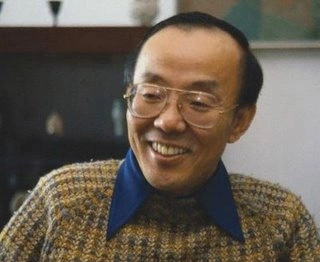
| 2 Quotes | |
| Born as | 遠藤 周作 |
| Occup. | Author |
| From | Japan |
| Born | March 27, 1923 Tōkyo, Japan |
| Died | September 29, 1996 |
| Aged | 73 years |
| Cite | |
Citation Formats
APA Style (7th ed.)
Shusaku endo biography, facts and quotes. (2026, February 11). FixQuotes. https://fixquotes.com/authors/shusaku-endo/
Chicago Style
"Shusaku Endo biography, facts and quotes." FixQuotes. February 11, 2026. https://fixquotes.com/authors/shusaku-endo/.
MLA Style (9th ed.)
"Shusaku Endo biography, facts and quotes." FixQuotes, 11 Feb. 2026, https://fixquotes.com/authors/shusaku-endo/. Accessed 27 Mar. 2026.
Early Life and Background
Shusaku Endo (Endo Shusaku, 1923-03-27 to 1996-09-29) was born in Tokyo in the uneasy calm between two wars, into a middle-class family whose moves would later give his fiction its recurring sense of dislocation. After his parents separated, he spent part of his childhood in Dairen (then under Japanese control in Manchuria), returning to Japan as the empire hardened into a wartime state. That early experience of being both insider and outsider - Japanese by blood and language, yet never fully at home in any single place - became an emotional template for his later protagonists.In 1933 his mother had him baptized Catholic in Kobe, a port city where foreign missionaries and Japanese converts lived under social suspicion. Catholicism remained a minority faith in Japan and carried a faint odor of foreignness, intensified by the political climate of the 1930s. Endo grew up during an era that demanded conformity - first to militarism and then, after 1945, to a rapidly American-influenced reconstruction. The pressure of those shifts - and the cost of appearing different - sharpened his lifelong preoccupation with shame, betrayal, and the hidden interior where public loyalty and private conscience collide.
Education and Formative Influences
Endo studied French literature at Keio University, came of age amid wartime deprivation, and then entered the cultural opening of the Occupation. In 1950 he went to France on a scholarship, studying in Lyon and later in Paris, encountering European Catholic culture not as an abstract creed but as a living history. The period was also marked by illness: he suffered recurring tuberculosis and spent long stretches in hospitals, an enforced solitude that intensified his attention to weakness and dependence. French novelists and Catholic writers offered him forms for interior drama, but the greater lesson was that faith could be inseparable from doubt, and that the body - frail, coughing, fevered - could become a moral instrument rather than a mere obstacle.Career, Major Works, and Turning Points
Returning to Japan, Endo emerged in the 1950s as a major postwar novelist wrestling with Christianity in a culture that often treated it as a Western import. Early successes such as "Shiroi hito" ("White Man") and "Kiiroi hito" ("Yellow Man") announced his comparative gaze, probing ethics across cultural lines. He reached a wider audience with "Umi to dokuyaku" ("The Sea and Poison", 1958), a chilling portrayal of wartime medical atrocities and the banality of moral compromise. His international breakthrough came with "Chinmoku" ("Silence", 1966), set among 17th-century Jesuit missionaries and persecuted Japanese Christians, and later with works that kept returning to the same pressure point - "Samurai" (1980), "Scandal" (1986), and the long, intimate "Fukai kawa" ("Deep River", 1993). Across decades, illness, public acclaim, and controversy pushed him toward ever more compassionate portraits of human failure, until his death in Tokyo in 1996.Philosophy, Style, and Themes
Endo described faith less as certainty than as a wound that never quite healed. The most revealing key is his own admission, “I became a Catholic against my will”. The line is not a slogan but a psychological confession: Catholicism arrived in his life as an imposed identity, tied to family authority and to the social discomfort of being different. That coercion helps explain his recurring fixation on betrayal. In "Silence", apostasy is not treated as a simple moral collapse but as a desperate act performed under unbearable pressure, and Endo refuses the easy satisfactions of martyr stories. He pursues the compromised, frightened person who cannot sustain heroic purity, then asks what kind of mercy could meet such a person in the mud.His prose favors plain surfaces over rhetorical fireworks, letting ethical horror emerge through restraint and the slow tightening of circumstance. Beneath that style lies a large cultural problem Endo never stopped worrying: how a faith born in the Mediterranean could speak in an East Asian key without becoming either propaganda or exotic ornament. He framed this directly: “Christianity, to be effective in Japan, must change”. In his fiction, this becomes the search for a "motherly" God who shares suffering rather than judges from above - a vision shaped by his own hospital years and by Japan's postwar atmosphere, where guilt could be submerged beneath economic recovery. Endo's characters often want to be good but discover that desire alone cannot cancel cowardice; what remains is the haunting question of whether compassion can exist without cultural domination, and whether grace can touch a person who has already failed.
Legacy and Influence
Endo stands as the most significant Japanese Catholic novelist of the 20th century, not because he preached, but because he dramatized the cost of belief in a society where belief itself could be suspect. "Silence" became a global touchstone for discussions of faith under persecution and the ethics of cultural encounter, influencing theologians, novelists, and filmmakers, and renewing attention to Japan's hidden Christian history. At home, his work broadened the postwar novel's moral vocabulary by insisting that weakness is not a footnote to character but its central fact. His enduring influence lies in the sympathy he extends to the morally defeated - and in his insistence that the most important dramas happen where public identity ends and the private conscience begins.Our collection contains 2 quotes written by Shusaku, under the main topics: Faith.
Shusaku Endo Famous Works
- 1993 Deep River (Novel)
- 1986 Scandal (Novel)
- 1980 The Samurai (Novel)
- 1974 When I Whistle (Novel)
- 1966 Silence (Novel)
- 1958 The Sea and Poison (Novel)
Source / external links