
Siegfried Lenz Biography Quotes 1 Report mistakes
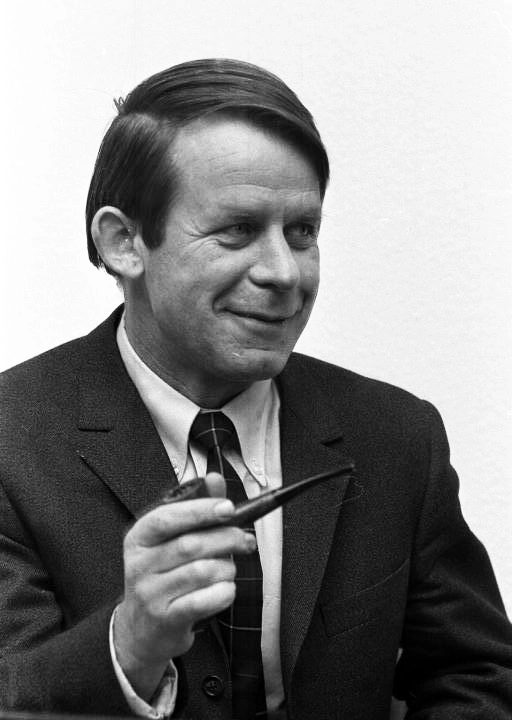
| 1 Quotes | |
| Occup. | Writer |
| From | Germany |
| Born | March 17, 1926 Lyck (Ełk), East Prussia |
| Age | 100 years |
| Cite | |
Citation Formats
APA Style (7th ed.)
Siegfried lenz biography, facts and quotes. (2026, February 11). FixQuotes. https://fixquotes.com/authors/siegfried-lenz/
Chicago Style
"Siegfried Lenz biography, facts and quotes." FixQuotes. February 11, 2026. https://fixquotes.com/authors/siegfried-lenz/.
MLA Style (9th ed.)
"Siegfried Lenz biography, facts and quotes." FixQuotes, 11 Feb. 2026, https://fixquotes.com/authors/siegfried-lenz/. Accessed 25 Mar. 2026.
Early Life
Siegfried Lenz was born on 17 March 1926 in Lyck, East Prussia, a region of lakes and flat horizons whose landscapes and village voices would echo through his fiction. The experience of growing up in a borderland shaped his sensitivity to questions of belonging, language, and memory. In adolescence he witnessed the unraveling of his world as the Second World War engulfed East Prussia. Like many of his generation, he was drawn into the war's machinery, an ordeal that would leave him with a lasting preoccupation: how individuals navigate duty, guilt, and conscience when institutions demand obedience.War and Aftermath
Conscripted into the German navy toward the end of the war, Lenz saw the collapse of the regime and the displacement of millions from his native region. Captivity and the liminal years that followed confronted him with a new moral and linguistic landscape. The enforcement of orders, the ambiguity of complicity, and the loss of homeland became durable themes. When he was finally free to resume civilian life, he joined the large tide of those who remade themselves in the ruined cities of the new Federal Republic.Studies and Journalism
Lenz moved to Hamburg, where he studied German, English, and philosophy. The port city became his adopted home and the staging ground for a professional life that began in journalism. He worked for the newspaper Die Welt and learned the precision and restraint that would characterize his prose. In Hamburg he also met Liselotte, known to friends as Lotti, who became his wife and most trusted first reader. Her presence in his working life was steady and formative; she read drafts, tempered doubts, and helped him stay attuned to the rhythms of everyday speech.First Books and a Voice of His Own
In the early 1950s Lenz left the newsroom to write full time, publishing with the Hamburg house Hoffmann und Campe. He made his name with stories and novels of clear, humane observation. So zaertlich war Suleyken, with its affectionate Masurian miniatures, turned the lost world of his childhood into memory art. Der Mann im Strom explored the dignity of work and the quiet heroism of ordinary lives. Even at this stage, he wrote with a carefully modulated tone: empathetic, ironical without cruelty, skeptical of grand abstractions.Gruppe 47 and Literary Companions
As his reputation grew, Lenz became a central participant in Gruppe 47, the informal workshop that helped reshape postwar German literature. He read alongside and debated with Heinrich Boell, Guenter Grass, and the group's instigator Hans Werner Richter. These sessions were crucibles of taste and ethics, and they confirmed Lenz in a practice of storytelling that trusted the reader and distrusted rhetorical flourish. With Boell and Grass he shared a commitment to confronting the moral wreckage of the recent past and to defending the autonomy of literature in the young republic.Breakthrough: Deutschstunde
His international breakthrough came with Deutschstunde (1968), a novel that turned a small North Frisian community into a theater of conscience. Told by the young Siggi Jepsen, who must write an essay on duty, the book dramatizes a conflict between a policeman father who obeys every order and a painter silenced by a regime's ban. The portrait of a son caught between loyalty and truth, and of neighbors navigating complicity, made the novel a touchstone in schools and public debate. It exemplified Lenz's gift for embedding ethical questions in palpable, lived worlds.Themes and Later Works
Across decades Lenz returned to recurring motifs: the burden and uses of memory, the weight of small gestures, the instability of national and personal identity, the sea and the flatlands as moral geography. Heimatmuseum examined the treacherous comforts of nostalgia, asking what it means to curate a past while acknowledging its fractures. Fundbuero and Arnes Nachlass approached loss and remembrance with the same tact: characters sift through objects, words, and silences to discover what can still be carried forward. The prose remained lucid, never hectoring, built to let readers infer rather than be instructed.Civic Engagement and Friendships
Lenz stood publicly for a liberal, open society. He supported the Social Democratic Party and lent his voice to the debates around Ostpolitik and reconciliation, aligning himself with the pragmatic humanism of political friends such as Helmut Schmidt. With writers like Guenter Grass and Heinrich Boell he took part in readings, petitions, and discussions that sought to widen the moral conversation after 1945. He was an active member of the literary public sphere, but he avoided polemical displays; his preference was for the essay, the speech, and the calm conversation in which arguments could be tested for fairness.Craft and Method
Lenz's sentences are deceptively simple. He pared away ornament, aiming for a transparency through which characters could breathe. He favored close third-person and first-person narrators who notice the world carefully: the angle of rain on a dike, the texture of a boat hull, a clerk's hesitation before a stamp. This observational ethics served his subjects: social outsiders, craftsmen, civil servants, refugees, and families divided by principle. He trusted dialogue and understatement, and he distrusted any impulse that reduced people to allegory. His fiction is democratic in the best sense: it grants attention to those who are rarely heard.Posthumous Resonances
Lenz's drawer contained risks he had long set aside. Among them was Der Ueberlaeufer, a novel written in the early 1950s about a German soldier who defects on the Eastern Front. Only after his death did it appear, reigniting debates about how early the postwar literary conscience could face taboos of desertion and betrayal. The book's late publication revealed both his boldness as a young writer and his prudence as a public figure who knew when a conversation would not yet be heard.Awards and Recognition
Over the years Lenz received many of the most respected honors available to a German-language writer, including the Goethe Prize of the City of Frankfurt and high federal decorations. More telling than the trophies was the endurance of his readership: his books became fixtures in classrooms, libraries, and family shelves, translated widely and read across generations. Critics valued his steadiness; younger writers learned from his moral tact and his attention to the everyday.Personal Loss, Late Years, and Death
The death of his wife Lotti, his closest confidante, marked him deeply. He continued to write and to appear in public, but with a quieter cadence. In later years he married again and remained in Hamburg, the city he had made his home shortly after the war. He died there in 2014. Friends from literature and politics, among them Guenter Grass and Helmut Schmidt, mourned a companion who had never mistaken fame for authority. His manner in private mirrored his prose: courteous, attentive, inclined to ask questions rather than deliver verdicts.Legacy
Siegfried Lenz stands as one of the essential narrators of postwar Germany. He found forms that allowed the largest questions to pass through ordinary lives without crushing them. He wrote about the long aftermath of catastrophe but kept faith with the possibility of decency. The company he kept, Heinrich Boell's moral urgency, Guenter Grass's exuberant imagination, Hans Werner Richter's uncompromising standards, Helmut Schmidt's practical ethics, situated him in the heart of the Federal Republic's intellectual life. Yet his work remains distinct: quiet where others argued, stubborn in its fairness, and enduring in its insistence that memory, if told truthfully and patiently, can be a way of living together.Our collection contains 1 quotes written by Siegfried, under the main topics: Legacy & Remembrance.
Other people related to Siegfried: Gunther Grass (Author)
Siegfried Lenz Famous Works
- 2008 A Minute's Silence (Novel)
- 1992 The Selected Stories of Siegfried Lenz (Short Story Collection)
- 1968 The German Lesson (Novel)
- 1960 The Lightship (Novella)
- 1957 The Drummer (Novel)
Source / external links