
Siegfried Sassoon Biography Quotes 9 Report mistakes
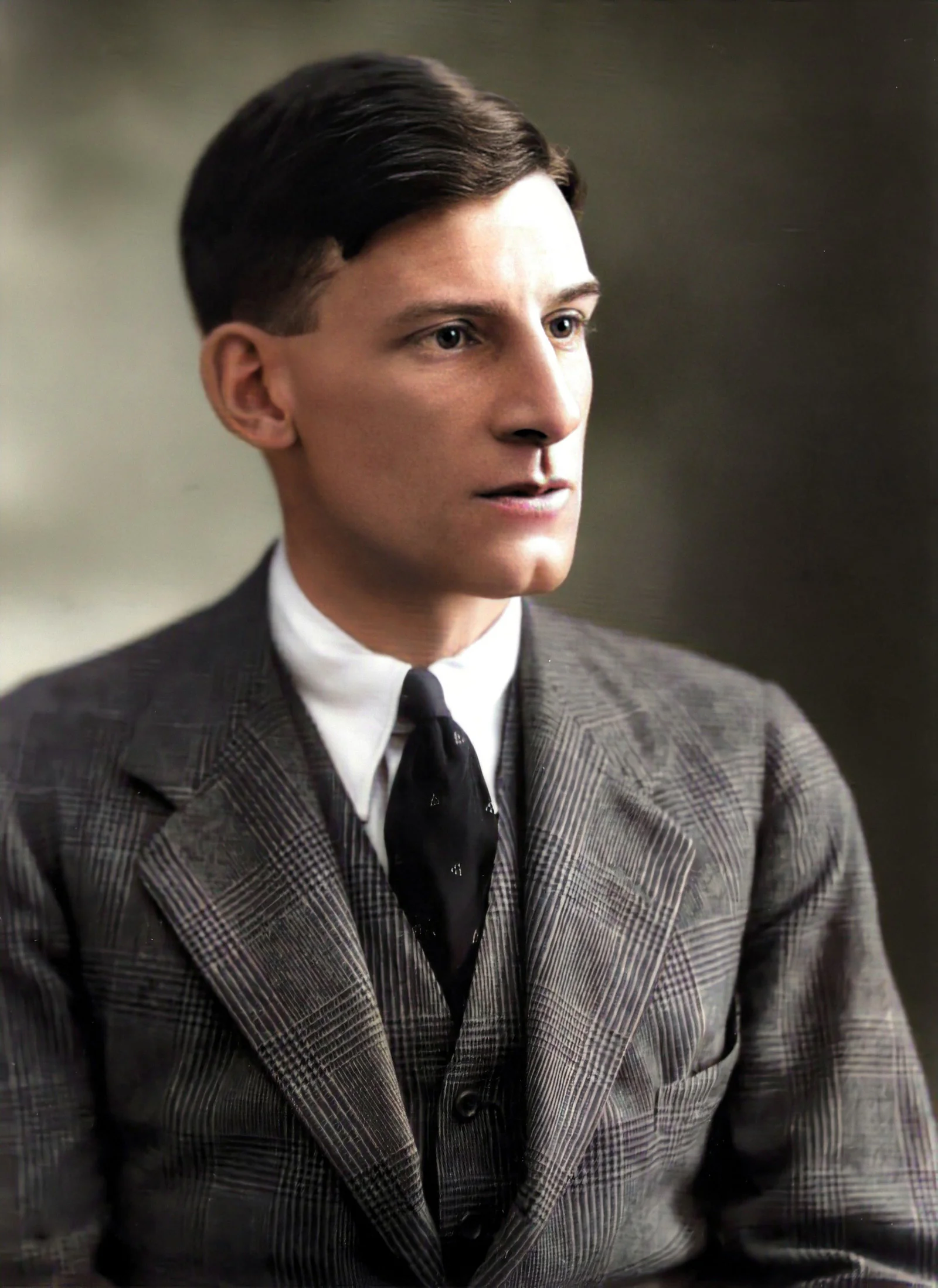
| 9 Quotes | |
| Born as | Siegfried Loraine Sassoon |
| Occup. | Poet |
| From | United Kingdom |
| Born | September 8, 1886 Matfield, Kent, England |
| Died | September 1, 1967 Heytesbury, Wiltshire |
| Cause | Stomach cancer |
| Aged | 80 years |
| Cite | |
Citation Formats
APA Style (7th ed.)
Siegfried sassoon biography, facts and quotes. (2026, February 2). FixQuotes. https://fixquotes.com/authors/siegfried-sassoon/
Chicago Style
"Siegfried Sassoon biography, facts and quotes." FixQuotes. February 2, 2026. https://fixquotes.com/authors/siegfried-sassoon/.
MLA Style (9th ed.)
"Siegfried Sassoon biography, facts and quotes." FixQuotes, 2 Feb. 2026, https://fixquotes.com/authors/siegfried-sassoon/. Accessed 6 Mar. 2026.
Early Life and Background
Siegfried Loraine Sassoon was born on September 8, 1886, in Matfield, Kent, into a family split by class and faith. His father, Alfred Ezra Sassoon, came from the wealthy Baghdadi Jewish Sassoon dynasty but was estranged after marrying Theresa Thornycroft, an English Catholic from an artistic family. The marriage left the household genteel but financially constrained, and the boy grew up with a sense of being both privileged and slightly out of place - a condition that later sharpened his eye for institutional hypocrisy.After his father died when Siegfried was still a child, Theresa raised him and his brothers in the pastoral rhythms of Kent. Hunting, cricket, and long solitary rides shaped the early Sassoon: romantic, athletic, and bookish, with a temperament that could turn from charm to severity. Before the war he tried on the role of the country gentleman-poet, publishing small volumes at his own expense and living for the seasons; but beneath the Edwardian calm lay a readiness for moral extremity that would be detonated by 1914.
Education and Formative Influences
Sassoon was educated at Marlborough College and briefly attended Clare College, Cambridge, leaving without a degree. His real schooling came from reading and imitation: the Georgian poets and late Victorians gave him melody and landscape; foxhunting and village life supplied detail; and a private hunger for recognition pushed him to test himself as both sportsman and writer. The prewar years trained him in lyric control, but also in the rituals of Englishness he would later indict from inside.Career, Major Works, and Turning Points
He enlisted in the Sussex Yeomanry at the outbreak of World War I and became an officer in the Royal Welch Fusiliers, serving on the Western Front with conspicuous bravery that earned him the Military Cross; the nickname "Mad Jack" captured the reckless courage that coexisted with acute sensitivity. The Somme and the death of friends, especially David Thomas, broke the last romance of battle and turned his poetry toward anger and witness, collected in works such as The Old Huntsman (1917), Counter-Attack and Other Poems (1918), and later the novel trilogy that became The Complete Memoirs of George Sherston (Memoirs of a Fox-Hunting Man, 1928; Memoirs of an Infantry Officer, 1930; Sherston's Progress, 1936). In 1917 he issued his famous protest, "Finished with the War: A Soldier's Declaration", a turning point that might have led to court-martial; instead, through the intervention of friends, he was sent to Craiglockhart War Hospital near Edinburgh, where he met and influenced Wilfred Owen. After the Armistice he remained a central literary figure, editing, mentoring, and writing with growing introspection, later publishing the autobiographical memoir The Weald of Youth (1942) and continuing verse and diaries into old age.Philosophy, Style, and Themes
Sassoon's inner life was defined by a struggle between gentility and ferocity, a duality he once rendered with emblematic bluntness: “In me the tiger sniffs the rose”. That psychological split produced his signature method: pastoral cadence interrupted by trench reality, comedy edged with disgust, and tenderness that refuses consolation. Early Georgians prized decorum; Sassoon weaponized decorum, turning neat rhyme and clear diction into instruments of accusation, as if the very polish of English verse should be forced to carry mud, blood, and lies.His war writing is not merely antiwar but anti-evasion, insisting that institutional language hides human cost. In his protest he framed himself not as a pacifist withdrawing from responsibility but as a soldier defending the meaning of service: “I am not protesting against the conduct of the war, but against the political errors and insincerities for which the fighting men are being sacrificed”. That distinction matters to his art: the poems aim their fury upward, at those who speak of honor while rationing truth. When he writes, “Soldiers are citizens of death's grey land, drawing no dividend from time's tomorrows”. he is diagnosing a moral economy in which the front line becomes a separate country, stripped of future and exploited for slogans. Even his satiric portraits of staff officers and patriotic civilians are animated by grief: the rage is the mask of a man who loved England enough to feel betrayed by it.
Legacy and Influence
Sassoon endures as one of the clearest moral intelligences to emerge from World War I, a poet who translated private shock into public indictment without abandoning craft. His influence runs through the modern literature of testimony - from later British war poets to memoirists and journalists who inherit his demand that language answer to experience. As Owen's early champion, he shaped a canon; as the author of the Sherston books, he helped define how the Great War would be remembered: not as pageant, but as a collision between inherited ideals and mechanized slaughter. His later life, marked by complex sexuality, periods of isolation, a late conversion to Catholicism, and the long work of self-scrutiny in diaries and memoir, reinforces the central Sassoon lesson: that courage can be physical, moral, and literary at once, and that the hardest battlefield may be the conscience.Our collection contains 9 quotes written by Siegfried, under the main topics: Poetry - Military & Soldier - War.
Other people related to Siegfried: Isaac Rosenberg (Poet), Robert Graves (Novelist), Edward Marsh (Editor), Paul Fussell (Historian)
Frequently Asked Questions
- Siegfried Sassoon wife: Hester Gatty.
- Siegfried Sassoon family: Parents Alfred Ezra Sassoon and Theresa Thornycroft; married Hester Gatty; one son, George.
- Siegfried Sassoon most famous poems: Everyone Sang; Suicide in the Trenches; The General; Base Details; Counter-Attack.
- Siegfried Sassoon influenced by: Thomas Hardy; Georgian poets; his World War I service.
- Siegfried Sassoon books: Memoirs of a Fox-Hunting Man; Memoirs of an Infantry Officer; Sherston's Progress; The Old Huntsman; Counter-Attack and Other Poems.
- Siegfried Sassoon poems: Counter-Attack; The General; Suicide in the Trenches; Base Details; They; Everyone Sang.
- How old was Siegfried Sassoon? He became 80 years old
Siegfried Sassoon Famous Works
- 1983 The War Poems (Book)
- 1937 The Complete Memoirs of George Sherston (Book)
- 1919 Memorial Tablet (Book)
- 1919 Picture-Show (Book)
- 1918 Counter-Attack and Other Poems (Book)
- 1917 The Old Huntsman (Book)
Source / external links