
Sigrid Undset Biography Quotes 4 Report mistakes
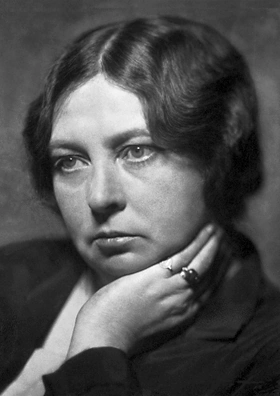
| 4 Quotes | |
| Occup. | Novelist |
| From | Norway |
| Born | May 20, 1882 |
| Died | June 10, 1949 |
| Aged | 67 years |
| Cite | |
Citation Formats
APA Style (7th ed.)
Sigrid undset biography, facts and quotes. (2026, February 11). FixQuotes. https://fixquotes.com/authors/sigrid-undset/
Chicago Style
"Sigrid Undset biography, facts and quotes." FixQuotes. February 11, 2026. https://fixquotes.com/authors/sigrid-undset/.
MLA Style (9th ed.)
"Sigrid Undset biography, facts and quotes." FixQuotes, 11 Feb. 2026, https://fixquotes.com/authors/sigrid-undset/. Accessed 12 Feb. 2026.
Early Life and Background
Sigrid Undset was born May 20, 1882, in Kalundborg, Denmark, to Norwegian parents and was brought to Kristiania (Oslo) while still a child. Her father, Ingvald Undset, was a respected archaeologist whose scholarly temperament and wide horizons helped set the household's emotional weather. His work and curiosity drew the family into an imaginative geography that ranged beyond Norway, and Undset later distilled that restlessness into her own lifelong sense that identity is made as much by inheritance as by choice.The family's stability fractured when Ingvald died in 1893, leaving Undset's mother, Charlotte Gytkjaer, to manage reduced means and difficult practicalities. The early encounter with bereavement and constraint - and with a mother's stoic endurance - shaped Undset's acute sympathy for women forced to bargain between duty and desire. In adolescence she became at once inward and watchful, testing the world against private standards while learning how quickly comfort can evaporate.
Education and Formative Influences
Undset attended school in Kristiania, where she proved intelligent but stubbornly self-contained, later recalling, "I rolled myself up into a tight ball of resistance and it was thus that I went through my school years". Her father had pressed education as a safeguard and a legacy, a push she remembered plainly: "I was sent to a school because my father was already aware that his days were numbered, and he was anxious for me to acquire a good education and follow in his footsteps". Alongside formal study she read deeply - the sagas, continental realism, and nineteenth-century moral psychology - and began training her eye on how social rules become interior voices.Career, Major Works, and Turning Points
Economic necessity sent her into clerical work, and the discipline of routine became a kind of apprenticeship; as she put it, "I went to work in an office and learned, among other lessons, to do things I did not care for, and to do them well. Before I left this office, two of my books had already been published". She broke through with contemporary realist novels of love, labor, and female autonomy - notably Jenny (1911) - then made a decisive turn to historical fiction grounded in meticulous research and lived human conflict: Kristin Lavransdatter (1920-1922) and the later tetralogy The Master of Hestviken (1925-1927). In 1924 she converted to Roman Catholicism, a conversion that sharpened rather than softened her moral vision, and in 1928 she received the Nobel Prize in Literature. During World War II she became a prominent anti-Nazi voice, fled Norway in 1940 through Sweden and the Soviet Union to the United States, and returned after liberation to a country in recovery, dying in Lillehammer on June 10, 1949.Philosophy, Style, and Themes
Undset's fiction is driven by a psychological realism that treats conscience as action, not ornament. Her own self-description of youth - "I rolled myself up into a tight ball of resistance and it was thus that I went through my school years". - reads like a key to her protagonists: women who protect an inner core while negotiating marriages, reputations, pregnancies, and faith. She refused sentimental portraits of emancipation or tradition; instead she traced how desire and pride can disguise themselves as principle, and how love can be both vocation and trap. The steady pressure of mortality, learned early, made her attentive to consequences across decades rather than scenes.Her style is tactile and exact: seasons, farm work, liturgy, childbirth, and law courts are rendered with the weight of real time. The office years left her with a craftsman's ethic - "to do things I did not care for, and to do them well". - and that ethic shows in her long-arc plotting, the patient accumulation of motives, and the refusal to excuse characters from the results of their choices. Even when she writes medieval Norway, her subject is not pageantry but the inner argument between will and obligation. Catholicism deepened her interest in sin, penance, and grace, yet she remained unsparing: salvation in Undset is never cheap, and love, when true, must survive the ordeal of truth-telling.
Legacy and Influence
Undset endures as Norway's great novelist of moral complexity and historical imagination, a writer who made the medieval North feel emotionally contemporary without flattening its difference. Kristin Lavransdatter remains a landmark in world historical fiction for its fusion of scholarship, narrative momentum, and intimate ethical inquiry, while Jenny and her other modern novels continue to speak to the costs of romantic idealism and social constraint. Her wartime stance reinforced her public authority, but her lasting influence lies in how rigorously she dramatized the formation of a conscience - and how she insisted that women's inner lives, in any century, are arenas where history and the soul collide.Our collection contains 4 quotes written by Sigrid, under the main topics: Work Ethic - Father - Loneliness.
Sigrid Undset Famous Works
- 1930 The Wild Orchid (Novel)
- 1925 The Master of Hestviken (Novel)
- 1920 Kristin Lavransdatter (Novel)
- 1909 Gunnar's Daughter (Novel)
Source / external links