
Simon Wiesenthal Biography Quotes 18 Report mistakes
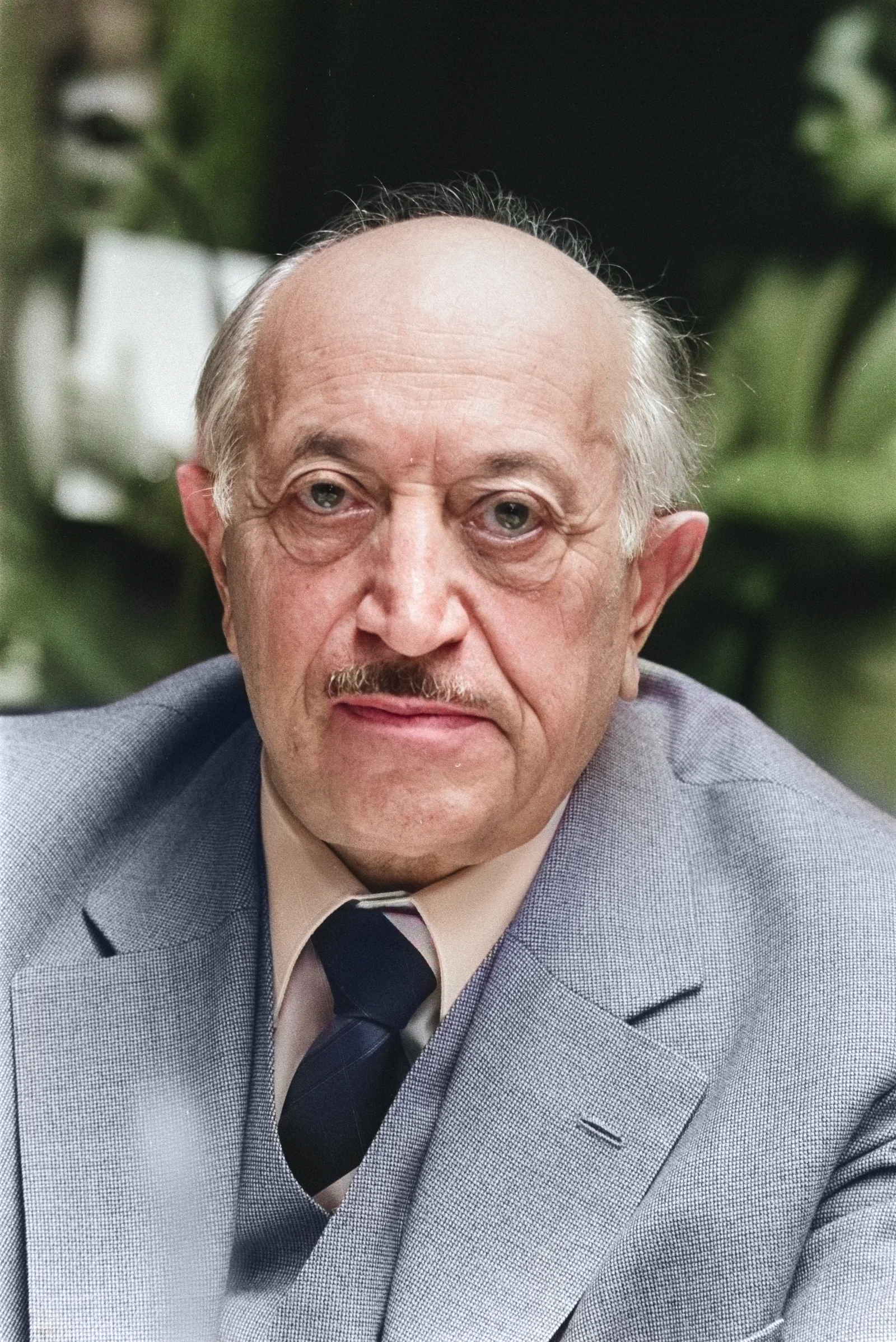
Attr: Rob Bogaerts / Anefo, CC0
| 18 Quotes | |
| Known as | The Nazi Hunter |
| Occup. | Activist |
| From | Austria |
| Spouse | Cyla Müller-Wiesenthal |
| Born | December 31, 1908 Buchach, Kingdom of Galicia, Austria-Hungary (now Ukraine) |
| Died | September 20, 2005 Vienna, Austria |
| Cause | Natural causes |
| Aged | 96 years |
| Cite | |
Citation Formats
APA Style (7th ed.)
Simon wiesenthal biography, facts and quotes. (2026, February 11). FixQuotes. https://fixquotes.com/authors/simon-wiesenthal/
Chicago Style
"Simon Wiesenthal biography, facts and quotes." FixQuotes. February 11, 2026. https://fixquotes.com/authors/simon-wiesenthal/.
MLA Style (9th ed.)
"Simon Wiesenthal biography, facts and quotes." FixQuotes, 11 Feb. 2026, https://fixquotes.com/authors/simon-wiesenthal/. Accessed 28 Mar. 2026.
Early Life and Background
Simon Wiesenthal was born on December 31, 1908, in Buczacz, in the Habsburg crown land of Galicia (today Buchach, Ukraine), into a Jewish family shaped by the borderland realities of empire, nationalism, and periodic antisemitic violence. The First World War tore through his childhood. His father, a reserve soldier, was killed in 1915, and the family endured dislocation and scarcity as regimes and uniforms changed around them. That early lesson - that history can turn intimate and lethal without warning - stayed with him as a lifelong alertness to the political weather.In the interwar years his mother moved him through a shifting map of Polish and Ukrainian claims, where Jews navigated education, trade, and communal life under pressure. Wiesenthal developed an orderly, methodical temperament and an eye for documentation, traits that would later become moral instruments. He married Cyla Mueller in 1936 in Lwow (then Poland; today Lviv, Ukraine), building a middle-class life just as Europe lurched toward catastrophe.
Education and Formative Influences
Drawn to design and the practical arts, Wiesenthal studied architecture, training in Prague after facing discriminatory limits closer to home, and later worked in Lwow. Architectural schooling taught him systems thinking - how complex structures stand or fail - and it also sharpened a habit of precision: measuring, verifying, and recording. Those disciplines, married to the Jewish ethical inheritance of memory and accountability, helped form the inner logic of his later work: that crimes on a mass scale are still made of individual decisions, and that evidence, patiently assembled, can reassert human responsibility against bureaucratic murder.Career, Major Works, and Turning Points
The Nazi-Soviet partition of Poland and then the German occupation collapsed his professional life into survival. Wiesenthal was imprisoned in multiple camps, including Janowska and Plaszow, and survived a chain of forced labor, brutality, and near-execution; by war's end he had been held in Mauthausen, liberated in May 1945. His wife survived as well, after separations and peril, and their reunification was itself a defiant fact. Almost immediately, he began assisting Allied war-crimes investigators, helping found a documentation effort in Linz and, later, establishing what became known as the Jewish Documentation Center in Vienna. As the world moved quickly from Nuremberg to Cold War amnesia, he turned his life into a long campaign to locate perpetrators, identify aliases, and press governments to prosecute - work that intersected with high-profile cases such as Adolf Eichmann (captured in 1960) and the later prosecution of Karl Silberbauer, who had arrested Anne Frank, as well as his persistent public advocacy through books like The Murderers Among Us and The Sunflower, which distilled the moral knots of survival, guilt, and forgiveness.Philosophy, Style, and Themes
Wiesenthal's activism was built on a stern, almost architectural idea of justice: that the postwar order would be morally uninhabitable if mass murder could be absorbed into quiet retirement. His temperament was not vengeful so much as contractual - a belief that law, documentation, and public memory must bind states and citizens to consequences. He warned that the threat was not only the old uniforms but the new convenience of forgetting: “There is no denying that Hitler and Stalin are alive today... they are waiting for us to forget, because this is what makes possible the resurrection of these two monsters”. The psychology underneath is clear: a survivor's hypervigilance transformed into civic vigilance, fear disciplined into procedure.His style combined meticulous files with a storyteller's instinct for moral clarity, turning names and dates into a public argument about responsibility. He often framed memory as a universal lesson, resisting any comforting idea that catastrophe is reserved for one people: “For your benefit, learn from our tragedy. It is not a written law that the next victims must be Jews. It can also be other people”. At the same time, he insisted that the legal pursuit itself was a form of historical speech, a refusal to let murder become merely "the past": “When history looks back, I want people to know that the Nazis could not kill millions of people with impunity”. In Wiesenthal, trauma did not harden into despair; it hardened into an ethic of record-keeping, an insistence that modernity's paperwork could be made to serve the victims as relentlessly as it had served the killers.
Legacy and Influence
Wiesenthal died on September 20, 2005, in Vienna, Austria, after decades in which his name became shorthand for the pursuit of Nazi criminals and for the idea that memory can be operationalized into justice. His impact is measured not only in cases aided but in the moral pressure he kept on democracies tempted to trade accountability for stability. By turning survival into a vocation of evidence, he helped shape postwar human-rights consciousness, strengthened the expectation that crimes against humanity are prosecutable across borders and decades, and left a durable model for investigators, historians, and activists: that the fight against genocide begins with refusing to misplace the facts.Our collection contains 18 quotes written by Simon, under the main topics: Ethics & Morality - Justice - War - Human Rights - God.
Source / external links