
Sir William Temple, 1st Baronet Biography Quotes 8 Report mistakes
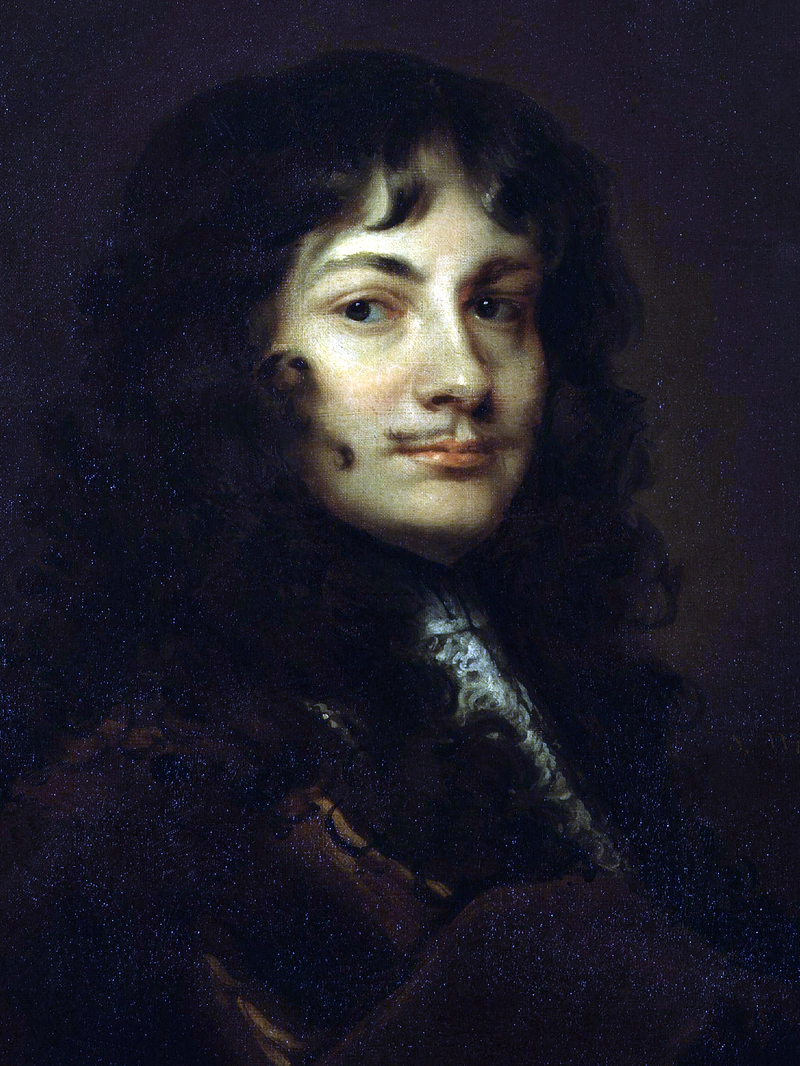
| 8 Quotes | |
| Born as | Sir William Temple |
| Occup. | Diplomat |
| From | England |
| Born | April 25, 1628 Blackfriars, London, England |
| Died | January 27, 1699 Moor Park, Farnham, Surrey, England |
| Aged | 70 years |
| Cite | |
Citation Formats
APA Style (7th ed.)
Sir william temple, 1st baronet biography, facts and quotes. (2026, February 11). FixQuotes. https://fixquotes.com/authors/sir-william-temple-1st-baronet/
Chicago Style
"Sir William Temple, 1st Baronet biography, facts and quotes." FixQuotes. February 11, 2026. https://fixquotes.com/authors/sir-william-temple-1st-baronet/.
MLA Style (9th ed.)
"Sir William Temple, 1st Baronet biography, facts and quotes." FixQuotes, 11 Feb. 2026, https://fixquotes.com/authors/sir-william-temple-1st-baronet/. Accessed 28 Mar. 2026.
Early Life and Background
Sir William Temple was born on April 25, 1628, into the anxious middle decades of Stuart England, when court culture, confessional tension, and constitutional conflict were all tightening toward rupture. He was the eldest son of Sir John Temple, Master of the Rolls in Ireland, a family position that placed public service and the mechanisms of law at the center of his earliest worldview. Though English by origin, Temple moved between England and Ireland in youth, learning early that the British Isles were not a single political organism but a set of linked kingdoms whose frictions could turn administrative questions into existential ones.He came of age during the Civil Wars and Interregnum, a period that rewarded adaptability and punished absolutism. Temple was not a zealot by temperament; he was drawn instead to order, balance, and the arts of accommodation. Even before he was famous, his private life displayed the blend that would define him: sociability disciplined by reserve, ambition tempered by a preference for quiet, and an instinct to convert experience into reflective prose rather than factional pamphleteering.
Education and Formative Influences
Temple was educated at Emmanuel College, Cambridge, and later at Gray's Inn, but his most durable schooling came through travel and observation: extended time on the Continent, especially in the Dutch Republic, where commerce, republican institutions, and religious pluralism offered a living alternative to England's cycles of repression and reaction. In the Netherlands he also met Dorothy Osborne, whose courtship letters to him survive as one of the era's most intimate records; their eventual marriage gave Temple a domestic anchor that he guarded fiercely, and it sharpened his sense that politics without private integrity curdles into performance.Career, Major Works, and Turning Points
After the Restoration, Temple entered diplomacy and became central to England's relations with the United Provinces, serving as envoy at The Hague in the 1660s and again in the 1670s. His most celebrated state achievement was helping to negotiate the Triple Alliance of 1668 (England, the Dutch Republic, and Sweden) to restrain Louis XIV's expansion, a brief triumph of collective security over great-power appetite. Later he was drawn into court reform schemes under Charles II, including the short-lived "Council of Thirty" associated with the 1679 plan to broaden counsel and steady government amid the Exclusion Crisis; disillusioned by faction and the limits of royal will, he withdrew to Moor Park in Surrey. There he turned memory into literature: Essays (notably "Upon the Ancient and Modern Learning" and "Upon Gardens"), Observations upon the United Provinces, and a continuing practice of political reflection that sought to make moderation intellectually persuasive rather than merely prudent.Philosophy, Style, and Themes
Temple's writing is marked by classical poise, empirical curiosity, and a distrust of both metaphysical systems and political enthusiasms. He liked knowledge that could be tested by experience and manners that could survive contact with rival opinions. His skepticism toward intellectual fashion appears in his dry verdict: “Who ever converses among old books will be hard to please among the new”. This was not antiquarian snobbery so much as self-defense - a way to keep his mind from being conscripted by novelty, whether philosophical or partisan, after he had watched England's public certainties break apart in real time.Beneath the calm surface lay a psychology trained by crisis: Temple sought habits that could outlast contingency. His advice on character formation is telling in its inwardness and restraint: “The best rules to form a young man, are, to talk little, to hear much, to reflect alone upon what has passed in company, to distrust one's own opinions, and value others that deserve it”. Diplomacy taught him that words can start wars or prevent them, and his essays turn that lesson inward, making self-government the prerequisite for public service. His political realism also hinged on a historian's understanding of habit and legitimacy: “Authority is by nothing so much strengthened and confirmed as by custom; for no man easily distrusts the things which he and all men have been always bred up to”. In Temple's hands, "custom" becomes both a warning and a tool - a reminder that reform must work with human nature, not against it, if it is to endure.
Legacy and Influence
Temple's reputation rests on a double afterlife: as a practitioner of 17th-century balance-of-power diplomacy and as a major English essayist who made political prudence aesthetically compelling. His Observations helped fix the Dutch Republic in the English imagination as a model of disciplined prosperity, while his essays fed the "Ancients vs. Moderns" debate and influenced later Augustan prose through their clarity and controlled irony. At Moor Park he also employed a young Jonathan Swift as secretary, a connection that mattered: Swift absorbed Temple's craft of insinuating argument through style even as he later resisted Temple's genteel moderation. In an era of absolutists and zealots, Temple endures as a portrait of the statesman-intellectual who tried to make measured counsel feel like a moral stance - and who turned disappointment with power into a literature of self-command.Our collection contains 8 quotes written by Sir, under the main topics: Wisdom - Reason & Logic - Book - Health - God.
Source / external links