
Sissela Bok Biography Quotes 3 Report mistakes
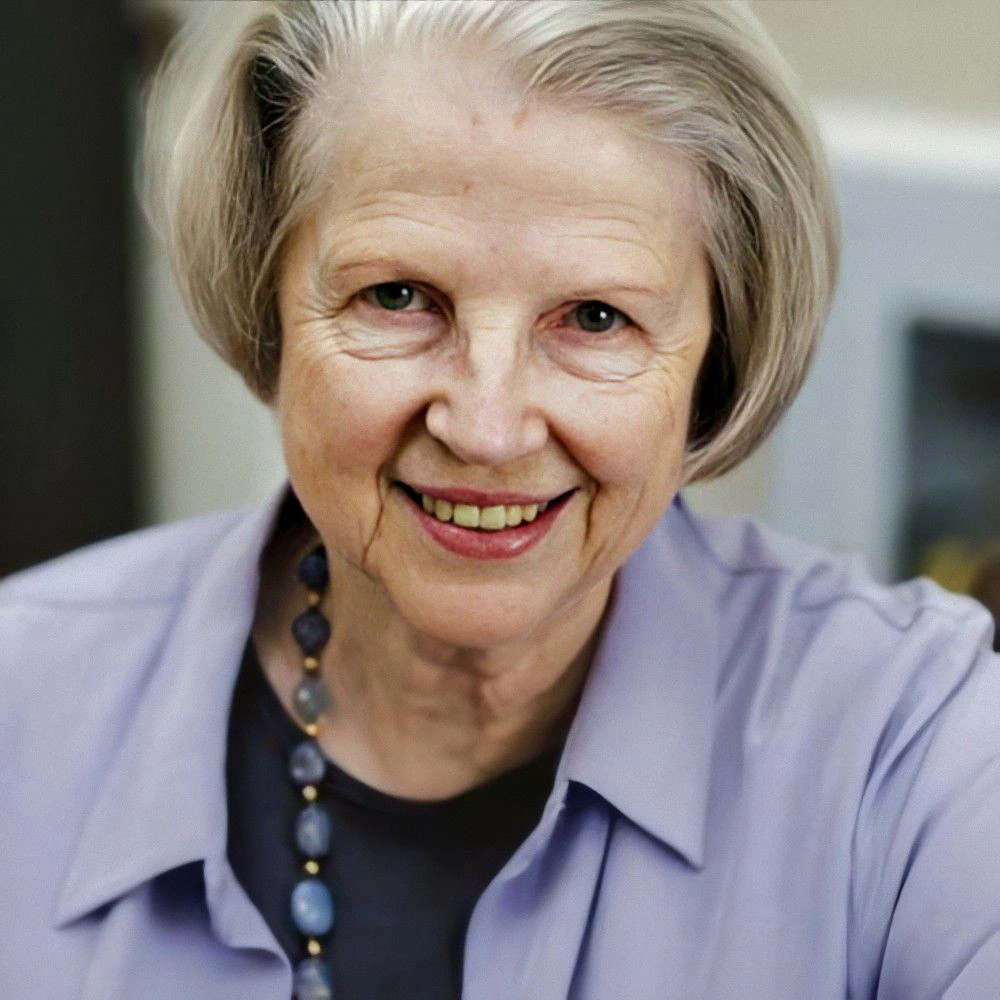
| 3 Quotes | |
| Born as | Sissela Myrdal |
| Occup. | Philosopher |
| From | Sweden |
| Spouse | Derek Bok |
| Born | December 2, 1934 Stockholm, Sweden |
| Age | 91 years |
| Cite | |
Citation Formats
APA Style (7th ed.)
Sissela bok biography, facts and quotes. (2026, February 11). FixQuotes. https://fixquotes.com/authors/sissela-bok/
Chicago Style
"Sissela Bok biography, facts and quotes." FixQuotes. February 11, 2026. https://fixquotes.com/authors/sissela-bok/.
MLA Style (9th ed.)
"Sissela Bok biography, facts and quotes." FixQuotes, 11 Feb. 2026, https://fixquotes.com/authors/sissela-bok/. Accessed 27 Mar. 2026.
Early Life and Background
Sissela Bok was born Sissela Myrdal on December 2, 1934, in Stockholm, Sweden, into a household where public responsibility and private scrutiny were inseparable. Her parents were Alva Myrdal, a leading Swedish social democrat and later Nobel Peace Prize laureate, and Gunnar Myrdal, the economist and sociologist whose inquiries into modern society made the family name a public emblem. Growing up amid debates about welfare states, war, and the ethics of reform, Bok absorbed early that ideas have consequences, and that personal life can be conscripted into public meaning.The family spent significant time in the United States during Gunnar Myrdal's major research period, and Bok's childhood thus unfolded across languages and civic cultures. The dislocations of mid-century Europe, the Cold War's moral rhetoric, and the contrast between Scandinavian social policy and American pluralism shaped her quiet preoccupation with the conditions that make trust possible. That preoccupation would later become her signature: not abstract moral purity, but the fragile infrastructure of honesty, promises, and restrained power on which ordinary life depends.
Education and Formative Influences
Bok studied at Radcliffe College and Harvard University, where analytic philosophy and political thought were being retooled for a century marked by propaganda, nuclear anxiety, and mass institutions. She married the philosopher Derek Bok, who would become president of Harvard, and their shared proximity to universities as both intellectual engines and political arenas sharpened her sense that ethical questions are never only personal. The era's philosophical climate - influenced by ordinary-language philosophy, postwar human rights discourse, and debates about civil disobedience and public policy - helped her develop a method: begin with lived practices like lying or keeping confidences, then test them against the requirements of democratic legitimacy.Career, Major Works, and Turning Points
Bok taught and wrote in Cambridge, Massachusetts, long associated with Harvard's interdisciplinary ethical inquiry, and became widely read for books that brought philosophical rigor to public dilemmas. Her landmark works include Lying: Moral Choice in Public and Private Life (1978), Secrets: On the Ethics of Concealment and Revelation (1982), and later interventions such as Mayhem (1998), which examined violence and the social conditions that permit it. Across these projects she insisted that ethics is not a decoration on politics but its operating system - especially when leaders justify manipulation in the name of security, reform, or efficiency. The turning point of her career was her decision to treat everyday moral acts - deception, confidentiality, coercion - as the real hinge-points of civic life, thereby making moral philosophy legible to readers outside the academy without diluting its standards.Philosophy, Style, and Themes
Bok's philosophy is grounded in the ethics of trust: the idea that truth-telling, promise-keeping, and constrained secrecy are prerequisites for cooperation and autonomy. Her prose avoids grand metaphysical claims and instead builds cumulative arguments from cases, institutions, and predictable human temptations. She is attentive to how social roles - parent, doctor, judge, citizen, official - create distinct permissions and dangers, and she repeatedly asks who bears the risks when deception or concealment becomes routine. The psychological center of her work is not cynicism about human nature but sobriety about self-justification: people lie most confidently when they can name a higher cause.In Secrets, she begins from the almost universal lure of withholding and the double-edged relief it can bring: “We are all, in a sense, experts on secrecy. From earliest childhood we feel its mystery and attraction. We know both the power it confers and the burden it imposes. We learn how it can delight, give breathing space and protect”. Yet she refuses the lazy equation of secrecy with treachery, insisting on moral distinctions that a healthy polity must preserve: “While all deception requires secrecy, all secrecy is not meant to deceive”. In Lying, her most enduring insight is how deception corrodes even the deceiver, because the liar must depend on a world where truth still mostly holds: “Liars share with those they deceive the desire not to be deceived”. Taken together, these themes reveal a moral psychology in which the wish to control outcomes collides with an unchosen dependency on others' trust - a dependency that, once damaged, cannot be repaired by rhetoric alone.
Legacy and Influence
Bok's influence endures in applied ethics, political theory, journalism, medicine, and public administration, where her frameworks for evaluating deception, confidentiality, and violence remain foundational. She helped normalize the expectation that officials must justify secrecy and manipulation not by invoking necessity but by answering to those who bear the costs. In an age of disinformation, surveillance, and institutional opacity, her work reads less like a period piece of Cold War anxiety than a manual for democratic adulthood: a reminder that moral legitimacy is not secured by good intentions, but by practices that preserve the possibility of informed consent, accountable power, and resilient trust.Our collection contains 3 quotes written by Sissela, under the main topics: Ethics & Morality - Honesty & Integrity.
Sissela Bok Famous Works
- 2010 Exploring Happiness: From Aristotle to Brain Science (Book)
- 1998 Mayhem: Violence as Public Entertainment (Book)
- 1995 Common Values (Book)
- 1991 Alva Myrdal: A Daughter's Memoir (Book)
- 1989 A Strategy for Peace: Human Values and the Threat of War (Book)
- 1983 Secrets: On the Ethics of Concealment and Revelation (Book)
- 1978 Lying: Moral Choice in Public and Private Life (Book)
Source / external links