
Sojourner Truth Biography Quotes 7 Report mistakes
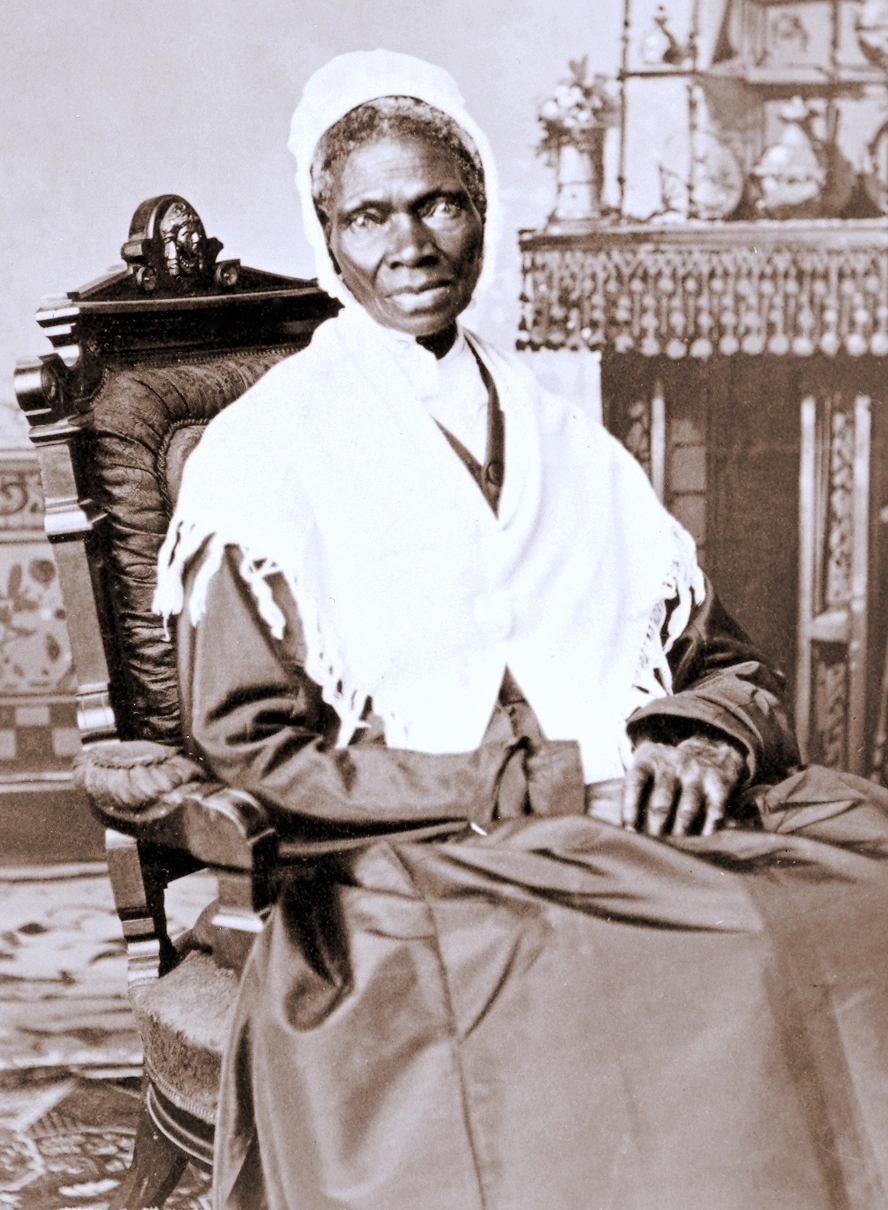
| 7 Quotes | |
| Born as | Isabella Baumfree |
| Occup. | Activist |
| From | USA |
| Born | November 18, 1787 Swartekill, New York |
| Died | November 26, 1883 Battle Creek, Michigan |
| Aged | 96 years |
| Cite | |
Citation Formats
APA Style (7th ed.)
Sojourner truth biography, facts and quotes. (2026, February 11). FixQuotes. https://fixquotes.com/authors/sojourner-truth/
Chicago Style
"Sojourner Truth biography, facts and quotes." FixQuotes. February 11, 2026. https://fixquotes.com/authors/sojourner-truth/.
MLA Style (9th ed.)
"Sojourner Truth biography, facts and quotes." FixQuotes, 11 Feb. 2026, https://fixquotes.com/authors/sojourner-truth/. Accessed 25 Mar. 2026.
Early Life and Background
Sojourner Truth was born Isabella Baumfree on November 18, 1787, enslaved in Ulster County, New York, in the Hudson River Valley world of Dutch-speaking farms and inherited bondage. Her earliest years were shaped by the forcible separations that defined slavery in the North as surely as in the South: she was sold multiple times, learned that family ties could be dissolved by an owner's convenience, and carried into adulthood a vivid memory of violence and arbitrariness that made "property" a personal, daily reality rather than an abstraction.In 1826, after years enslaved to John Dumont near New Paltz, she walked away with her infant daughter Sophia, effectively freeing herself just before New York's final emancipation law took full effect in 1827. The next year she did something almost unheard of for a Black woman in her position: she sued for the return of her young son Peter, illegally sold into the South, and won in a New York court. That victory did not make her safe from poverty or exploitation, but it fixed in her a lifelong conviction that the law could be forced, at times, to acknowledge Black personhood - and that moral courage had to be practical.
Education and Formative Influences
Illiterate in a print culture that often treated literacy as the gateway to citizenship, Baumfree formed her intellect through oral religion, labor, and a fierce self-education in human motives. In New York City she moved through a ferment of evangelical revivals, abolitionist agitation, and utopian experiments, including the controversial circle around the self-styled prophet Matthias in the early 1830s - a bruising lesson in how charisma can mimic revelation and how spiritual hunger can be exploited. By the early 1840s she had recast her life in a new key: in 1843 she took the name Sojourner Truth, announcing a calling to travel and "declare the truth" as she understood it.Career, Major Works, and Turning Points
Truth became one of the century's most compelling abolitionist lecturers, speaking across the Northeast and Midwest and attaching her personal story to the national crisis of slavery. In 1850, with the help of Olive Gilbert, she published The Narrative of Sojourner Truth, a best-selling account that financed her work and fixed her public identity as both witness and moralist; she also allied with reformers such as William Lloyd Garrison and Frederick Douglass while keeping her own independent line. A major turning point came in 1851 at the Women's Rights Convention in Akron, Ohio, where her extemporaneous address - later remembered as "Ain't I a Woman?" in variants shaped by others - fused antislavery realism with a gendered claim to full humanity. During the Civil War she recruited Black troops, aided freedpeople, met Abraham Lincoln in 1864, and afterward pressed the federal government on issues from desegregated streetcars in Washington, D.C. to land for the formerly enslaved, spending her later decades largely in Battle Creek, Michigan, still speaking, still organizing, still refusing retirement.Philosophy, Style, and Themes
Truth's thought was built from lived proofs: strength, motherhood, and survival as evidence that the categories used to exclude Black women were fraudulent. Her speaking style was spare, humorous, and prosecutorial - less ornament than cross-examination - and she treated audiences as juries forced to confront the contradiction between Christian professions and American practices. “Religion without humanity is very poor human stuff”. The sentence is both theology and diagnosis: she had seen piety used to sanctify sale, beating, and family separation, and she answered by making compassion the test of faith.Equally central was her insistence on action over permission, a psychology forged in self-emancipation and in a courtroom victory won without the normal tools of power. “If women want any rights more than they's got, why don't they just take them, and not be talking about it”. The provocation was not mere bravado - it was an ethic of agency from someone who had learned that waiting for benevolence meant waiting forever. Yet her moral universe also stretched beyond borders and factions; she could move from indictment to a cosmic, connective tenderness that made strangers into kin. “Those are the same stars, and that is the same moon, that look down upon your brothers and sisters..” That imagery reveals the inward source of her endurance: a sense of providence wide enough to hold loss, distance, and national violence without surrendering the hope of reunion.
Legacy and Influence
Sojourner Truth died on November 26, 1883, but her influence has only widened: as an abolitionist who made slavery's injuries legible, a women's rights advocate who refused to let gender reforms forget race, and a religious thinker who measured doctrine by its human results. Her Narrative remains a key text of American self-making, while her speeches helped define a tradition of Black feminist argument rooted in experience, labor, and moral clarity. In memory she is often simplified into a single line or legend, yet her real achievement was more demanding - the steady conversion of private suffering into public witness, and the insistence, decade after decade, that freedom must be lived as well as declared.Our collection contains 7 quotes written by Sojourner, under the main topics: Ethics & Morality - Truth - Wisdom - Mortality - Long-Distance Friendship.
Source / external links