
Solomon Ibn Gabriol Biography Quotes 18 Report mistakes
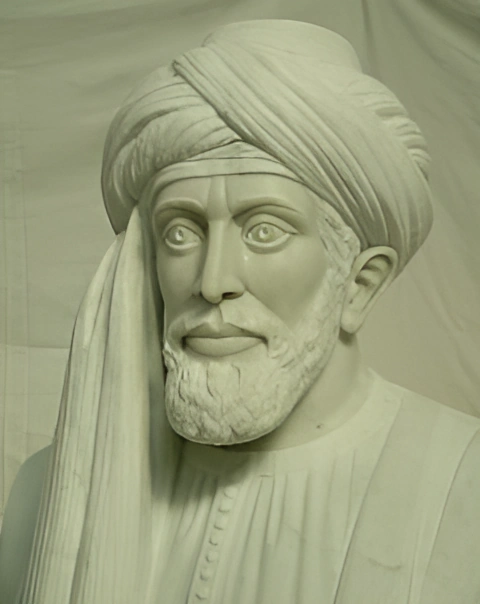
| 18 Quotes | |
| Occup. | Poet |
| From | Spain |
| Born | 1021 AC |
| Died | 1058 AC |
| Cite | |
Citation Formats
APA Style (7th ed.)
Solomon ibn gabriol biography, facts and quotes. (2026, February 11). FixQuotes. https://fixquotes.com/authors/solomon-ibn-gabriol/
Chicago Style
"Solomon Ibn Gabriol biography, facts and quotes." FixQuotes. February 11, 2026. https://fixquotes.com/authors/solomon-ibn-gabriol/.
MLA Style (9th ed.)
"Solomon Ibn Gabriol biography, facts and quotes." FixQuotes, 11 Feb. 2026, https://fixquotes.com/authors/solomon-ibn-gabriol/. Accessed 25 Mar. 2026.
Early Life and Background
Solomon ibn Gabirol (Shelomoh ibn Gabirol, Latinized as Avicebron) was born around 1021 in al-Andalus, probably in Malaga, into the Hebrew-speaking minority living under Muslim rule. His short life unfolded in the last, glittering phase of the Cordoban caliphate's afterlife, when power splintered into taifa kingdoms and court patronage migrated from one city to another. In that competitive world, poetry was not an ornament but a currency: reputations were made in public recitation, and livelihoods could depend on a single patron's favor.He grew up amid both cultural abundance and personal fragility. Medieval reports portray him as sickly and often isolated, yet fiercely proud, a temperament that could sound like self-defense hardened into style. He wrote with precocious confidence, but also with the bitterness of a man repeatedly brushed by loss and instability. The Andalusi Jewish elite prized polish, wit, and social ease; Gabirol, by contrast, seems to have carried an abrasive honesty that could win admiration and invite estrangement in equal measure.
Education and Formative Influences
Gabirol was formed by the Hebrew revival in Spain - a movement that remade biblical Hebrew into a supple instrument for courtly lyric and philosophical hymn. He mastered Arabic culture as the surrounding medium, absorbed Neoplatonic metaphysics circulating in Arabic, and trained in grammar, rhetoric, and biblical exegesis. His early poems already show a musician's ear for meter and a moralist's obsession with inner discipline; they also reveal how deeply he internalized the Andalusi ideal that literature should be both technically exact and ethically weight-bearing.Career, Major Works, and Turning Points
By his teens he was composing ambitious Hebrew verse and seeking patrons among Jewish courtiers. A key relationship was with Yekutiel ibn Hasan, a Jewish official in Zaragoza; Gabirol praised him in panegyric and elegy, and Yekutiel's political fall and death became a formative shock. Gabirol spent much of his adult life moving through the taifa landscape, associated especially with Zaragoza and, later, Valencia, where he likely died around 1058. His major Hebrew works include the great liturgical poem "Keter Malkhut" (The Royal Crown), a sweeping meditation on God, cosmos, and human frailty that entered Jewish prayer; and the ethical treatise "Tikkun Middot ha-Nefesh" (The Improvement of the Moral Qualities), which maps virtues and vices with almost clinical attention. In Arabic he composed his philosophical summa, later known in Latin as "Fons Vitae" (The Fountain of Life), a dialogue on matter and form and the structure of being - the work that ensured his afterlife in medieval scholasticism even when his identity as a Jewish poet-philosopher was forgotten.Philosophy, Style, and Themes
Gabirol's inner life reads like a struggle between solitude and longing: he wanted purity of mind, yet lived in a world that demanded performance, alliances, and tactical speech. His ethical writing and aphoristic tone return obsessively to the dangers of exposure, as if words themselves were moral events with irreversible consequences. “As long as a word remains unspoken, you are its master; once you utter it, you are its slave”. In that maxim one hears a man trained by court politics and personal vulnerability, someone who experienced disclosure as a loss of control and who turned that fear into a discipline of reticence. A related suspicion of intimacy appears in “If you want to keep something concealed from your enemy, don't disclose it to your friend”. , not mere cynicism but a survival psychology in a factional age where friendship could be porous and patronage precarious.At the same time, Gabirol's poetry opens a second register: metaphysical audacity joined to devotional humility. In "Keter Malkhut" he speaks as a finite creature dazzled by an infinite source, pressing reason to its limits and then letting worship carry what analysis cannot. “Thou hast created me not from necessity but from grace”. That sentence captures his characteristic combination of Neoplatonic ascent and biblical dependence: the universe as emanation and order, yet the human self as radically contingent, saved from meaninglessness by a Creator's gratuitous gift. Stylistically he welded Andalusi elegance to a colder, sharper introspection; his lines can sound like jeweled architecture, but the emotional climate is often wintry, as if beauty were the only stable home he could build.
Legacy and Influence
Gabirol left two legacies that rarely meet in later memory: the synagogue poet whose "Keter Malkhut" shaped Hebrew liturgy, and the philosopher Avicebron whose "Fons Vitae" influenced Latin thinkers such as William of Auvergne and Duns Scotus through its doctrine of universal hylomorphism, long before scholars recognized the author as a Jewish Andalusi. Modern readers prize him for the tension he refused to resolve: the court poet who distrusted speech, the moralist whose severity masks an ache for belonging, and the metaphysician who could turn private pain into cosmic praise. His life, compressed into little more than three decades, became a proof that Hebrew could carry both the highest philosophical abstraction and the most intimate reckoning with the self.Our collection contains 18 quotes written by Solomon, under the main topics: Ethics & Morality - Wisdom - Friendship - Mortality - Life.
Solomon Ibn Gabriol Famous Works
- 1050 Fountain of Life (Fons Vitae) (Philosophical treatise)
- 1045 The Kingly Crown (Keter Malchut) (Poem)
- 1045 Azharot (Exhortations) (Poem)
- 1045 Tikkun Middot HaNefesh (The Improvement of the Moral Qualities) (Ethical treatise)
Source / external links