
Solon Biography Quotes 11 Report mistakes
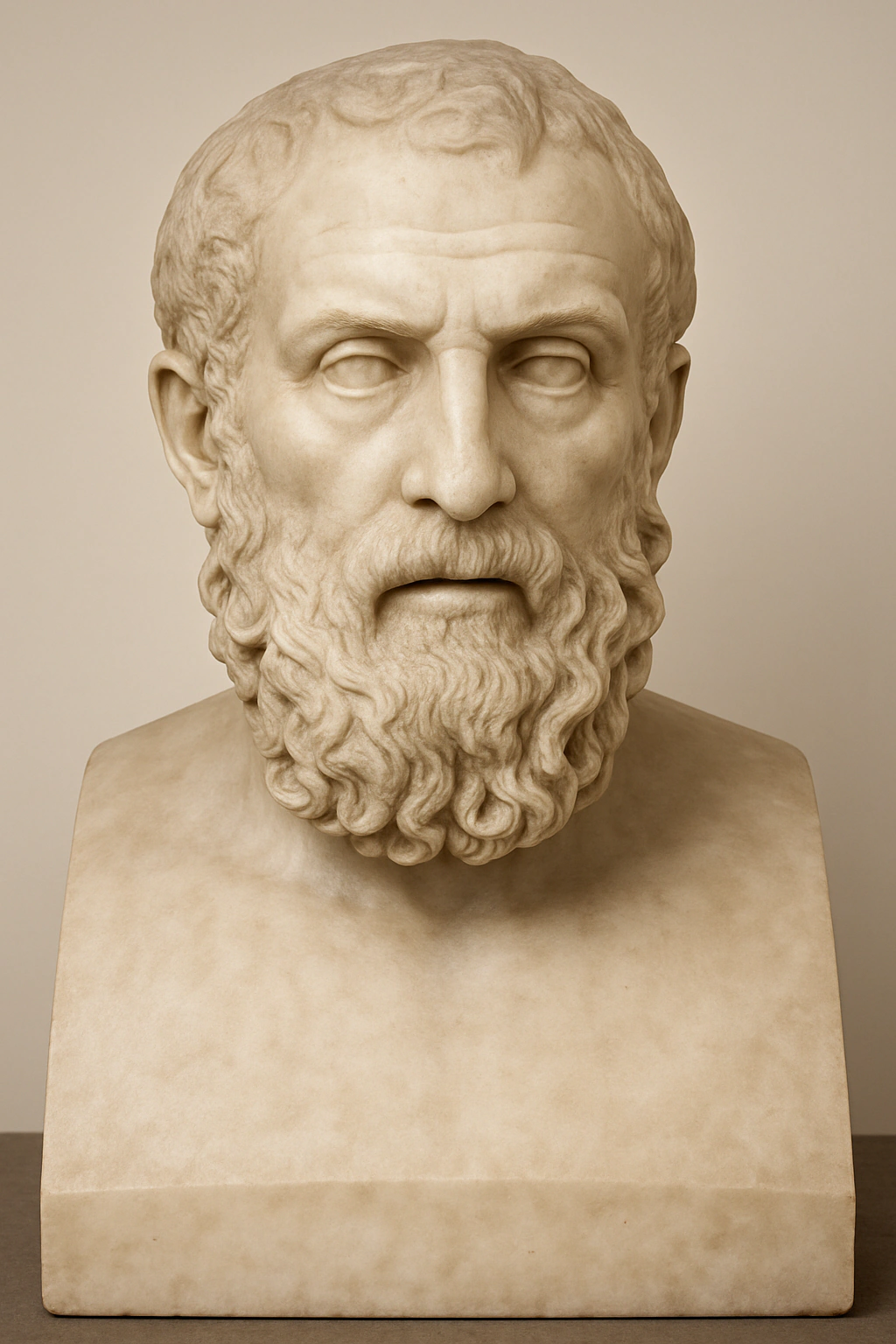
| 11 Quotes | |
| Known as | Solon of Athens |
| Occup. | Statesman |
| From | Greece |
| Born | 630 BC Athens, Attica, Ancient Greece |
| Died | 560 BC Cyprus (trad.) |
| Cite | |
Citation Formats
APA Style (7th ed.)
Solon biography, facts and quotes. (2026, February 11). FixQuotes. https://fixquotes.com/authors/solon/
Chicago Style
"Solon biography, facts and quotes." FixQuotes. February 11, 2026. https://fixquotes.com/authors/solon/.
MLA Style (9th ed.)
"Solon biography, facts and quotes." FixQuotes, 11 Feb. 2026, https://fixquotes.com/authors/solon/. Accessed 31 Mar. 2026.
Early Life and Background
Solon was born around 630 BCE in Athens, in a world where aristocratic lineages claimed inherited right to rule and small farmers lived close to debt, drought, and violence. Ancient sources place him in the orbit of the Eupatridae yet not at the very pinnacle of wealth, a positioning that mattered: he could read elite habits from within while feeling the pressure building beneath them. Attica in his youth was riven by status competition and by the harsh logic of credit. Debtors who failed could be seized, their land pledged, their bodies reduced to security, and some were sold abroad. Political life, meanwhile, was a contest of clans, with law still tangled in custom.Before he became a lawgiver, Solon was also known as a poet and a man of practical affairs. He traded, traveled, and watched Greek communities test the boundaries between oligarchy and popular pressure. A famous early public role came during the struggle over Salamis against Megara, when Athenians were said to have banned further agitation for the island until Solon, using verse and performance, shamed them back into action. Whether embroidered or not, the episode captures the public mood of his Athens: easily exhausted, quick to faction, yet capable of collective resolve when given a moral vocabulary.
Education and Formative Influences
Solon matured during the long aftershock of Draco's written laws (late 7th century BCE) and in the wider Greek movement toward codification and civic identity. He absorbed the emerging idea that a city could be governed not merely by lineage and force but by publicly knowable rules, and he used elegiac poetry as a tool of civic instruction. Travel and commerce likely broadened his perspective beyond Attica's clan politics, while the competitive symposium culture sharpened his craft of argument and his sense that reputation, persuasion, and self-restraint were political resources as real as land.Career, Major Works, and Turning Points
Around 594/593 BCE Solon was chosen archon and mediator, tasked with averting civil war between creditors and the dispossessed. His central turning point was the Seisachtheia, the "shaking off of burdens": cancellation of many debts, abolition of debt bondage for Athenians, and measures to prevent the person from being pledged as security, paired with the repatriation of those sold abroad. He restructured the constitution by organizing citizens into property classes for officeholding, opened the assembly and popular courts in ways that widened participation, and required public officials to be accountable under law. He also issued regulations on inheritance, marriage, funerary display, and the export of produce (notably encouraging olive cultivation), aiming to discipline both elite excess and popular desperation. After legislating he is said to have left Athens for years, traveling to avoid pressure to revise his laws and to let the city test them - a statesman stepping back so institutions, not charisma, would govern.Philosophy, Style, and Themes
Solon's inner life, as glimpsed through later tradition and through the civic tone of his surviving fragments, is marked by mistrust of extremes and by a preference for measured, law-bound freedom. He understood that reform that humiliates the powerful invites revenge, and reform that flatters the masses invites chaos; his craft was compromise without surrender. The psychological core is a stern pedagogy: politics as character formation. “Learn to obey before you command”. The line reads as more than advice to subordinates - it is a theory of civic maturity, insisting that authority is legitimate only when it has first submitted to rules, limits, and the slow discipline of public life.His style joins moral language to institutional design. “Speech is the mirror of action”. For Solon, rhetoric was not decorative; it was a test of integrity, because in a polis built on persuasion, words are the first arena where faction can either be restrained or unleashed. The same realism informs his famous refusal to declare any life finally blessed while it is still exposed to reversal: “Call no man happy until he is dead, but only lucky”. This is not mere gloom; it is the psychological antidote to hubris, aimed especially at elites who confuse wealth with permanence and at democrats who confuse momentary victory with justice. His reforms thus carry a distinct emotional intelligence: deflate pride, contain resentment, and make space for ordinary security.
Legacy and Influence
Solon became one of the canonical Seven Sages and, more importantly, a touchstone for later arguments about constitutional balance. Athenians after him - from the tyranny of Peisistratus and his sons to the democratic transformations associated with Cleisthenes - fought over what counted as "Solonian" legitimacy, treating his name as a moral constitution even when institutions changed. Classical writers used him as the exemplary lawgiver who preferred law to domination, and later political thought repeatedly returned to his problem: how to reconcile social debt, civic equality, and elite competition without destroying the city. In that sense his influence is not a single blueprint but a durable attitude - that stability requires both material relief and a culture trained to obey the law before it claims the right to rule.Our collection contains 11 quotes written by Solon, under the main topics: Wisdom - Justice - Friendship - Learning - Honesty & Integrity.
Other people related to Solon: Thales (Philosopher)
Frequently Asked Questions
- Solon full name: Solon of Athens (son of Execestides)
- Why was Solon important: He laid the foundations for Athenian democracy
- Solon Java: A lightweight Java microframework named Solon
- Solon bird: No notable bird; Solon refers to a statesman
- What was Solon known for: Reforming Athenian laws and ending debt bondage
- Solon died: c. 560–558 BCE, likely in Cyprus
- Solon meaning: Athenian lawgiver; a wise legislator
Source / external links