
Sophocles Biography Quotes 101 Report mistakes
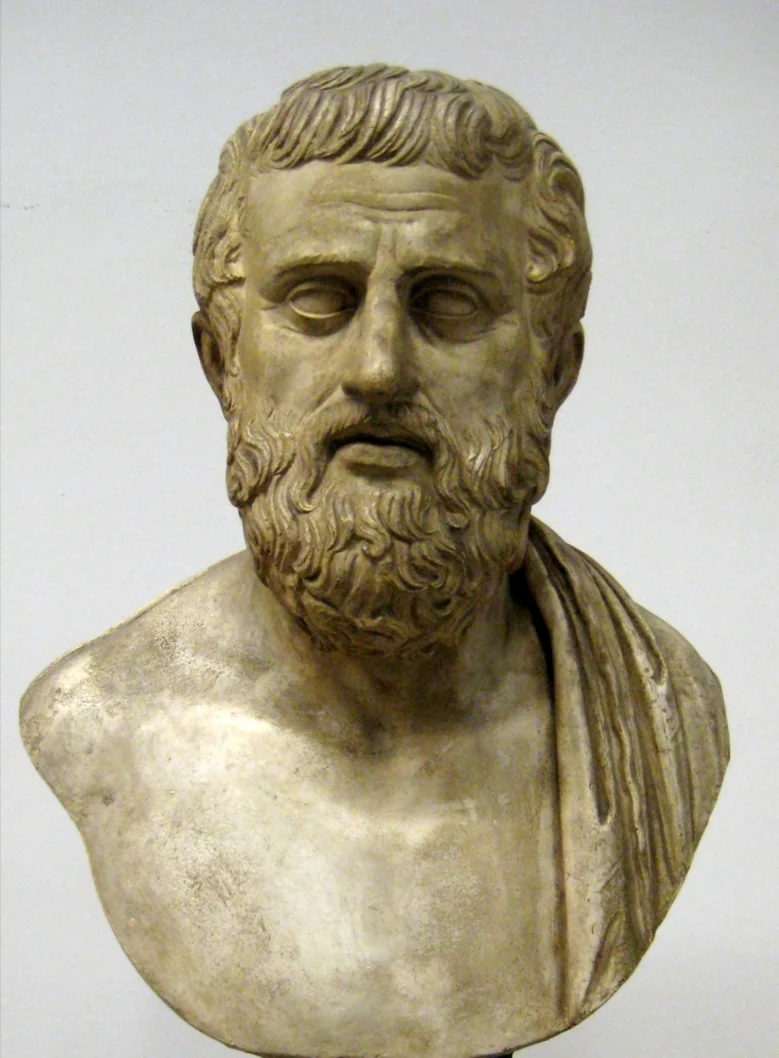
| 101 Quotes | |
| Known as | Sophocles of Athens |
| Occup. | Author |
| From | Greece |
| Born | 496 BC Athens, Greece |
| Died | 405 BC Athens, Greece |
| Cite | |
Citation Formats
APA Style (7th ed.)
Sophocles biography, facts and quotes. (2026, February 1). FixQuotes. https://fixquotes.com/authors/sophocles/
Chicago Style
"Sophocles biography, facts and quotes." FixQuotes. February 1, 2026. https://fixquotes.com/authors/sophocles/.
MLA Style (9th ed.)
"Sophocles biography, facts and quotes." FixQuotes, 1 Feb. 2026, https://fixquotes.com/authors/sophocles/. Accessed 12 Feb. 2026.
Early Life and Background
Sophocles was born around 496 BCE at Colonus Hippius, a village just outside Athens sacred to Poseidon and later memorialized in his final play. His father, Sophillus, is traditionally said to have been a prosperous manufacturer or arms-maker, a status that placed the boy inside the confident, expanding world of early democratic Athens. He grew up as the city moved from aristocratic faction toward civic experiment, and as the threat of Persia forced Athenians to define themselves not only by lineage but by public service and collective survival.The generation of Sophocles came of age with the Persian Wars as lived memory. Ancient sources report that after Salamis (480 BCE) he was chosen to lead a chorus of boys in a victory celebration, an early sign of poise in public ritual and an aptitude for the musical-dramatic forms out of which tragedy was made. Athens in these decades was also refashioning its self-image through the theater of Dionysus - tragedy was not private literature but a civic instrument where myth could interrogate law, piety, and power before thousands.
Education and Formative Influences
He received the rounded education of an affluent Athenian: μουσικη (song, dance, and lyre), gymnastic training, and the rhetorical habits required for assembly life, all under the shadow of older tragic masters. Aeschylus had already turned myth into a stage for moral and political argument; Sophocles absorbed that ambition while living through the rise of Pericles, the building program on the Acropolis, and the cultural confidence that linked beauty, order, and civic identity. Tragedy competitions at the City Dionysia offered both artistic discipline and ruthless public judgment, schooling him in precision, restraint, and the art of making moral collisions legible.Career, Major Works, and Turning Points
Sophocles entered dramatic competition young and famously defeated Aeschylus in 468 BCE, beginning a career that produced roughly 120 plays, of which seven survive complete: Ajax, Antigone, Trachiniae, Oedipus the King, Electra, Philoctetes, and Oedipus at Colonus. He served Athens in office as well as art - as a strategos with Pericles during the Samian War (441/440 BCE), and later in a board of probouloi after the Sicilian disaster (413 BCE), experiences that deepened his portrayal of leaders under pressure and cities at moral breaking points. His innovations were technical but consequential: he is credited with adding a third actor, refining scenic painting, and expanding the chorus into a more complex moral counterpoint, enabling drama less about pageantry and more about the tightening vise of choice, knowledge, and consequence.Philosophy, Style, and Themes
Sophocles wrote in the high Attic style - lucid, sculpted, and emotionally exact - and yet his tragic worldview is anything but tidy. His plays assume a universe where divine order exists, but human beings meet it through partial knowledge and brittle language: prophecy, rumor, law, and self-justifying argument. Again and again he stages the moment a person discovers that the virtues that built their identity can, under stress, become instruments of ruin. In his moral anatomy, corruption is often internal: the impulse to cure one evil by committing another, or to treat fear as evidence. "All a man's affairs become diseased when he wishes to cure evils by evils". This is less sermon than psychological observation - a portrait of the mind narrowing under threat until it mistakes escalation for remedy.His most enduring protagonists - Antigone, Oedipus, Ajax, Philoctetes - are not merely sufferers but arguers, people whose integrity is also a rigidity. Sophocles understood honor as a kind of spiritual economy: when it is real it costs, and when it is counterfeit it poisons the city that rewards it. "I would prefer even to fail with honor than win by cheating". Yet he also gives voice to the bleak counter-thought that haunts mortals who have seen too much: "Not to be born is, past all prizing, best". That sentence does not cancel courage; it explains why courage in Sophocles is never naive. His art holds both - the nobility of standing firm and the abyss that makes such standing feel, at times, almost irrational.
Legacy and Influence
Sophocles died around 406/405 BCE, near the end of the Peloponnesian War, as Athens itself was approaching defeat and political trauma. His plays outlived the polis that staged them: Aristotle treated Oedipus the King as the model of tragic construction; later dramatists, from Seneca to Racine, learned from his tension between public argument and private agony; modern theater returns to Antigone whenever law collides with conscience. In biography as in drama, Sophocles became a symbol of balanced excellence - the citizen-artist whose craft could absorb an era of brilliance and catastrophe and still leave works that feel like forensic reports on the human soul.Our collection contains 101 quotes written by Sophocles, under the main topics: Ethics & Morality - Wisdom - Truth - Art - Justice.
Other people related to Sophocles: Edith Hamilton (Writer), Nathaniel Lee (Dramatist)
Frequently Asked Questions
- Sophocles Family: Father: Sophilus; Mother: Unknown; Spouse: Nicostrate or Nicippe; Children: Iophon, Agathon, and Ariston
- Sophocles Full Name: Sophocles, son of Sophilus
- How many of Sophocles plays survived? 7 out of approximately 120
- What is Sophocles known for? Writing Greek tragedies, such as 'Oedipus Rex', 'Antigone', and 'Electra'
- Where did Sophocles live? Ancient Athens, Greece
Sophocles Famous Works
- -401 Oedipus at Colonus (Play)
- -409 Philoctetes (Play)
- -413 Electra (Play)
- -429 Oedipus Rex (Play)
- -441 Antigone (Play)
- -450 The Trachiniae (Play)
- -450 Ajax (Play)
Source / external links