
Stanislaus I Biography Quotes 2 Report mistakes
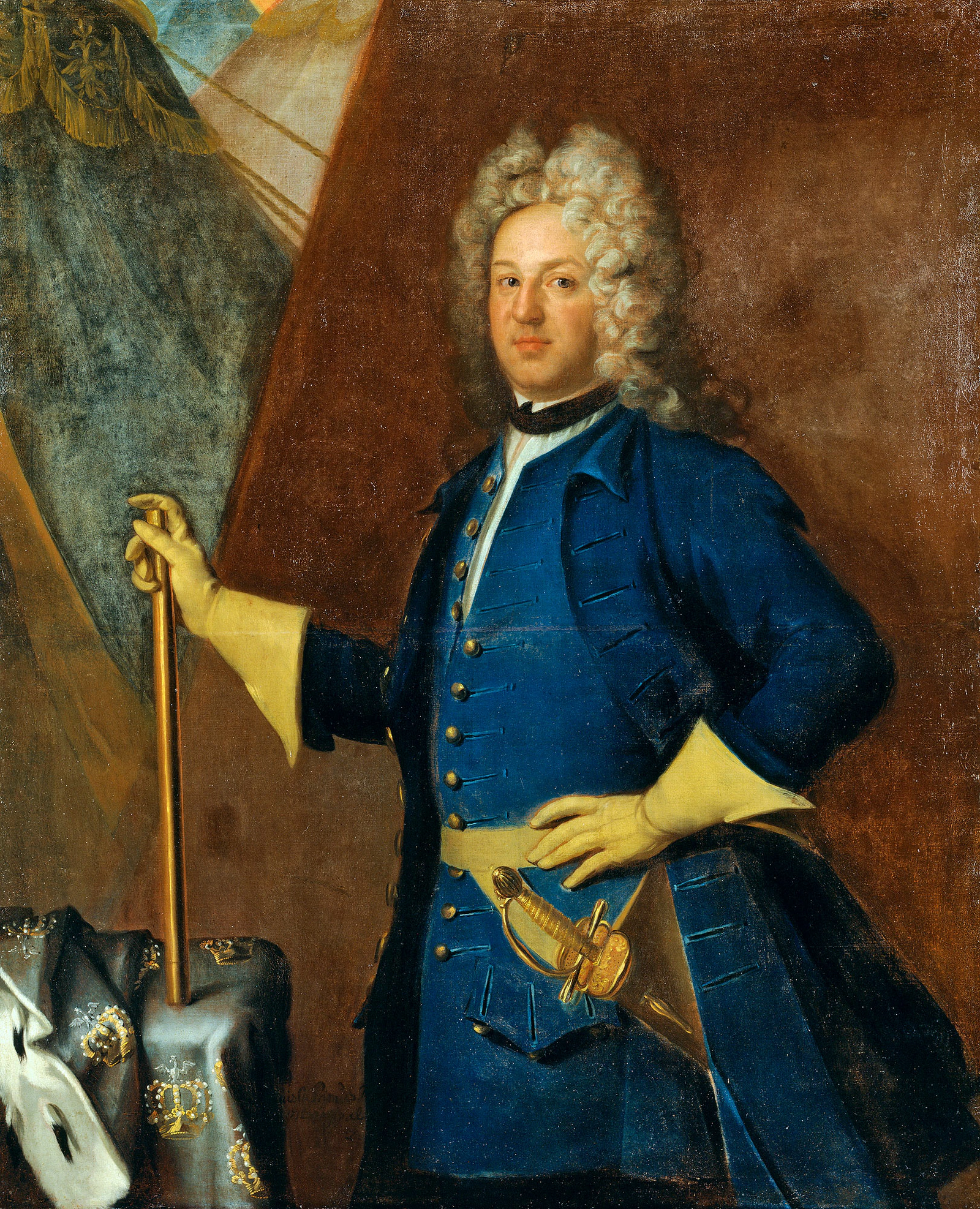
Attr: By David von Krafft
| 2 Quotes | |
| Born as | Stanisław Leszczyński |
| Known as | Stanislaus I of Poland |
| Occup. | Royalty |
| From | Poland |
| Spouse | Catherine Opalińska |
| Born | October 20, 1677 Lwów, Polish–Lithuanian Commonwealth |
| Died | February 23, 1766 Lunéville, Duchy of Lorraine |
| Cause | Burn injuries |
| Aged | 88 years |
| Cite | |
Citation Formats
APA Style (7th ed.)
Stanislaus i biography, facts and quotes. (2026, February 11). FixQuotes. https://fixquotes.com/authors/stanislaus-i/
Chicago Style
"Stanislaus I biography, facts and quotes." FixQuotes. February 11, 2026. https://fixquotes.com/authors/stanislaus-i/.
MLA Style (9th ed.)
"Stanislaus I biography, facts and quotes." FixQuotes, 11 Feb. 2026, https://fixquotes.com/authors/stanislaus-i/. Accessed 28 Mar. 2026.
Early Life and Background
Stanislaw Leszczynski was born on 1677-10-20 into the Protestant-leaning, politically connected szlachta of the Polish-Lithuanian Commonwealth, a state whose elective monarchy made kingship less a birthright than a fragile contract with magnates and factions. His family held office in Greater Poland, and his early world was one of sejmik assemblies, confessional compromise, and the perpetual tension between noble liberty and the need for central authority. The Commonwealth he inherited in imagination was already being hollowed out by the veto politics of the Sejm and by the pressure of neighboring powers - Sweden, Russia, and the Habsburgs - that treated Polish elections as strategic battlegrounds.The defining event of his youth was not a private tragedy but an era: the Great Northern War (1700-1721). As Sweden's Charles XII marched into Poland and Saxon forces of King Augustus II were contested, Leszczynski rose as a plausible native alternative to a monarch seen as foreign and entangling. From the beginning, his life formed around the paradox of an elected king who could be crowned without being securely rooted, and of a patriotism that had to operate through the machinery of international alliance.
Education and Formative Influences
Like many high nobles, Leszczynski was educated for public life rather than for a single profession - trained in languages, diplomatic manners, and the legal-political culture of the Commonwealth, where rhetoric and negotiation were practical tools. His formation was sharpened by missions and court exposure in an age when political legitimacy was argued as much in salons and chancelleries as on battlefields; his later taste for moral essays and reformist reflection suggests a temperament that absorbed Enlightenment currents while retaining a Commonwealth noble's sensitivity to honor, patronage, and the precariousness of authority.Career, Major Works, and Turning Points
Backed by Sweden, Leszczynski was elected King of Poland in 1704 and crowned in 1705, a reign inseparable from Charles XII's military fortunes; when Sweden fell at Poltava in 1709, Augustus II returned and Leszczynski entered the long apprenticeship of exile. A second dramatic turn came in 1733: after Augustus's death, Leszczynski was again elected by a large faction, now supported by France through his daughter Maria Leszczynska, who had married Louis XV in 1725, but Russian and Austrian arms imposed Augustus III, igniting the War of the Polish Succession (1733-1738). The settlement ended his royal ambitions but granted him the Duchy of Lorraine and Bar (life tenure), with a future transfer to France - a quiet transformation of a twice-crowned, twice-displaced king into a prince of letters and a civic benefactor at Nancy, where he ruled until his death on 1766-02-23.Philosophy, Style, and Themes
Leszczynski's inner life was shaped by repeated political disconfirmation: elections won and revoked, crowns gained and lost, promises made in Europe and undone by armies. That biography produced a mind suspicious of easy certainties and attentive to the moral costs of power. “To believe with certainty we must begin with doubting”. Read against his career, the line sounds less like fashionable skepticism than hard-earned method - a ruler trained by reversals to test appearances, to ask who benefits, and to treat legitimacy as something built through institutions and conscience rather than proclaimed by ceremony.His prose and patronage in Lorraine - essays, maxims, and projects aimed at public improvement - carried a practical Enlightenment tone: ethics expressed as usable counsel, benevolence translated into hospitals, schools, and civic spaces. Yet his themes were never purely philosophical; they were political in the intimate sense that they concerned fear, endurance, and the discipline of facing reality. “Have the courage to face a difficulty lest it kick you harder than you bargain for”. The sentence reads like self-instruction from a man who had watched hesitation invite foreign intervention and noble factionalism, and who learned that softness in decision-making could cost a country its autonomy. His style, accordingly, favors clarity and admonition - moral psychology tethered to statecraft, the private virtue of courage offered as a public necessity.
Legacy and Influence
Leszczynski's direct political legacy in Poland was constrained by the Commonwealth's decline and by the decisive role of Russia and Austria in the royal elections that unseated him, but his life became a template for the 18th-century displaced sovereign - a king whose authority migrated from throne to salon, from battlefield to philanthropy. In Lorraine he left an urban and cultural imprint, especially in Nancy, where his benefactions symbolized a humane princely ideal and where his name remained attached to civic renewal. For Polish memory, he endures as a poignant figure of elective monarchy's vulnerability: a native king twice chosen and twice overridden, who converted personal defeat into a public-minded, Enlightenment-inflected program of moral reflection and social improvement.Our collection contains 2 quotes written by Stanislaus, under the main topics: Reason & Logic - Overcoming Obstacles.
Frequently Asked Questions
- Last king of Poland: Stanisław II Augustus was the last king of Poland, but Stanisław Leszczyński was one of the last elected kings before him.
- Stanislas France: Stanisław Leszczyński lived in France after his reign, where he became Duke of Lorraine.
- Stanisław Polish writer: Stanisław Leszczyński was not primarily known as a writer, but as a king. He did write essays and philosophical works.
- Leszczynski pronunciation: Leszczynski is pronounced as lesh-CHIN-ski.
- Leszczyński name origin: The name Leszczyński is of Polish origin, derived from the town of Leszno.
- Stanislaw meaning: Stanislaw means 'glory of the camp' or 'become famous'.
- Stanislas: Stanislas is the French form of the name Stanislaw.
- Stanislaw pronunciation: Stanislaw is pronounced as sta-NEE-swahf.
- How old was Stanislaus I? He became 88 years old
Source / external links