
Stanley Baldwin Biography Quotes 12 Report mistakes
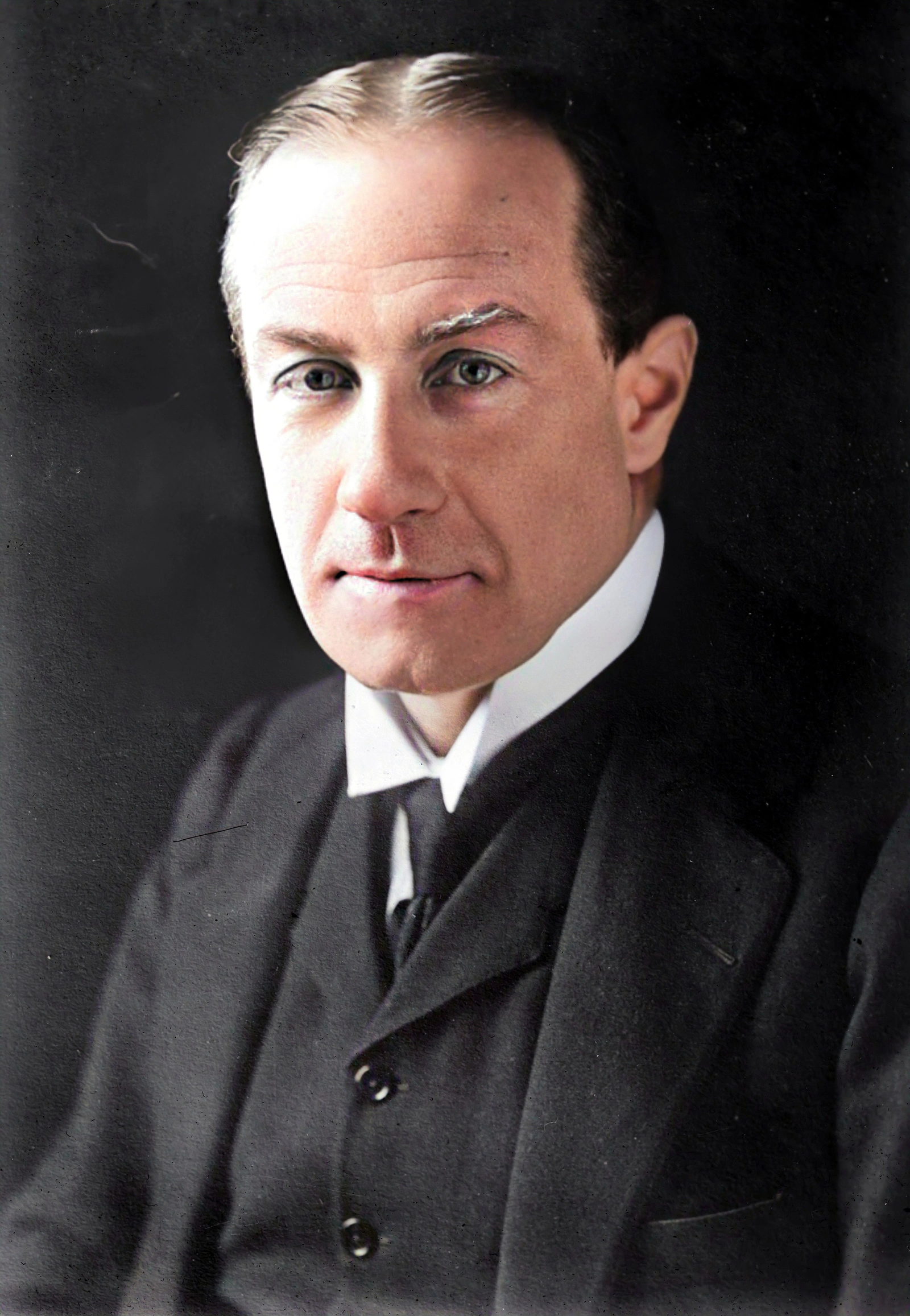
Attr: Bain News Service
| 12 Quotes | |
| Occup. | Statesman |
| From | United Kingdom |
| Born | August 3, 1867 Worcestershire, England |
| Died | December 14, 1947 Stourport-on-Severn, Worcestershire, England |
| Cause | Pancreatic cancer |
| Aged | 80 years |
| Cite | |
Citation Formats
APA Style (7th ed.)
Stanley baldwin biography, facts and quotes. (2026, March 4). FixQuotes. https://fixquotes.com/authors/stanley-baldwin/
Chicago Style
"Stanley Baldwin biography, facts and quotes." FixQuotes. March 4, 2026. https://fixquotes.com/authors/stanley-baldwin/.
MLA Style (9th ed.)
"Stanley Baldwin biography, facts and quotes." FixQuotes, 4 Mar. 2026, https://fixquotes.com/authors/stanley-baldwin/. Accessed 28 Mar. 2026.
Early Life and Background
Stanley Baldwin was born on August 3, 1867, at Bewdley in Worcestershire, into the solid, paternalistic world of Victorian industry and provincial Nonconformist respectability. His father, Alfred Baldwin, was a successful ironmaster and later a Conservative MP; the family business at Wilden and the social obligations that came with it trained Stanley early in the habits of trusteeship - the idea that wealth, stability, and public service were inseparable.
That background left him with an instinctive suspicion of ideological flamboyance and a lifelong preference for compromise that looked, to critics, like softness and, to admirers, like national therapy. He grew up as Britain moved from mid-Victorian confidence into the anxieties of mass politics: organized labor, Irish Home Rule, and the first signs that the empire and the European balance of power were no longer comfortably managed by elite consensus.
Education and Formative Influences
Baldwin was educated at Harrow and then Trinity College, Cambridge, where he read history and absorbed the late-Victorian belief that national character mattered as much as policy mechanics. He later traveled and studied briefly in Europe, but his deepest formation remained English: the manners of the country house and the practical arithmetic of the factory. That blend - patrician tone without aristocratic lineage - became his political instrument: he could speak to boardrooms and chapel congregations, and he learned to treat public opinion as something to be steadied rather than inflamed.
Career, Major Works, and Turning Points
Entering Parliament as Conservative MP for Bewdley in 1908, Baldwin rose through party office during the First World War and after, becoming Chancellor of the Exchequer in 1922 and then Prime Minister three times (1923-1924, 1924-1929, 1935-1937). His premierships were defined by managing a democracy under strain: the 1926 General Strike, the slow evolution of imperial self-government (including the Statute of Westminster 1931, negotiated under the National Government), and the long, politically fraught path toward rearmament in the 1930s. He was also central to the Conservative break with David Lloyd George in 1922 and to the creation of a broad National Government coalition in the Great Depression era, though his reputation later hardened around the charge that Britain rearmed too late as Hitler rose.
Philosophy, Style, and Themes
Baldwin governed as a moral psychologist as much as an administrator. He believed the durability of institutions depended on the emotional temperature of the public, which is why he prized endurance over brilliance and treated leadership as a test of nerves. “A statesman wants courage and a statesman wants vision; but believe me, after six months' experience, he wants first, second, third, and all the time - patience”. The line is not mere homespun: it reveals his self-conception as a national moderator, willing to accept personal unpopularity to keep social conflict from turning revolutionary.
His language - simple, domestic, England-centered - hid a sharp awareness that modernity had dissolved old certainties, especially in war and diplomacy. “Since the day of the air, the old frontiers are gone. When you think of the defense of England, you no longer think of the chalk cliffs of Dover; you think of the Rhine”. That was Baldwin the realist, acknowledging that technology and geography had rewritten strategy, even as he publicly calibrated that realism against a pacific electorate haunted by 1914-1918. Beneath his calm lay a bleak understanding of the coming bombardment age, captured in his notorious warning, “The bomber will always get through”. Psychologically, it suggests a man who managed fear by naming it plainly, then trying to domesticate it through procedure, coalition, and gradual preparation.
Legacy and Influence
Baldwin died on December 14, 1947, after living long enough to see Britain win the war his generation dreaded and to witness the postwar settlement begin without him. His legacy remains paradoxical: a master of party management and public tone who helped normalize mass democracy for Conservatism, yet also a symbol of the 1930s hesitations that later Britons interpreted as moral and strategic failure. He shaped the modern premiership as a craft of communication and consent, and his speeches - at once reassuring and ominous - still define how historians debate the limits of caution in an age when delay could be fatal.
Our collection contains 12 quotes written by Stanley, under the main topics: Witty One-Liners - Truth - Leadership - Reason & Logic - War.
Other people related to Stanley: Lord Curzon (Statesman), Ellen Wilkinson (Politician), William Maxwell Aitken (Businessman), Edward VIII (Royalty)
Source / external links