
Stanley Kubrick Biography Quotes 18 Report mistakes
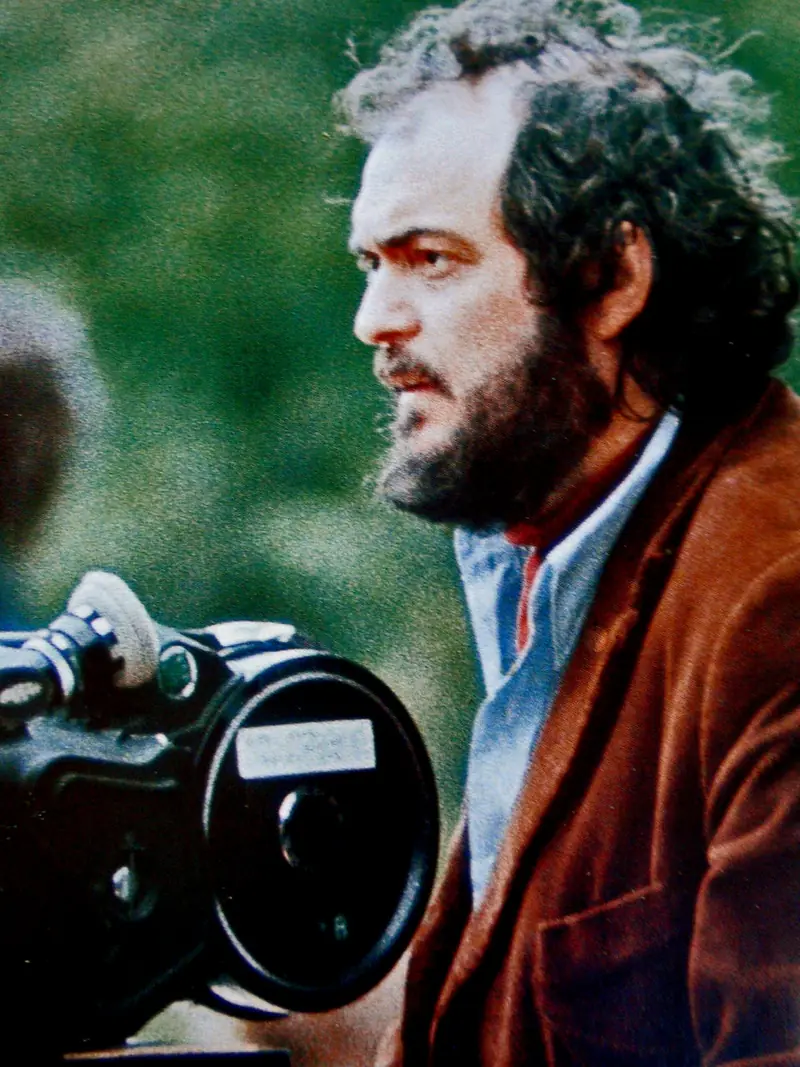
| 18 Quotes | |
| Occup. | Director |
| From | USA |
| Born | July 26, 1928 Manhattan, New York, United States |
| Died | March 7, 1999 Harpenden, Hertfordshire, England, United Kingdom |
| Cause | Heart attack |
| Aged | 70 years |
Stanley Kubrick was born on July 26, 1928, in the Bronx, New York City. The son of a physician, he developed early passions for chess and photography, pursuits that sharpened his patience, planning, and eye for detail. As a teenager he sold a striking photo to Look magazine, capturing a newsstand after President Franklin D. Roosevelt's death. Hired soon after as a staff photographer, he learned how to tell stories visually, composing frames with deliberate geometry and atmosphere that would later define his films.
From Documentaries to Features
Eager to move from stills to motion pictures, Kubrick self-financed short documentaries like Day of the Fight (1951) and Flying Padre (1951). His first narrative features followed: Fear and Desire (1953), an ambitious low-budget war allegory; Killer's Kiss (1955), a moody New York noir; and The Killing (1956), a meticulously structured heist film photographed by Lucien Ballard and co-written with crime novelist Jim Thompson. Paths of Glory (1957), adapted with Calder Willingham and Thompson, starred Kirk Douglas and revealed Kubrick's command of camera movement, moral complexity, and performance, qualities that would recur throughout his career.
Hollywood Scale and the Drive for Control
Spartacus (1960), again with Kirk Douglas, gave Kubrick large-scale resources but limited autonomy. The experience reinforced his belief in tight control over script, design, and editing. Lolita (1962), adapted from Vladimir Nabokov, showed how he could transmute contentious material into sly, unsettling cinema. Dr. Strangelove or: How I Learned to Stop Worrying and Love the Bomb (1964), co-written with Terry Southern and Peter George, blended deadpan satire with apocalyptic dread, and showcased Peter Sellers in multiple roles alongside George C. Scott and Sterling Hayden. It established Kubrick as a director whose themes of technology, authority, and absurdity resonated globally.
Expatriate Craft and 2001: A Space Odyssey
Relocating to England, Kubrick built a production base that afforded privacy and precision. With Arthur C. Clarke he developed 2001: A Space Odyssey (1968), fusing speculative science with visual poetry. The film's groundbreaking effects, advanced by collaborators like Douglas Trumbull, and its radical use of music by Richard Strauss and Gyorgy Ligeti, redefined cinematic ambition. Kubrick received an Academy Award for the film's visual effects and cemented a long-term relationship with Warner Bros., granting him rare creative freedom.
Dystopias, Design, and Disquiet
A Clockwork Orange (1971), led by Malcolm McDowell and featuring electronic arrangements by Wendy Carlos, provoked fierce debate over free will and violence; Kubrick later withdrew it from UK circulation for many years. Barry Lyndon (1975) transformed 18th-century painting into moving images, using custom-modified Zeiss lenses to film scenes by candlelight. The patient pacing, meticulous costumes, and John Alcott's natural-light cinematography created a singular period aesthetic, supported by production design of extraordinary rigor.
Horror, War, and the Limits of Human Endurance
The Shining (1980), with Jack Nicholson and Shelley Duvall, turned a haunted hotel into a maze of psychology, sound, and space. The film's fluid Steadicam work, pioneered with operator Garrett Brown, and Ray Lovejoy's editing built a pervasive dread that influenced generations of horror filmmakers. Full Metal Jacket (1987), adapted with Michael Herr and Gustav Hasford, split the Vietnam experience into boot camp and battlefield, anchored by Matthew Modine and the ferocious presence of R. Lee Ermey. Shot largely in England, it examined how institutions shape, and unmake, identity.
Final Work and Sudden Loss
Eyes Wide Shut (1999), adapted with Frederic Raphael from Arthur Schnitzler, explored desire and secrecy in a modern marriage, starring Tom Cruise and Nicole Kidman. Kubrick completed a cut and screened it for the studio and principals shortly before his death on March 7, 1999, at his home in Hertfordshire, England. The film was released posthumously and instantly became a subject of debate, adding to the aura of an artist whose final statements resist easy interpretation.
Methods, Collaborators, and Working Life
Kubrick was known for exhaustive research, long rehearsals, and a readiness to attempt dozens of takes to capture a precise tone or rhythm. He collaborated closely with producers like James B. Harris and Jan Harlan; with actors ranging from Peter Sellers to Keir Dullea, George C. Scott, and Nicole Kidman; and with key behind-the-camera partners including production designer Ken Adam, cinematographers Geoffrey Unsworth and John Alcott, editor Ray Lovejoy, and composer-curators like Wendy Carlos and Jocelyn Pook. Leon Vitali became an indispensable aide across casting and postproduction. Kubrick's home base in England allowed him to merge studio-scale resources with the focus of an artisan's workshop.
Themes, Technology, and Aesthetics
Across genres, Kubrick interrogated power, entropy, and the fragile boundaries of rational control. His films often place characters within meticulously arranged spaces that reveal inner states: war rooms, space stations, grand salons, training depots, and labyrinthine hotels. He embraced technical innovation when it served storytelling, from front projection and large-format photography to extreme low-light lenses and stabilized camera systems. Music functioned as architecture, with classical and avant-garde works shaping meaning as much as image.
Recognition and Legacy
Kubrick received numerous award nominations over decades and won the Academy Award for visual effects on 2001. More enduring than trophies is his influence on filmmakers such as Martin Scorsese, Steven Spielberg, Ridley Scott, and Christopher Nolan. Spielberg later realized A.I. Artificial Intelligence from concepts Kubrick had developed, a testament to their mutual respect. Archives of Kubrick's scripts, notes, and production materials have illuminated the depth of his planning and the care he invested in every frame.
Personal Life and Character
Married to the artist Christiane Harlan from 1958 until his death, Kubrick maintained a family-centered life near his sets, even as myths of reclusiveness grew around him. Friends and collaborators describe him as private but generous, intellectually restless, and intensely curious, a lover of animals and chess who cherished conversation as much as he distrusted publicity. Born in 1928 in New York and dying in 1999 in England, he bridged American energy with European craftsmanship, leaving a body of work whose precision, enigma, and emotional force continue to challenge and reward audiences worldwide.
Our collection contains 18 quotes who is written by Stanley, under the main topics: Ethics & Morality - Wisdom - Justice - Love - Learning.
Other people realated to Stanley: Jack Nicholson (Actor), Arne Jacobsen (Architect), Shelley Winters (Actress), Anthony Burgess (Novelist), Peter Sellers (Actor), James Earl Jones (Actor), Terry Southern (Writer), Pauline Kael (Critic), Diane Johnson (Novelist), Sydney Pollack (Director)
Source / external links