
Stanley Smith Stevens Biography Quotes 3 Report mistakes
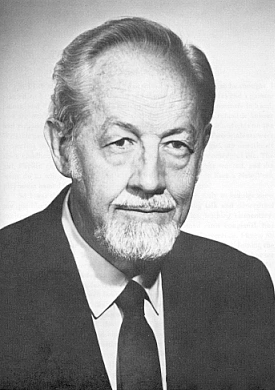
| 3 Quotes | |
| Occup. | Psychologist |
| From | USA |
| Born | November 4, 1906 Ogden, Utah |
| Died | January 18, 1973 |
| Aged | 66 years |
| Cite | |
Citation Formats
APA Style (7th ed.)
Stanley smith stevens biography, facts and quotes. (2026, February 19). FixQuotes. https://fixquotes.com/authors/stanley-smith-stevens/
Chicago Style
"Stanley Smith Stevens biography, facts and quotes." FixQuotes. February 19, 2026. https://fixquotes.com/authors/stanley-smith-stevens/.
MLA Style (9th ed.)
"Stanley Smith Stevens biography, facts and quotes." FixQuotes, 19 Feb. 2026, https://fixquotes.com/authors/stanley-smith-stevens/. Accessed 28 Mar. 2026.
Early Life and Background
Stanley Smith Stevens was born on November 4, 1906, in Ogden, Utah, and came of age as American psychology was hardening into an experimental science with an engineering temperament. His early years unfolded between the lingering moral seriousness of late-19th-century America and the rising authority of laboratories, instruments, and quantification. That tension - between felt experience and measurable fact - would later become the axis of his work: how to treat private sensation as something public science could responsibly study.The United States he inherited was also rapidly technologizing. Telephone networks, radio, and industrial standardization were changing what counted as evidence, accuracy, and noise. Stevens developed an abiding respect for measurement as a cultural ideal, but he never quite surrendered to the fantasy that measurement automatically solves conceptual problems. Instead, he became a diagnostician of where numbers come from, what they mean, and what they allow one to say - a concern that would make him both influential and controversial among psychologists and statisticians.
Education and Formative Influences
Stevens trained as a psychologist and experimentalist in the interwar period, when behaviorism was prominent but psychophysics and sensory research remained a disciplined way to approach mind without introspection. He ultimately built his career at Harvard University, a setting that rewarded technical rigor and theoretical ambition. In that milieu he absorbed the era's conviction that psychology should speak the language of measurement, while also confronting a recurring embarrassment: sensations are not rulers-and-scales objects, yet laboratories demand comparability, calibration, and replicable procedures.Career, Major Works, and Turning Points
At Harvard Stevens became a central figure in mid-century psychophysics, psychoacoustics, and the logic of measurement. His 1946 paper "On the Theory of Scales of Measurement" proposed the now-famous taxonomy of nominal, ordinal, interval, and ratio scales, tying empirical operations to permissible transformations and statistical summaries. He also advanced modern scaling methods and signal-related research in audition, and he shaped discourse through synthetic works such as the multi-volume Handbook of Experimental Psychology (1951), which helped define what counted as "experimental" in a postwar discipline seeking legitimacy alongside physics, engineering, and medicine.Philosophy, Style, and Themes
Stevens thought like a builder of instruments. His ambition was not simply to collect data but to design procedures that make subjective experience behave like a stable scientific quantity. The core psychological wager in his psychophysics was operational: if observers can reliably map intensities onto numbers under controlled instructions, then sensation can be studied with the same seriousness as physical stimuli. As he put it, “The method of magnitude estimation provided a direct measure of sensation”. The sentence is revealing not only as a methodological claim but as a portrait of temperament - confident that disciplined judgment, aggregated across observers, can become an instrument. Yet the word "direct" also signals his lifelong anxiety about mediation: if the route from mind to number is indirect, the entire edifice of quantitative psychology trembles.His scale theory carried the same dual impulse - bold system-building paired with constraint. “The type of measure used placed constraints on which statistics can be used”. Here Stevens is policing inference: measurement is not a decorative preface to analysis but a contract that limits what you may legitimately compute and conclude. That constraint was not merely pedantic; it was ethical in a scientific sense, an attempt to prevent psychologists from laundering conceptual confusion through impressive arithmetic. And his editorial and synthetic projects served a parallel psychological function: to stabilize a sprawling discipline by giving it a map. “A technical survey that systematize, digest, and appraise the mid century state of psychology”. In Stevens, systematizing was a kind of emotional regulation for the field - a way to quiet disputes by translating them into measurement choices, scaling assumptions, and rules of transformation.
Legacy and Influence
Stevens died on January 18, 1973, leaving behind concepts that became default equipment across the behavioral and social sciences. The nominal-ordinal-interval-ratio schema entered textbooks worldwide, shaping how researchers justify statistical methods, design questionnaires, and argue about what their numbers really mean. His psychophysical methods, including magnitude estimation and the broader agenda associated with "Stevens' power law", helped normalize the idea that subjective intensity can be modeled with lawful regularities. Just as importantly, his work exemplified a mid-20th-century American faith that careful operational design can bridge the private world of experience and the public world of science - a faith still debated, but rarely ignored.Our collection contains 3 quotes written by Stanley, under the main topics: Knowledge - Science.
Source / external links