
Steffi Graf Biography Quotes 9 Report mistakes
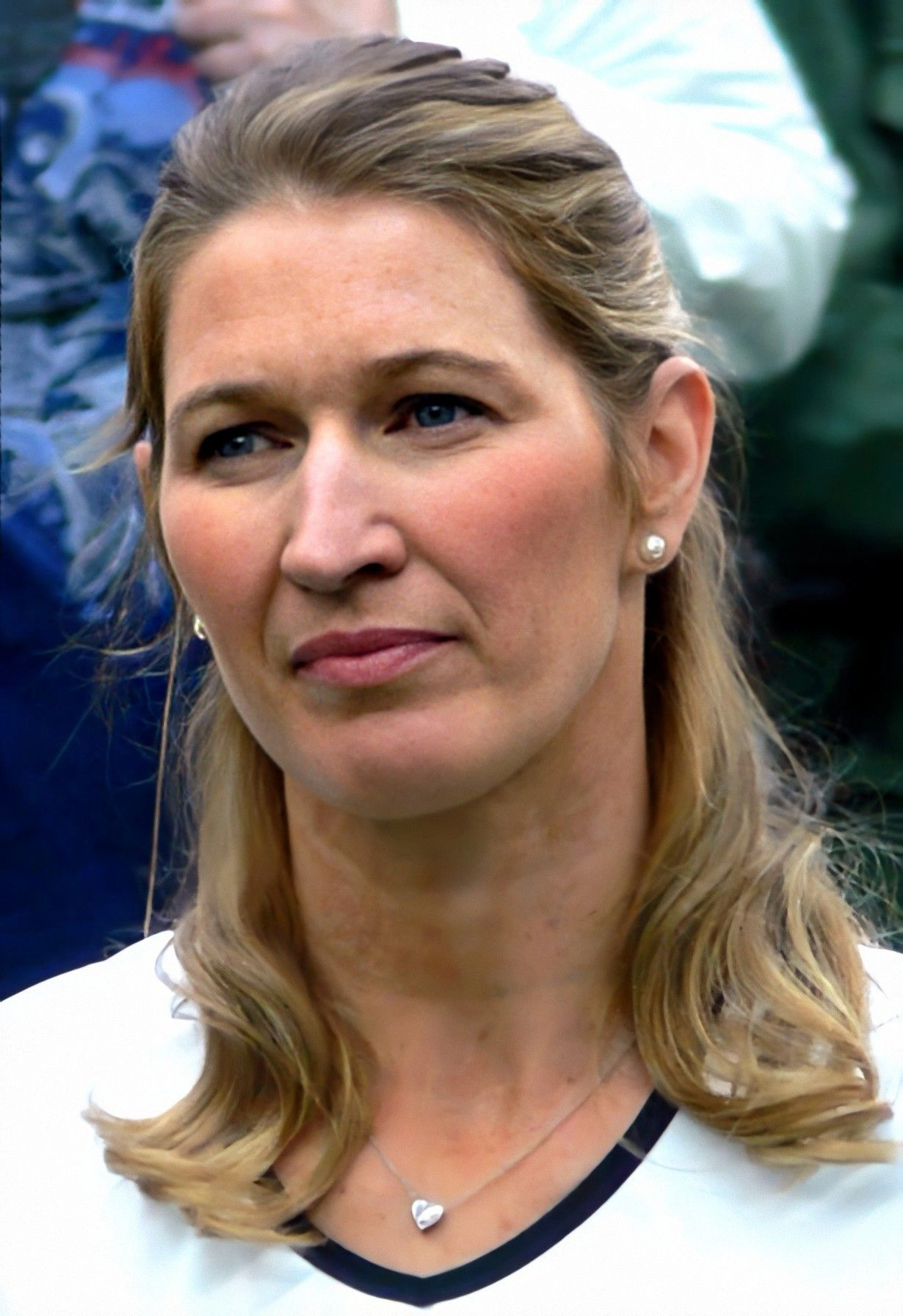
Attr: Mark Henckel, CC BY-SA 2.0
| 9 Quotes | |
| Born as | Stefanie Maria Graf |
| Occup. | Athlete |
| From | Germany |
| Born | June 14, 1969 Mannheim, West Germany |
| Age | 56 years |
| Cite | |
Citation Formats
APA Style (7th ed.)
Steffi graf biography, facts and quotes. (2026, February 11). FixQuotes. https://fixquotes.com/authors/steffi-graf/
Chicago Style
"Steffi Graf biography, facts and quotes." FixQuotes. February 11, 2026. https://fixquotes.com/authors/steffi-graf/.
MLA Style (9th ed.)
"Steffi Graf biography, facts and quotes." FixQuotes, 11 Feb. 2026, https://fixquotes.com/authors/steffi-graf/. Accessed 26 Mar. 2026.
Early Life and Introduction to Tennis
Stefanie Maria Graf was born on June 14, 1969, in Mannheim, then West Germany, and grew up in nearby Bruehl. Her father, Peter Graf, introduced her to tennis when she was a toddler, fashioning drills in the family living room before moving her onto local courts. Her mother, Heidi, provided steadiness at home, and her younger brother, Michael, shared the family's itinerant life as tournaments and training sessions came to define their calendar. Driven and disciplined from the outset, Graf won junior events across Europe and turned professional in the early 1980s while still in her mid-teens.Breakthrough and Rise to No. 1
Graf's surge to the top was swift. After steady improvements against established champions like Chris Evert and Martina Navratilova, she captured her first Grand Slam singles title at the 1987 French Open. That season established her as the sport's ascendant force. In 1988 she seized the No. 1 ranking and began an era of dominance that would span more than a decade. She would ultimately hold the world No. 1 position for a record 377 weeks, including 186 consecutive weeks, milestones that testify to her consistency and competitive edge.
The Golden Slam and Unprecedented Dominance
The apex of her career came in 1988, when she completed the rarest sweep in tennis: winning the Australian Open, French Open, Wimbledon, and US Open and adding the Olympic singles gold medal in Seoul. The Golden Slam had never been achieved before, and Graf's blend of athleticism, precision, and mental steel defined that season. Across surfaces, her heavy, penetrating forehand, low skidding slice backhand, and explosive footwork left opponents few options. She finished numerous years as the year-end No. 1 and amassed 22 Grand Slam singles titles and 107 career singles titles, placing her among the most decorated players in history.Rivalries That Shaped an Era
Graf's career was shaped by rivalries that spanned generations. Early on she faced Evert and Navratilova, whose poise and tactical mastery tested her emerging game. Later, duels with Gabriela Sabatini showcased contrasting styles and brought out some of her most memorable matches. Against Arantxa Sanchez Vicario she fought marathon clay-court battles. Her matches with Monica Seles, whose ferocious two-handed power challenged Graf during the early 1990s, came to define a fierce rivalry. A shocking attack on Seles in 1993 by a spectator derailed that rivalry and cast a shadow over the sport. In the late 1990s, Martina Hingis became a central foil, culminating in a dramatic French Open final in 1999.Coaching, Team Support, and Leadership
Peter Graf functioned as her first coach and manager, instilling relentless practice habits and a simple tactical philosophy built around first-strike tennis. As her career evolved, the Swiss coach Heinz Gunthardt joined her team, refining point construction, fitness, and scheduling. Trainers and physios helped her manage a heavy workload, while German tennis officials coordinated her participation in team competitions. Graf helped West Germany and later Germany to success in the Fed Cup, reflecting her stature as the standard-bearer for her nation during a period when compatriot Boris Becker was similarly lifting the men's game.Adversity, Injuries, and Off-Court Turmoil
The 1990s brought both triumph and turbulence. Graf battled back and knee issues, among other injuries, that periodically interrupted her seasons yet rarely dimmed her peak level. Off the court, her father faced a widely publicized tax-evasion case, eventually serving a prison sentence. The scrutiny was intense, but Graf cooperated with authorities, addressed outstanding matters, and continued to compete. The combination of physical strains and media pressure could have derailed a lesser career; instead, she returned repeatedly to the top, leaning on a small circle that included her mother, her brother Michael, and long-standing members of her training team.Olympic Moments and National Representation
Graf treated national representation as a serious duty. Beyond the Golden Slam in 1988, she earned an Olympic silver medal in singles at Barcelona 1992. She was a central figure in the expansion of German tennis on the world stage, drawing sellout crowds and inspiring a generation of players. Her professionalism and understated manner contrasted with the exuberance of some contemporaries but made her a model of focus for teammates and opponents alike.Late-Career Brilliance and Retirement
After injuries and interruptions, Graf staged a stirring late-career run. She won the 1999 French Open in a dramatic final and reached the Wimbledon final weeks later, evidence that her game still translated across surfaces. Shortly thereafter, satisfied with her accomplishments and mindful of her body, she announced her retirement in August 1999. By then she had compiled eight year-end No. 1 finishes, 22 major singles titles, and a resume that spanned more than a decade of dominance.Personal Life and Philanthropy
Graf's personal life entered a new chapter as she grew close to American tennis champion Andre Agassi. The two married in 2001 and later welcomed children, balancing family with charity and business endeavors. Graf founded Children for Tomorrow in 1998, a foundation devoted to supporting children and families affected by war, persecution, and trauma. Working alongside clinicians and partner organizations, she helped expand services in Germany and abroad. In the United States she also supported initiatives connected to education and youth development, frequently collaborating with Agassi's philanthropic network in Las Vegas.Legacy and Playing Style
Graf's legacy rests on the rare combination of statistics and style. Her inside-out forehand remains one of the most feared shots ever struck, a weapon set up by nimble footwork and a precise, biting slice that disrupted rhythm on grass and hard courts. She could attack early, defend with patience, and shift patterns mid-point without visible emotion. She also changed perceptions of athleticism in the women's game, emphasizing speed, balance, and explosive transitions from defense to offense. Even decades after retirement, her records for total weeks at No. 1 and the perfection of the 1988 Golden Slam anchor any conversation about tennis greatness.Enduring Influence
Steffi Graf's influence extends beyond trophies. Her understated professionalism, resilience through injury and public scrutiny, and commitment to family and philanthropy have shaped how champions imagine life after sport. The people closest to her father Peter and mother Heidi in the early years, her coach Heinz Gunthardt during her mature seasons, her brother Michael, and her husband Andre Agassi during and after her transition out of competition stand as constants in a career defined by excellence. For many, she remains the paragon of all-court tennis and a symbol of sustained, dignified achievement.Our collection contains 9 quotes written by Steffi, under the main topics: Motivational - Sports - Training & Practice - Gratitude - Embrace Change.
Other people related to Steffi: Gabriela Sabatini (Athlete), Boris Becker (Athlete)
Source / external links