
Stephen Harper Biography Quotes 38 Report mistakes
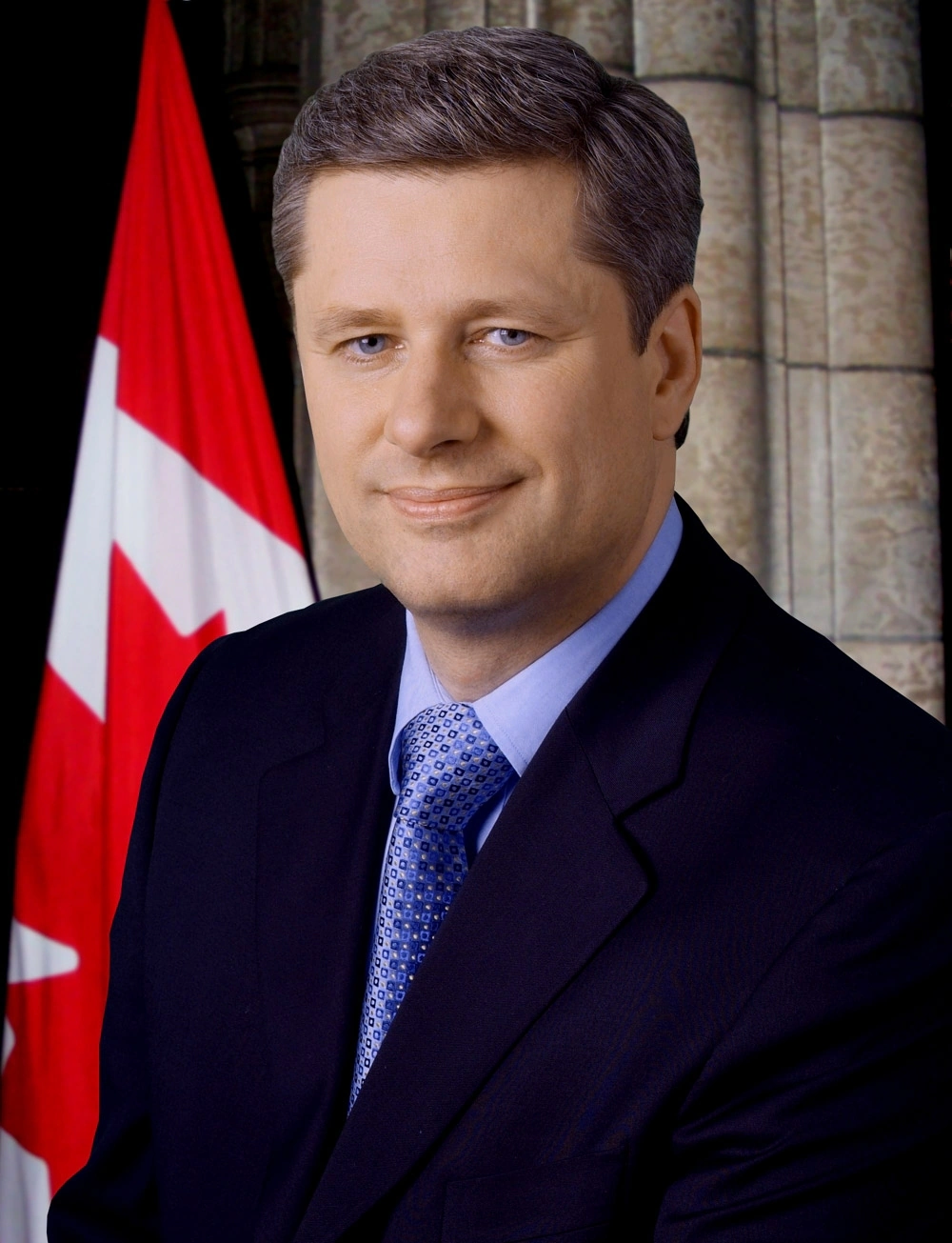
| 38 Quotes | |
| Born as | Stephen Joseph Harper |
| Occup. | Politician |
| From | Canada |
| Born | April 30, 1959 Toronto, Ontario |
| Age | 66 years |
| Cite | |
Citation Formats
APA Style (7th ed.)
Stephen harper biography, facts and quotes. (2026, February 11). FixQuotes. https://fixquotes.com/authors/stephen-harper/
Chicago Style
"Stephen Harper biography, facts and quotes." FixQuotes. February 11, 2026. https://fixquotes.com/authors/stephen-harper/.
MLA Style (9th ed.)
"Stephen Harper biography, facts and quotes." FixQuotes, 11 Feb. 2026, https://fixquotes.com/authors/stephen-harper/. Accessed 6 Mar. 2026.
Early Life and Background
Stephen Joseph Harper was born on April 30, 1959, in Toronto, Ontario, into an English-Canadian, middle-class family shaped by the postwar boom and the steadying habits of suburban life. His father worked as an accountant and the household ethos was practical, cautious, and aspirational - a sensibility that would later reappear in Harper's preference for incremental institutional change over grand rhetorical nation-building. When the family moved west to Calgary in the 1970s, Harper absorbed a second Canada: one oriented to resource cycles, entrepreneurial risk, and skepticism toward Ottawa-centered decision making.The political atmosphere of his youth combined Pierre Trudeau's constitutional ambition with Western alienation and the energy shocks of the 1970s. Those cross-currents - national unity debates, inflation, and the feeling in Alberta that federal policy could be indifferent to the West - helped form Harper's enduring preoccupation with how federations distribute power and recognition. Even before he held office, he read Canada as a country whose stability depended on rules, markets, and the management of regional grievance rather than charismatic consensus.
Education and Formative Influences
Harper attended the University of Calgary, leaving early to work in the oil and gas sector during the early 1980s downturn, then returning to complete a BA and later an MA in economics. The discipline mattered: he carried into politics an economist's reflex for incentives, tradeoffs, and institutional constraints, along with a taste for long-range demographic and fiscal arguments. Calgary's intellectual milieu - conservative think tanks, policy-oriented faculty, and the rise of Western protest politics - reinforced his belief that ideas and organization, not just personality, decide political outcomes.Career, Major Works, and Turning Points
Harper entered national politics through the Reform Party, becoming an MP in 1993 and quickly emerging as a policy-heavy critic of Liberal governance; after leaving Parliament in 1997 he led the National Citizens Coalition, sharpening his small-c conservatism and fundraising discipline before returning as Canadian Alliance leader in 2002. His decisive turning point was engineering the 2003-2004 merger of the Alliance and the Progressive Conservatives into the Conservative Party of Canada, then rebranding the movement as a government-in-waiting. He became prime minister in 2006, winning minority mandates in 2006 and 2008 and a majority in 2011; his governments emphasized fiscal restraint, tougher criminal justice measures, a more assertive foreign policy (notably in Afghanistan and later in support of Ukraine), and a recalibrated federalism. Major episodes included the 2008 coalition crisis and prorogation controversies, the 2009-2010 stimulus response to the global financial crisis, and the long project of turning a once-fractured right into a durable electoral machine; he was defeated in 2015 and later returned to public life as a commentator, boardroom figure, and president and CEO of the International Democracy Union.Philosophy, Style, and Themes
Harper's inner political life was defined by a tension between suspicion of centralized moralizing and respect for nationwide social commitments. He was often described as controlled and private, and that reserve was not merely temperament but method: he sought to reduce politics to accountable levers - budgets, statutes, enforcement - and to minimize the improvisational theater that can destabilize coalitions. His conservatism blended market liberalism with institutional discipline, aiming to make the federal government smaller in some areas while making it more directive in others, particularly security and law-and-order.Three recurrent themes explain the psychology behind his program: federation, globalization, and bounded reform. His warning that “If Ottawa giveth, then Ottawa can taketh away”. captures his core federalist suspicion that dependency can become a tool of control, a belief rooted in Western grievances but applied across provinces and policy files. Yet he also acknowledged limits to market logic in a country built on shared social insurance: “I think first and foremost everybody should understand that Canadians are strongly committed to the system of universal health insurance, to the principle that your ability to pay does not determine your access to critical medical service”. - a pragmatic concession that reveals a leader more interested in durability than ideological purity. And his emphasis on trade as national common sense - “I think because we're such a trading nation, I think Canadians understand that first and foremost we're part of the global economy”. - signals a worldview in which sovereignty is protected not by isolation but by competitiveness, alliances, and export capacity. Even his hardest edges were typically expressed as cautions against futile symbolic battles, preferring to shift incentives, appoint judges, and consolidate voter blocs over time.
Legacy and Influence
Harper's lasting impact lies less in a single signature statute than in the reconfiguration of Canadian conservatism and the normalization of a managerial, data-driven right-of-center federal government. He demonstrated that a party rooted in the West could win and hold power by combining social moderation with fiscal messaging, tight caucus discipline, and relentless constituency work, setting a template later leaders could copy or react against. His tenure also intensified debates over the boundary between executive control and parliamentary culture, over Canada's energy and climate choices, and over how a middle power navigates an interdependent world - arguments that continue to define Canadian politics long after his departure from office.Our collection contains 38 quotes written by Stephen, under the main topics: Ethics & Morality - Leadership - Freedom - Overcoming Obstacles - Equality.
Other people related to Stephen: Paul Martin (Politician), Stockwell Day (Politician), Joe Clark (Scientist), Tim Murphy (Politician), Peter MacKay (Politician), Michael Ignatieff (Politician), Preston Manning (Politician), Jean Charest (Lawyer)
Source / external links