
Stephen Jay Gould Biography Quotes 13 Report mistakes
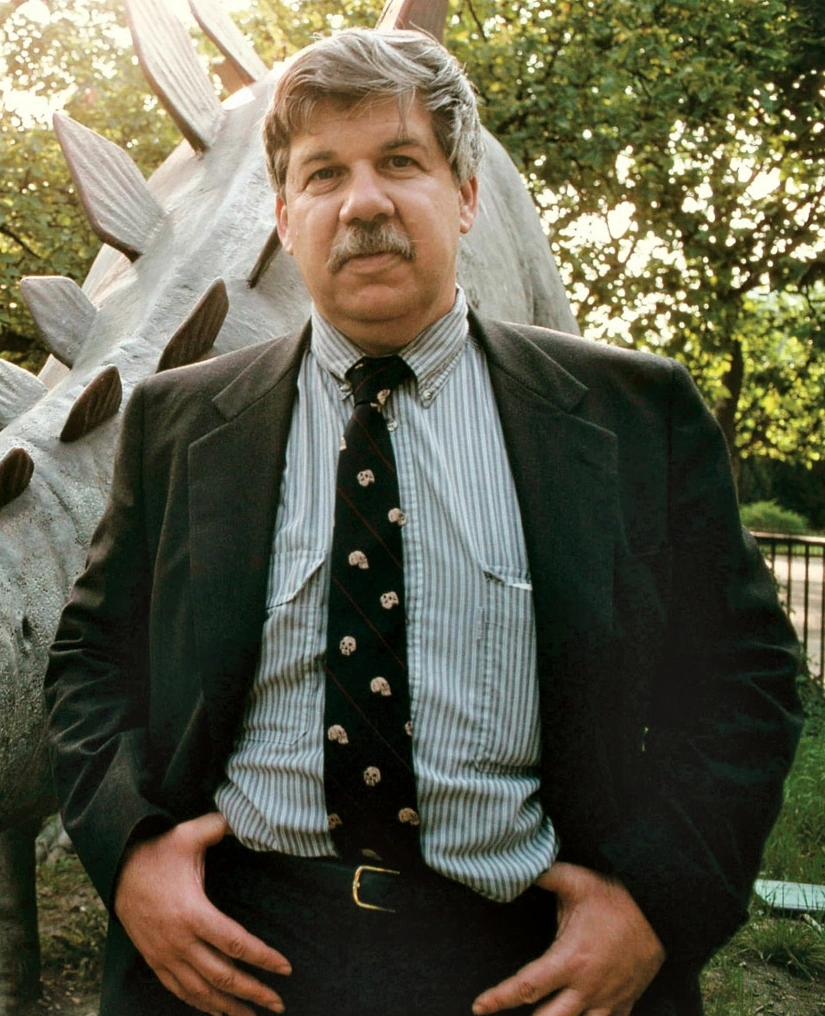
| 13 Quotes | |
| Occup. | Scientist |
| From | USA |
| Born | September 10, 1941 Bayside, New York, United States |
| Died | May 20, 2002 Manhattan, New York, United States |
| Aged | 60 years |
| Cite | |
Citation Formats
APA Style (7th ed.)
Stephen jay gould biography, facts and quotes. (2026, February 15). FixQuotes. https://fixquotes.com/authors/stephen-jay-gould/
Chicago Style
"Stephen Jay Gould biography, facts and quotes." FixQuotes. February 15, 2026. https://fixquotes.com/authors/stephen-jay-gould/.
MLA Style (9th ed.)
"Stephen Jay Gould biography, facts and quotes." FixQuotes, 15 Feb. 2026, https://fixquotes.com/authors/stephen-jay-gould/. Accessed 26 Mar. 2026.
Early Life and Background
Stephen Jay Gould was born on September 10, 1941, in Queens, New York City, into a Jewish family whose politics and public-mindedness shaped his sense of science as a civic practice. His father, Leonard Gould, was a court reporter and a World War II veteran; his mother, Eleanor, worked as an artist. Gould grew up in a mid-century city where museums, libraries, and street-corner argument were part of everyday education, and where the postwar prestige of science - from antibiotics to rockets - made intellectual ambition feel like a public good rather than a private eccentricity.
A decisive childhood moment arrived at the American Museum of Natural History, where the dinosaur halls gave him, by his own later retellings, a vocation: not simply to do science, but to narrate deep time and contingency in a language that could compete with myth. That early awe coexisted with a hard-edged awareness of history - the Cold War, the civil-rights era, and the aftershocks of eugenics - which later fueled his insistence that biology could not be separated from the ways societies used it to rank human worth.
Education and Formative Influences
Gould studied geology at Antioch College (BA, 1963), a small Ohio school known for cooperative education and progressive politics, then earned his PhD in paleontology at Columbia University in 1967, working at the American Museum of Natural History. Trained in the quantitative turn of mid-century evolutionary biology yet drawn to the older craft of natural history, he absorbed the legacies of Darwin, Lyell, and the Modern Synthesis while also learning how museums turn specimens into arguments. At Columbia and the AMNH he developed his lifelong fascination with land snails and with the tension between incremental change and the punctuations that the fossil record seems to stage.
Career, Major Works, and Turning Points
After completing his doctorate, Gould joined Harvard University, where he spent his career as a professor of geology and a curator of invertebrate paleontology at the Museum of Comparative Zoology. His early technical work on the evolution of Bermudan land snails helped anchor his later theoretical claims in gritty, local detail, and in 1972 he and Niles Eldredge proposed punctuated equilibrium, arguing that evolutionary change is often concentrated in geologically brief bursts separated by long periods of relative stasis. Gould became one of the most visible scientists in America through essays first written for Natural History magazine (beginning in the mid-1970s) and collected in books such as Ever Since Darwin (1977), The Panda's Thumb (1980), Hen's Teeth and Horse's Toes (1983), Wonderful Life (1989), Full House (1996), and his late synthesis The Structure of Evolutionary Theory (2002). He also entered public battles over creationism, and he reshaped debates about human difference with The Mismeasure of Man (1981; revised 1996), a critique of biological determinism and biased measurement. In 1982 he was diagnosed with abdominal mesothelioma; surviving far beyond grim predictions, he wrote about statistics, hope, and time with an intensity that sharpened his sense of life's contingency. He died on May 20, 2002, in New York City.
Philosophy, Style, and Themes
Gould's inner life as a writer-scientist revolved around a single moral-historical project: to dethrone inevitability. He treated evolution not as a ladder but as a branching experiment whose outcomes depend on chance, constraint, and history. In his hands, fossils were not just data points but witnesses against self-congratulating narratives of progress, and he returned obsessively to moments when people smuggled cultural hierarchy into nature. “The most important scientific revolutions all include, as their only common feature, the dethronement of human arrogance from one pedestal after another of previous convictions about our centrality in the cosmos”. That sentence captures Gould's psychology: he distrusted stories that end by flattering the storyteller, and he felt intellectually alive when confronting ideas that forced humility.
His prose fused museum diorama concreteness with argumentative snap - baseball, music, and New York vernacular beside technical detail - because he believed persuasion was part of scientific responsibility. “Science is an integral part of culture. It's not this foreign thing, done by an arcane priesthood. It's one of the glories of the human intellectual tradition”. The line is both invitation and warning: by placing science inside culture, Gould insisted it could be corrupted by cultural bias, hence his vigilance about IQ testing, racial typologies, and the seductions of simplistic adaptationism. Underneath the polemics lay a personal discipline of contingency, a refusal to convert temporary dominance into destiny: "We are glorious accidents of an unpredictable process with no drive to complexity, not the expected results of evolutionary principles that yearn to produce a creature capable of understanding
Our collection contains 13 quotes written by Stephen, under the main topics: Meaning of Life - Life - Reason & Logic - Equality - Science.
Other people related to Stephen: Simon Conway Morris (Scientist), Ruth Hubbard (Scientist)
Stephen Jay Gould Famous Works
- 2002 The Structure of Evolutionary Theory (Book)
- 1996 Full House: The Spread of Excellence from Plato to Darwin (Book)
- 1991 Bully for Brontosaurus (Book)
- 1989 Wonderful Life: The Burgess Shale and the Nature of History (Book)
- 1981 The Mismeasure of Man (Book)
Source / external links