
Stephen King Biography Quotes 22 Report mistakes
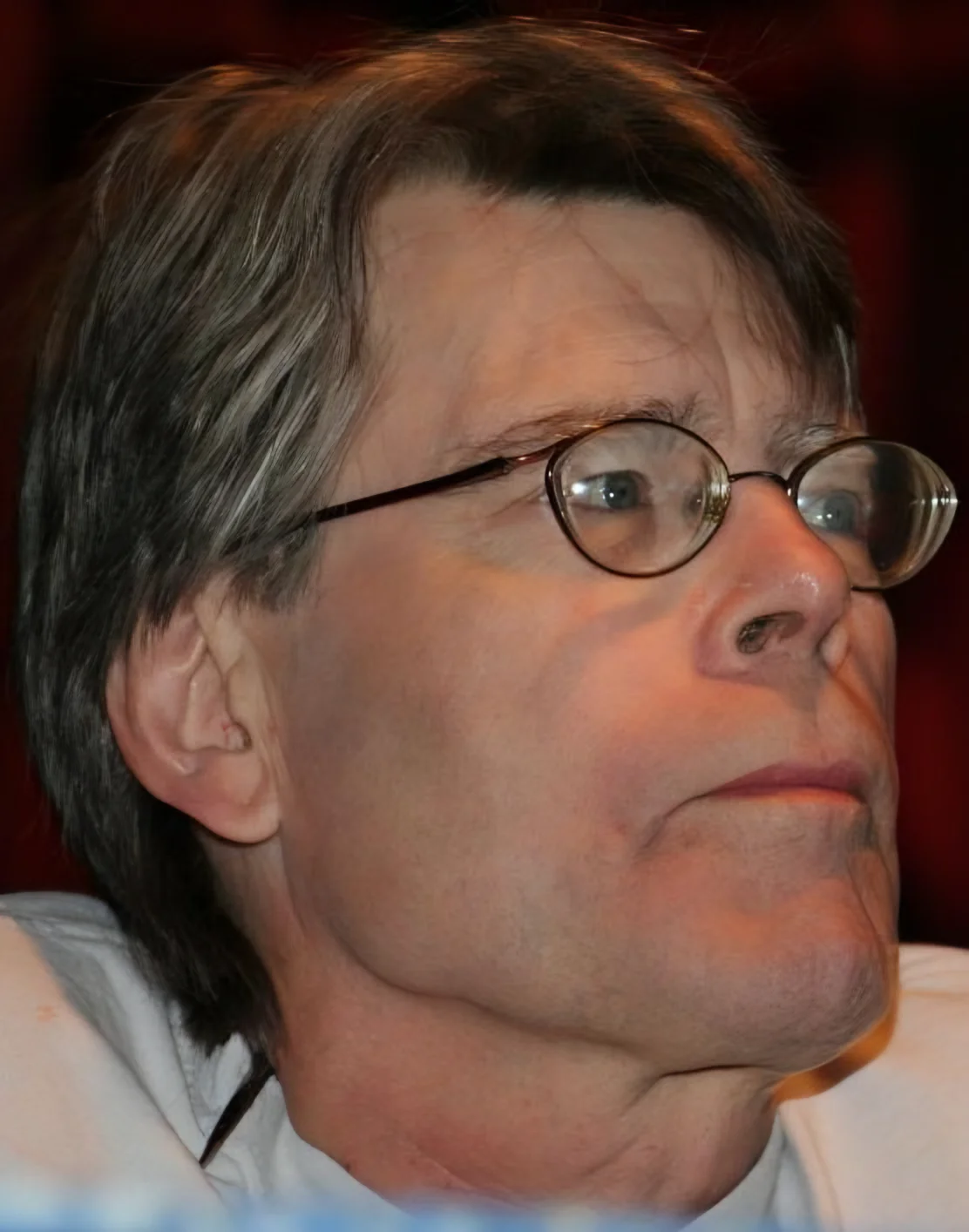
Attr: Pinguino Kolb, CC BY 2.0
| 22 Quotes | |
| Born as | Stephen Edwin King |
| Occup. | Author |
| From | USA |
| Born | September 21, 1947 Portland, Maine, USA |
| Age | 78 years |
| Cite | |
Citation Formats
APA Style (7th ed.)
Stephen king biography, facts and quotes. (2026, February 11). FixQuotes. https://fixquotes.com/authors/stephen-king/
Chicago Style
"Stephen King biography, facts and quotes." FixQuotes. February 11, 2026. https://fixquotes.com/authors/stephen-king/.
MLA Style (9th ed.)
"Stephen King biography, facts and quotes." FixQuotes, 11 Feb. 2026, https://fixquotes.com/authors/stephen-king/. Accessed 25 Mar. 2026.
Early Life and Background
Stephen Edwin King was born on September 21, 1947, in Portland, Maine, into a postwar America braced by Cold War dread and an expanding mass culture of radio thrills, pulp paperbacks, and Saturday matinees. His father, Donald Edwin King, left the family when Stephen was a toddler, a rupture that became a private template for absence in his fiction - the missing parent, the fragile home, the child forced to read the adult world early. Raised largely by his mother, Nellie Ruth Pillsbury King, he moved through Maine and briefly Indiana before the family resettled in Durham, Maine, where money was tight and stability had to be made, not assumed.King grew up with an appetite for stories that matched the era's taste for monsters: EC-style comics, B-movie creature features, and mid-century horror and science fiction. Childhood illness and long hours indoors fed a life of reading, while small-town New England provided the hard edges - class divides, churchgoing respectability, and gossip as social control. The local details that later made Derry and Castle Rock feel documentary were first learned as weather, accent, and habit: the way people joke to avoid fear, and the way fear still leaks through.
Education and Formative Influences
King attended the University of Maine at Orono, writing for the campus paper and honing a plainspoken, reporterly rhythm even as he drafted stories in the grooves of Lovecraft, Bradbury, and Richard Matheson; he also met Tabitha Spruce, a fellow writer who became his wife in 1971. The late 1960s - Vietnam, assassinations, student protest - sharpened his sense that public life was saturated with menace, and that the "normal" American town could be a stage set for violence; teaching high school English after graduation, he learned the daily texture of adolescent cruelty and longing that would later animate Carrie White and countless bullied kids in his work.Career, Major Works, and Turning Points
King's breakthrough came with "Carrie" (1974), rescued from a trash can and completed with Tabitha's encouragement, then sold in a deal that moved his family out of precarity and into full-time writing; the film adaptation (1976) made his name synonymous with modern horror. A prolific surge followed: "Salem's Lot" (1975), "The Shining" (1977), "The Stand" (1978, expanded 1990), "It" (1986), "Misery" (1987), "Pet Sematary" (1983), and the "Dark Tower" cycle (beginning with "The Gunslinger", 1982). He also wrote as Richard Bachman, testing whether voice and craft could outpace brand, before the pseudonym was exposed. Public success ran alongside private damage: alcohol and cocaine dependence crescendoed in the 1980s until a 1987 family intervention pushed him into sobriety, a shift that brought greater emotional clarity to later work. In 1999, he was struck by a van while walking near his Maine home; the long recovery, chronic pain, and brush with death reframed his urgency, feeding books like "On Writing" (2000) and deepening the mortal stakes of his later novels.Philosophy, Style, and Themes
King's style is democratic and intimate: a conversational narrator who uses brand names, jokes, and local idiom to gain trust, then turns that trust into a trapdoor. His craft ethos is stubbornly unromantic, rooted in routine and revision rather than mythic inspiration: “Talent in cheaper than table salt. What separates the talented individual from the successful one is a lot of hard work”. That line doubles as self-portrait - a writer who built an enormous body of work by showing up daily, and who narrates the inner life of work itself: boredom, doubt, the small satisfactions of a clean paragraph.Psychologically, King's fiction is less about exotic evil than about the ways ordinary people betray themselves under pressure. He repeatedly returns to the seductions of voice - the persuasive salesman, the smiling predator, the inner whisper that rationalizes cruelty - because he understands that evil rarely arrives announcing itself. “The trust of the innocent is the liar's most useful tool”. The sentence could sit on the spine of "Needful Things" or "Misery": innocence, in King, is not naivete but an open hand extended toward the world, and horror is what happens when someone learns how to hold that hand too tightly.
His famous defense of genre is also a moral claim about art: “Fiction is the truth inside the lie”. King uses supernatural premises to excavate the real - domestic violence, addiction, grief, institutional failure, and the dread that history can turn on a casual choice. Small towns become pressure cookers where community can be salvation or mob, and where childhood is both Eden and crime scene. Again and again he stages a test: whether decency can be chosen when fear offers easier exits.
Legacy and Influence
King remade popular fiction by proving that horror could be both commercially dominant and emotionally serious, and by turning a regional landscape - Maine's mills, lakes, and back roads - into a modern myth system as recognizable as Faulkner's Yoknapatawpha. His books and their adaptations have shaped late-20th- and early-21st-century visual language of terror, from haunted hotels to killer clowns, while his essays and "On Writing" demystified the profession for millions of aspiring writers. Just as enduring is his ethical insistence that the frightening story is not an escape from reality but a way to look at it without blinking, insisting that courage is ordinary, fear is universal, and craft is earned.Our collection contains 22 quotes written by Stephen, under the main topics: Witty One-Liners - Motivational - Ethics & Morality - Dark Humor - Writing.
Other people related to Stephen: Clive Barker (Writer), Kathy Bates (Actress), Brendan Gleeson (Actor), David Soul (Actor), David E. Kelley (Producer), Gary Sinise (Actor), Tim Curry (Actor), Nancy Travis (Actress), Rebecca De Mornay (Actress), Miguel Ferrer (Actor)
Stephen King Famous Works
- 1987 Misery (Novel)
- 1986 It (Novel)
- 1983 Pet Sematary (Novel)
- 1978 The Stand (Novel)
- 1977 The Shining (Novel)
- 1974 Carrie (Novel)
Source / external links