
Steve Buyer Biography Quotes 22 Report mistakes
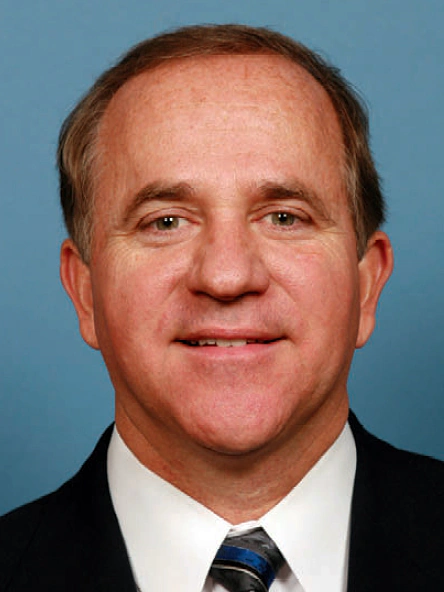
| 22 Quotes | |
| Born as | Stephen Earle Buyer |
| Occup. | Politician |
| From | USA |
| Born | November 26, 1958 Rensselaer, Indiana, United States |
| Age | 67 years |
| Cite | |
Citation Formats
APA Style (7th ed.)
Steve buyer biography, facts and quotes. (2026, February 11). FixQuotes. https://fixquotes.com/authors/steve-buyer/
Chicago Style
"Steve Buyer biography, facts and quotes." FixQuotes. February 11, 2026. https://fixquotes.com/authors/steve-buyer/.
MLA Style (9th ed.)
"Steve Buyer biography, facts and quotes." FixQuotes, 11 Feb. 2026, https://fixquotes.com/authors/steve-buyer/. Accessed 12 Feb. 2026.
Early Life and Background
Stephen Earle Buyer was born on November 26, 1958, in the United States and came of age in Indiana at the hinge point between postwar civic confidence and the mistrust that followed Vietnam and Watergate. That timing mattered: his political instincts would later favor order, chain-of-command accountability, and a belief that public institutions - when competently run - can still earn legitimacy. In the Midwest, where patriotism often read as duty rather than display, Buyer absorbed a local vocabulary of service, restraint, and a suspicion of ideological fashion.Before he was a national figure, he cultivated the habits of someone preparing for public life through structured institutions rather than celebrity: military service, law, and party politics. The psychology that emerges from his later rhetoric suggests a man more comfortable with systems than spectacle - someone drawn to the practical mechanics of government and to the moral authority of those who serve in uniform. That blend would become the through-line of his identity: soldier-lawyer-legislator.
Education and Formative Influences
Buyer attended Indiana University, completing undergraduate and legal studies (Indiana University Bloomington and the Indiana University Maurer School of Law), and he also served in the U.S. Army, including deployment during the Gulf War era. Those environments reinforced a particular cast of mind: a respect for hierarchy paired with legal proceduralism, and a tendency to frame policy questions in terms of institutional readiness and operational risk. He entered politics as a Republican at a moment when the party was fusing Cold War national-security language with deregulation and technological optimism, giving him a vocabulary for both veterans issues and modernization.Career, Major Works, and Turning Points
Buyer represented Indiana's 4th Congressional District in the U.S. House of Representatives from 1993 to 2011, a long tenure spanning the post-Cold War drawdown, the rise of the internet economy, 9/11, and the wars in Afghanistan and Iraq. He became closely associated with veterans and defense-related concerns, serving as chairman of the House Committee on Veterans' Affairs (2005-2007), where oversight and benefit delivery were central rather than abstract ideological battles. After leaving Congress, he entered private-sector work in the health and life-sciences arena and later faced federal securities-fraud charges connected to insider trading; in 2022 he was convicted, a late-life turning point that complicated a public persona built on discipline and duty, and forced any appraisal of his career to hold both institutional service and personal failure in the same frame.Philosophy, Style, and Themes
Buyer spoke in the idiom of civic obligation. His most consistent theme was the moral weight of military service as a foundation for republican life, and he returned to it with a ceremonial precision that doubled as self-definition: "The sacrifices ordinary American men and women from communities large and small have been willing to make, often before they were past their teenage years, have secured our nation unprecedented freedoms and made us the world's bulwark of liberty". The sentence is less flourish than worldview - history as a ledger of paid costs - and it reveals a psychology that anchors legitimacy in sacrifice. In that framework, government is not primarily a marketplace of preferences but a trustee for those who bore risk on the nation's behalf, which helps explain his comfort with oversight, benefits administration, and the ethic of accountability.At the same time, he expressed a technocratic caution about lawmaking under uncertainty: "In fact, it is often times a detriment for the Government to preemptively legislate on an issue before we can either define it or grasp its impact". That skepticism of premature statutory enthusiasm aligned with his era's rapid technological change and with a lawyer's fear of unintended consequences. Even when turning to infrastructure and energy security, he framed vulnerabilities as systems problems exposed by stress events rather than partisan abstractions: "I also believe that Hurricane Katrina did reveal a weakness in our energy supply systems, highlighting the reliance this country has on the gulf coast for our energy resources". Read together, these lines sketch a politician who preferred diagnostics to moralizing: define the system, locate the failure point, then reform without grandstanding.
Legacy and Influence
Buyer is remembered as a consequential Indiana Republican of the late-20th and early-21st century House - a committee-oriented legislator whose public identity was inseparable from veterans advocacy and the governance work of oversight. His influence persists in the institutional memory of how Congress frames obligations to service members and how it talks about infrastructure resilience and regulatory humility in a high-speed technological age. Yet his post-congressional conviction left a cautionary residue: the soldierly language of duty can coexist with private ethical lapses, and the contrast has become part of his historical footprint - a reminder that character is tested not only in speeches and hearings, but in the quiet decisions made after power is acquired.Our collection contains 22 quotes written by Steve, under the main topics: Justice - Freedom - Resilience - Health - Military & Soldier.
Source / external links