
Steve Jobs Biography Quotes 98 Report mistakes
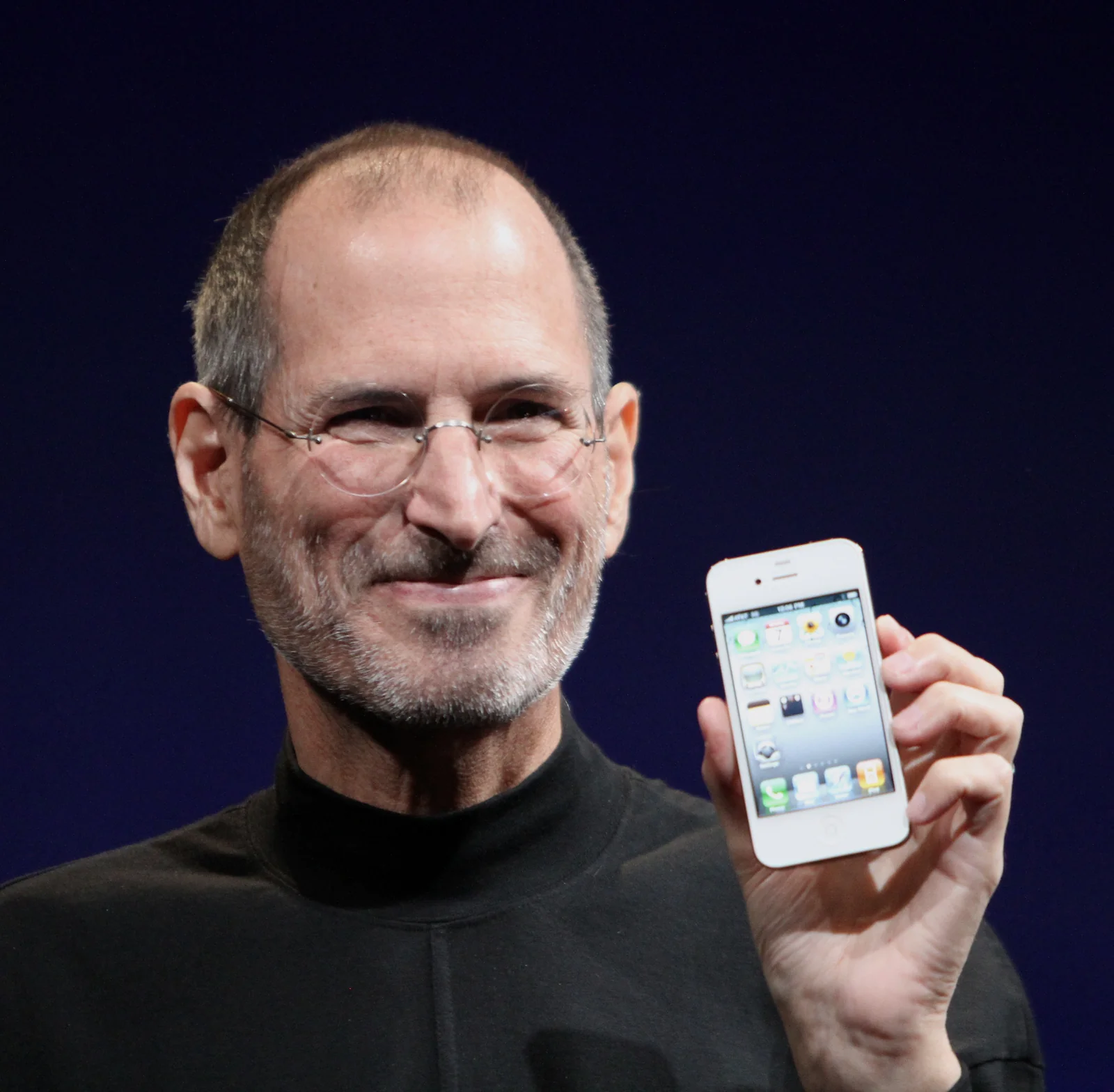
| 98 Quotes | |
| Born as | Steven Paul Jobs |
| Occup. | Businessman |
| From | USA |
| Spouse | Laurene Powell Jobs |
| Born | February 24, 1955 San Francisco, California, USA |
| Died | October 5, 2011 Palo Alto, California, USA |
| Cause | Pancreatic cancer |
| Aged | 56 years |
| Cite | |
Citation Formats
APA Style (7th ed.)
Steve jobs biography, facts and quotes. (2026, February 2). FixQuotes. https://fixquotes.com/authors/steve-jobs/
Chicago Style
"Steve Jobs biography, facts and quotes." FixQuotes. February 2, 2026. https://fixquotes.com/authors/steve-jobs/.
MLA Style (9th ed.)
"Steve Jobs biography, facts and quotes." FixQuotes, 2 Feb. 2026, https://fixquotes.com/authors/steve-jobs/. Accessed 5 Mar. 2026.
Early Life and Background
Steven Paul Jobs was born on February 24, 1955, in San Francisco, California, and adopted shortly after birth by Paul and Clara Jobs, a working- and middle-class couple who raised him in the Santa Clara Valley that was becoming Silicon Valley. His father, a machinist and handyman, taught him to take things apart and put them back together with care - a domestic apprenticeship in precision that later hardened into a moral demand for finish, even inside a device no customer would see.He grew up in a California culture intoxicated with aerospace, suburban optimism, and a new counterculture that questioned every institution at once. Jobs was bright, restless, and often difficult in school, combining showman instincts with a bruising intensity that could charm, argue, or intimidate depending on the moment. Early friendships and mentors in the Valley introduced him to electronics clubs and the idea that a small team could out-invent giant corporations, a conviction that became his lifelong psychological refuge: if control could be held tightly enough, the future could be made.
Education and Formative Influences
Jobs enrolled at Reed College in Portland in 1972 but dropped out after one semester, staying on by auditing classes that fed his aesthetic and spiritual hunger, including calligraphy, which later shaped the typographic elegance of the Macintosh. In the same years he absorbed Zen Buddhism, practiced meditation, experimented with LSD, and pursued a kind of purified perception - the belief that stripping away clutter revealed truth. That pursuit fused with Bay Area engineering pragmatism: beauty, intuition, and circuitry could belong to the same object, and the person who unified them could claim authorship over the user experience itself.Career, Major Works, and Turning Points
After working at Atari and traveling to India, Jobs partnered with Steve Wozniak to found Apple Computer in 1976, first selling the Apple I and then scaling the Apple II into a mass-market phenomenon that helped define personal computing. He pushed Apple toward the graphical user interface after visiting Xerox PARC, then drove the Macintosh team with near-messianic urgency, unveiling it in 1984 as a cultural event as much as a product. Power struggles with CEO John Sculley culminated in Jobs being forced out in 1985, a humiliation that became a second apprenticeship: at NeXT he built an exquisitely engineered workstation that sold modestly but birthed software foundations that later powered Mac OS X, and at Pixar - acquired from George Lucas in 1986 - he helped turn computer animation into a new studio system, beginning with Toy Story (1995). Apple bought NeXT in 1996, bringing Jobs back; as interim CEO and then CEO, he rebuilt the company around focus and design, launching the iMac (1998), iPod and iTunes (2001), iPhone (2007), and iPad (2010), turning Apple into a defining enterprise of the digital age before his death on October 5, 2011, in Palo Alto, California, after years of fighting pancreatic neuroendocrine tumor.Philosophy, Style, and Themes
Jobs treated products as arguments about how life should be lived: simpler, faster, more legible, more integrated. His most revealing creed insisted that “Design is not just what it looks like and feels like. Design is how it works”. That sentence was less a slogan than a psychological contract - aesthetics were permitted only when they served function, and function had to feel inevitable. It also explained his ferocious review sessions, his intolerance for compromise, and his fixation on end-to-end control, from silicon to software to retail. He did not merely want customers satisfied; he wanted them converted, because conversion proved the internal order he sensed could be imposed on a messy world.Underneath the confidence was a persistent fear of drift - of becoming ordinary, replaceable, or irrelevant - and he fought it with devotion to work as identity. “The only way to do great work is to love what you do”. In his own life, love meant obsession: a willingness to bet reputation, relationships, and comfort on the next release. Yet his public reflections, sharpened by illness, disclosed a different metric of success: “Being the richest man in the cemetery doesn't matter to me. Going to bed at night saying we've done something wonderful, that's what matters to me”. The line reframed ambition as a quest for meaning through making, and it clarifies why he could be both inspiring and punishing - he demanded the wonderful, and he demanded it now.
Legacy and Influence
Jobs helped move computing from a specialist tool to an intimate companion, shaping modern expectations for interfaces, typography, industrial design, and the seamless coupling of hardware, software, and services. His keynote theater became a global template for product storytelling; his ecosystem strategy reorganized music, phones, apps, and retail; and his insistence on focus influenced leaders far beyond technology. The darker parts of his legend - volatility, credit disputes, a sometimes brutal management style - also became cautionary text for a generation trying to separate visionary standards from personal harm. Still, the enduring influence is hard to escape: the pocket computer, the app economy, and the idea that a consumer device can be a cultural artifact all bear his imprint, not only in what was built, but in the belief that taste, engineering, and willpower can be welded into history.Our collection contains 98 quotes written by Steve, under the main topics: Motivational - Ethics & Morality - Wisdom - Never Give Up - Mortality.
Other people related to Steve: Aaron Sorkin (Producer), Paul Rand (Designer), Walter Isaacson (Writer), Andy Hertzfeld (Inventor), George Lucas (Director), Danny Boyle (Director), Lukas Haas (Actor), Arthur Rock (Businessman), Steven Levy (Journalist), Robert Iger (Businessman)
Steve Jobs Famous Works
- 2011 Steve Jobs (Biography)
Source / external links