
Steve Wozniak Biography Quotes 35 Report mistakes
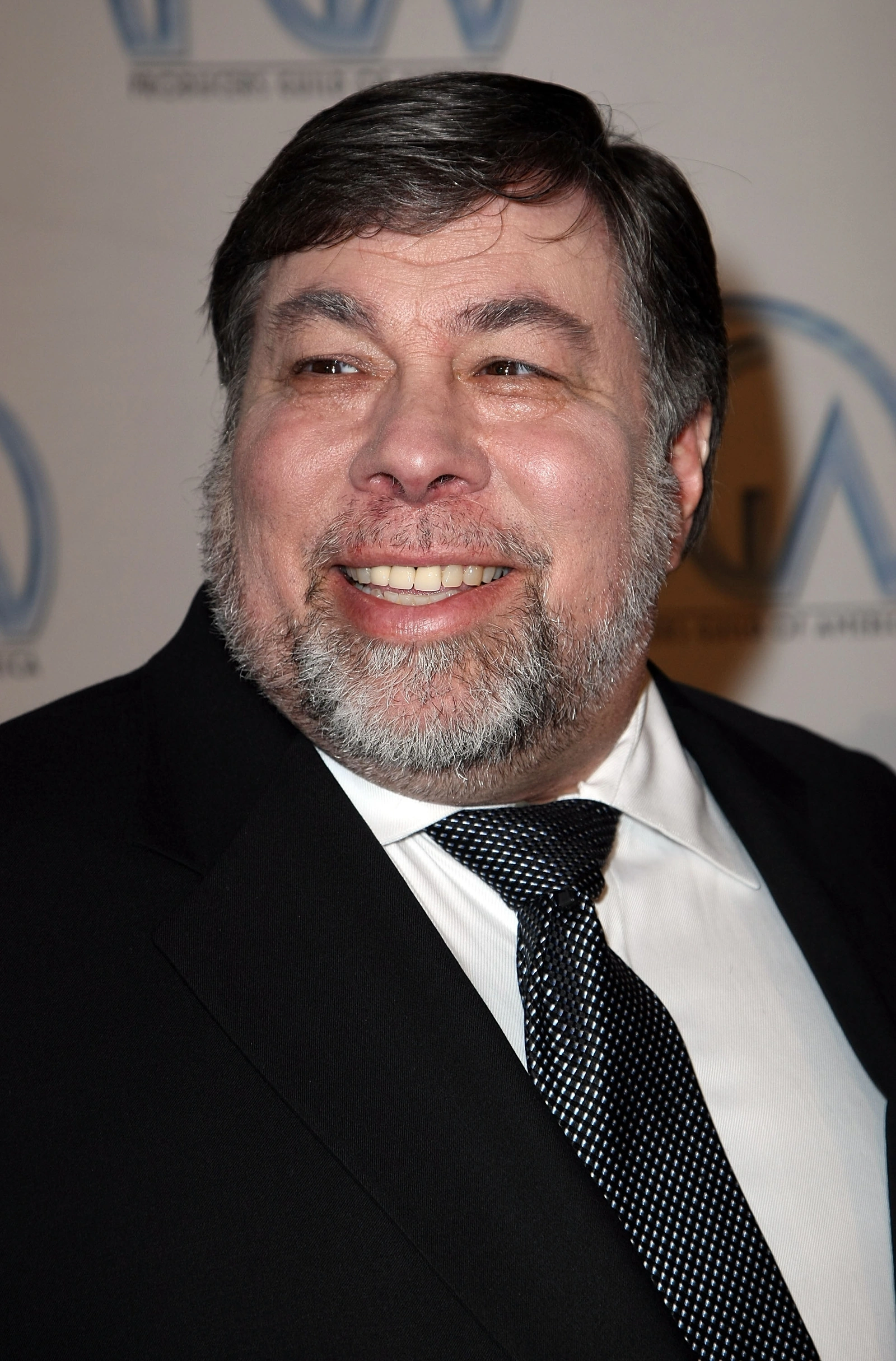
| 35 Quotes | |
| Born as | Stephen Gary Wozniak |
| Occup. | Businessman |
| From | USA |
| Born | August 11, 1950 San Jose, California, U.S. |
| Age | 75 years |
| Cite | |
Citation Formats
APA Style (7th ed.)
Steve wozniak biography, facts and quotes. (2026, February 11). FixQuotes. https://fixquotes.com/authors/steve-wozniak/
Chicago Style
"Steve Wozniak biography, facts and quotes." FixQuotes. February 11, 2026. https://fixquotes.com/authors/steve-wozniak/.
MLA Style (9th ed.)
"Steve Wozniak biography, facts and quotes." FixQuotes, 11 Feb. 2026, https://fixquotes.com/authors/steve-wozniak/. Accessed 5 Mar. 2026.
Early Life and Background
Stephen Gary Wozniak was born on August 11, 1950, in San Jose, California, at the center of what would soon be called Silicon Valley. His father, Francis Jacob "Jerry" Wozniak, worked as an engineer at Lockheed in the Cold War aerospace economy, and the household treated electronics not as magic but as a craft with rules, tolerances, and ethics. That environment gave Wozniak an unusually early confidence that complex systems could be understood from the inside out, component by component.As a boy he built radios, logic games, and small digital devices, chasing elegance rather than profit. He was shy in public yet fearless with schematics, and he learned a lifelong habit: use humor to soften intensity, then let the work speak. The Santa Clara Valley around him was changing from orchards to laboratories; Wozniak absorbed both the neighborly informality of suburbia and the precision culture of engineering, a mix that later shaped the friendly, non-corporate feel of early Apple.
Education and Formative Influences
Wozniak attended Homestead High School in Cupertino, where science fairs and local engineering networks mattered as much as grades, and he began to see computing as something an individual could master, not just institutions. He briefly attended the University of Colorado Boulder (where a notorious prank led to disciplinary trouble), then returned to California and enrolled at De Anza College before moving through Berkeley coursework and early industry work. More decisive than any diploma were the informal schools of the era: the HP engineer mindset, the ethic of sharing among hobbyists, and the emerging "hacker" culture that prized cleverness, thrift, and personal freedom.Career, Major Works, and Turning Points
In the early 1970s Wozniak worked at Hewlett-Packard while designing computers at night, and he met Steve Jobs through their mutual friend Bill Fernandez. Wozniak built "blue box" phone phreaking devices with Jobs, a formative lesson in how engineering feats could become products - and how boundaries could be tested. In 1976, inspired by the Homebrew Computer Club, Wozniak designed the Apple I, a single-board computer that could be assembled by hobbyists; Jobs pushed for sales, and Apple Computer was formed. Wozniak then engineered the Apple II (1977), a breakthrough consumer machine with color graphics, expandability, and a polished, friendly architecture that helped make personal computing mainstream. After an early-1980s plane crash and a long recovery, he stepped back from day-to-day Apple roles, returned briefly to complete his degree at UC Berkeley, and later pursued philanthropy, education projects, and smaller ventures while remaining a public symbol of the engineer-founder.Philosophy, Style, and Themes
Wozniak's inner life reads like a tension between showmanship and purity: he loved applause, yet he trusted the clean proof of a circuit more than the theater of a pitch. He could be bluntly self-assessing about ability, as in, “In some parts of life, like mathematics and science, yeah, I was a genius. I would top all the top scores you could ever measure it by”. That candor was not vanity so much as a clue to his motivation: he wanted the score to be objective, the design to be undeniably right, and the machine to reward the user with simplicity earned through hidden complexity.His style favored minimal parts, maximal effect - a kind of moral economy where constraints forced honesty. The Apple II embodied that ethic: it was not merely functional, it was legible to tinkerers, inviting learning rather than demanding obedience. Wozniak's suspicion of opaque systems became a personal rule of thumb: “Never trust a computer you can't throw out a window”. Under the joke sits a deep desire for user control and for technology that remains subordinate to human judgment. Even in later years, as computing became locked-down and platform-driven, he kept returning to the dignity of the builder and the end user, distilling his ambitions into a modest epitaph: “In the end, I hope there's a little note somewhere that says I designed a good computer”. It is a revealing metric - not market share, not dominance, but goodness as experienced by ordinary people.
Legacy and Influence
Wozniak's enduring influence is less the cult of the founder than the template of the humane engineer: a creator who treats accessibility, play, and transparency as technical requirements. The Apple II helped define the late-1970s and 1980s home-computing boom and seeded industries from educational software to early small-business computing. Beyond Apple, he became a living argument that the "personal" in personal computer was an ethical stance - empowering individuals to understand, modify, and trust their tools. In an era when technology often feels remote and coercive, Wozniak remains a touchstone for a different origin story: ingenuity rooted in craft, community, and the quiet pride of making something that works.Our collection contains 35 quotes written by Steve, under the main topics: Witty One-Liners - Motivational - Freedom - Knowledge - Gratitude.
Other people related to Steve: Andy Hertzfeld (Inventor), John Sculley (Businessman), Arthur Rock (Businessman), Steven Levy (Journalist)
Steve Wozniak Famous Works
- 2006 iWoz: Computer Geek to Cult Icon (Book)
Source / external links